


Could Distributed Peer Review Better Decide Grant Funding?
The landscape of academic grant funding is notoriously competitive and plagued by lengthy, bureaucratic processes, exacerbated by difficulties in finding willing reviewers. Distributed […]

There’s a lot of myths that get in the way of learning maths, says Stanford University’s Jo Boaler, and her research not only topples conventional wisdom but gives solid ways of allowing everyone to harness their inherent ability to excel at mathematics.
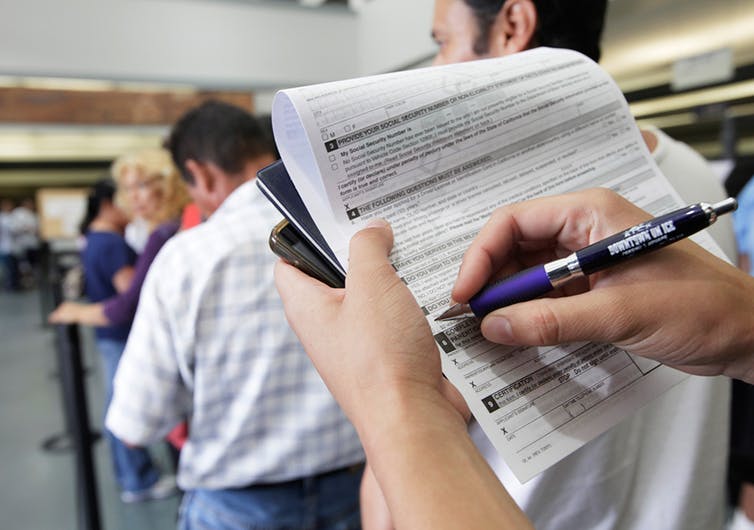
The year 2017 turned out to be the start for mainstream behavioral economics after a leading practitioner in the field won a Nobel prize for his work. Throughout 2017, The Conversation asked experts in economics, psychology and other areas to address the power of this burgeoning field, as well as its potential for misuse. Here are some articles for your consideration.

By drawing on a plethora of psychological and sociological research, marketers subtly give us permission to buy and not to think too much, or too deeply, about why we’re buying. Not thinking all the time is a very efficient way for us to get by. It conserves energy, and allows us to live relatively easily by responding to our psychological predispositions, social norms, and general cognitive imperfections.
America’s rural-urban divide, it seems, has never been greater, a point reinforced by large geographic disparities in support for Donald Trump in the 2016 presidential election. But it is also the case that big cities and rural communities are more tightly integrated than ever and are increasingly interdependent, both economically and socially. That was the starting point for a recent webinar which is archived here.
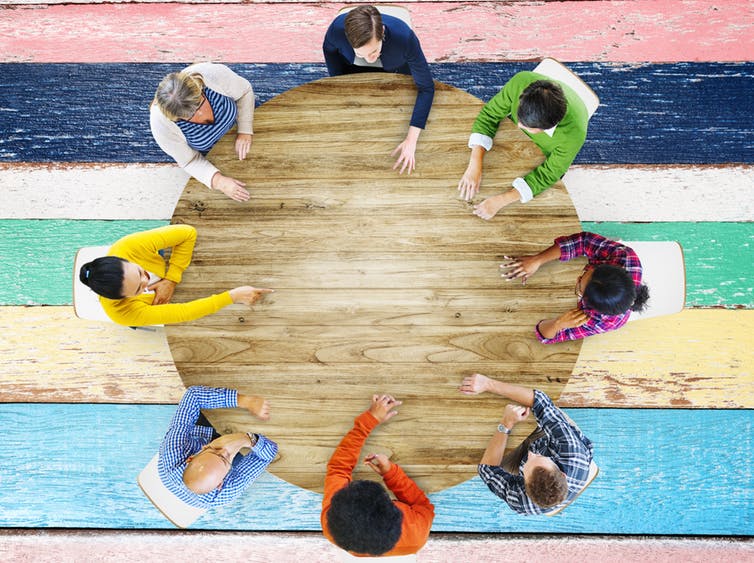
You’d be forgiven for assuming a quick and sure way to multiply profits and amplify organizational success is to increase the gender and racial diversity of any group. According to mainstream media, the effects of gender and racial diversity are universally favorable. However, professor Alice Eagly states, “the truth is there’s no adequate scientific basis for these newsworthy assertions.”

The issue of sexual assault, the deceit, the gender stereotypes and the level of taboo surrounding the topic, has once again hit […]
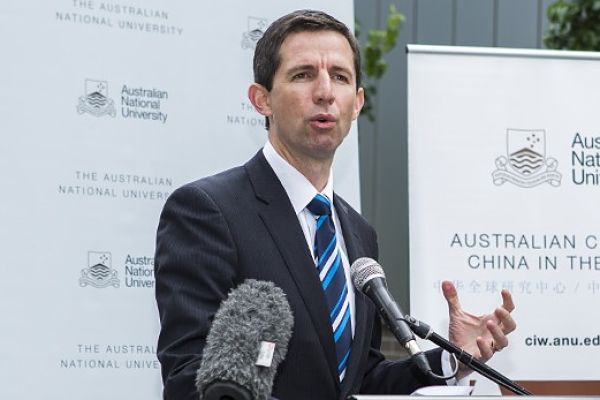
Starting in 2018, Australian universities will be required to prove their research provides concrete benefits for taxpayers and the government, who fund it.

The credibility of science is under siege, says Andrea Saltelli. On the one hand doubt is shed on the quality of entire scientific fields or sub-fields. On the other this doubt is played out in the open, in the media and blogosphere.

The Royal Swedish Academy of Sciences has awarded this year’s Nobel Prize in Economic Sciences to the American economists Robert E. Hall […] Four Americans working in the social and behavioral sciences are among the 20 people named MacArthur Fellows this year. Recipients may be […] Euan Adie, the founder of Altmetric and later of Overton, discusses the reasons the led to Overton’s focus on showing researchers how […] The following is an adapted extract from The Cultural Industries, fifth edition, by David Hesmondhalgh. The increasing presence of information technology (IT) […] Developers of AI data centers have a public trust problem. According to multiple surveys, a majority of Americans say they would oppose […] I was adding some final flourishes on the topic of ‘iatrocracy’ to my forthcoming book with Natewindé Sawadogo – Sickness and Social […]
EXPLORE
Impact
Economic Peaks, Troughs and This Year’s Nobelists in Economics
READ MORE
Four From Social Science World Receive 2026 MacArthur Fellowships
READ MORE

Quick Insight: Euan Adie on Getting Academics Credit for Their Impact
READ MORE
Innovation

IT Giants and Their Operations: Should We Be Concerned?
READ MORE

What We Miss When We Study Public Trust with Surveys Alone
READ MORE

AI and ‘Iatrocracy’ – A Cautionary Tale
READ MORE