


Could Distributed Peer Review Better Decide Grant Funding?
The landscape of academic grant funding is notoriously competitive and plagued by lengthy, bureaucratic processes, exacerbated by difficulties in finding willing reviewers. Distributed […]
Where ideological issues such as Hong Kong and Taiwan are concerned, Australian lecturers tell of how a vocal minority of international Chinese students are attempting to police teaching materials and class discussions.
Academic freedom is widely championed as the foundation of a good university. It is seen as vital in speaking “truth to power” – […]

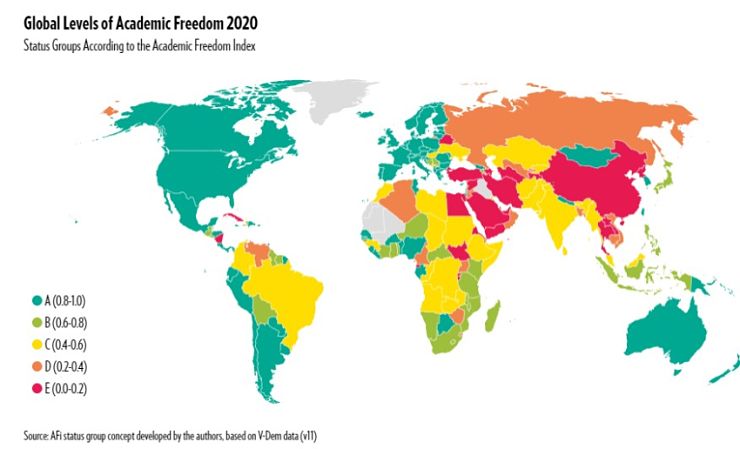
“Free Universities: Putting the Academic Freedom Index Into Action,” a report released by the Global Public Policy Institute in March, works as part of an effort to put the Academic Freedom Index (AFi) into action.
The COVID-19 pandemic has exacted a toll on academic freedom is several ways, in particular by restricting mobility and allowing for greater surveillance.
Academic freedom is only one wing by which the academy flies, says Jimi Adesina. The other is the duty of scholars to act ethically and responsibly.
Spats, fall-outs and intellectual and personal feuds have long been commonplace among scholars. And, because critiques of ideas and publications are also exercises in freedom of expression, they are integral to the rough and tumble of academic life. But British universities are now facing much more insidious challenges…
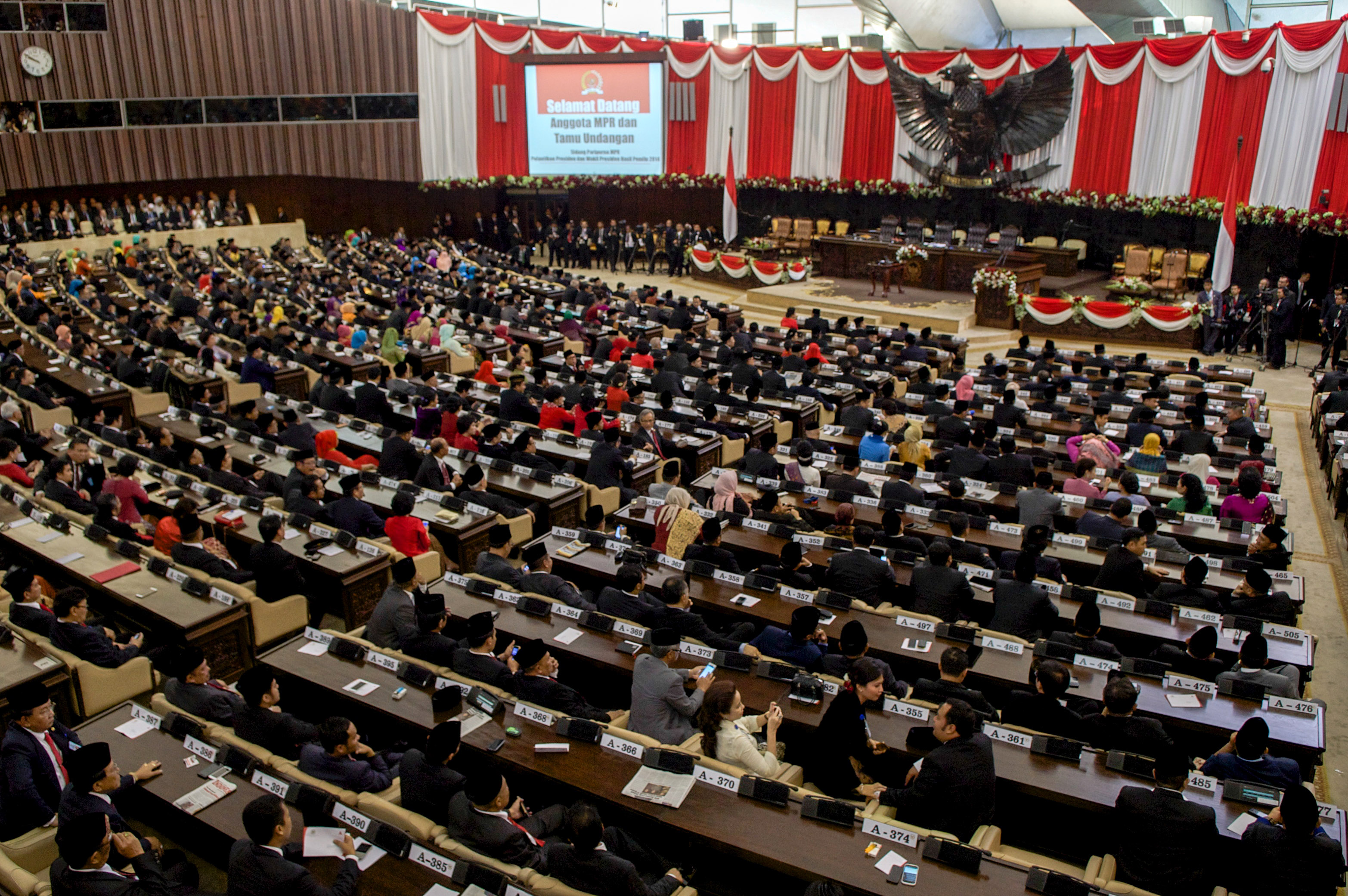
Our study, Doing Research Assessment, shows Indonesian policy-making is predominantly informed by research with poor theoretical engagement, with no strong tradition of peer review and with legal threats to academic freedom.

Funders from private industry — which represent two-thirds of funding in medical research, for example — can go great lengths to suppress the publication of findings which appear unfavorable. How can academic freedom be protected with this monumental funding shift?
Jürgen Habermas, a globally known social theorist whose explorations of democracy, validity and communication have gained new prominence in the current moment, […] People often see science as a world apart: cool, rational and untouched by persuasion or performance. In this view, scientists simply discover […] “Research impact” means different things to different people. Some refer broadly to how science changes behaviors, beliefs, or practices outside academic institutions. […] David Canter considers informal places where people socialize, suggesting they’re an arena ChatGPT and other LLMs can’no’t replicate. As someone who lives […] It’s become cliche since Clive Humbly coined it in 2006, but data is indeed the new oil. It’s a mantra repeated by […] In September 2025, The Guardian reported about a lawyer in Australia having faced sanctions due to false citations. These citations were not […]
EXPLORE
Impact

Jürgen Habermas, 1929-2026: Exponent of the Public Sphere
READ MORE

Scientists Should Keep in Mind It’s Called the ‘Marketplace of Ideas’ for a Reason
READ MORE

Survey Finds Social Scientists Feel Unsupported in Seeking Societal Impact
READ MORE
Innovation

Reaching Parts to Which AI Has No Access
READ MORE

Andrea Medina-Smith on Making Research Data More FAIR
READ MORE

A Status Check on Hallucinated Case Law Incidents
READ MORE