
Could Distributed Peer Review Better Decide Grant Funding?
The landscape of academic grant funding is notoriously competitive and plagued by lengthy, bureaucratic processes, exacerbated by difficulties in finding willing reviewers. Distributed […]

Funders from private industry — which represent two-thirds of funding in medical research, for example — can go great lengths to suppress the publication of findings which appear unfavorable. How can academic freedom be protected with this monumental funding shift?
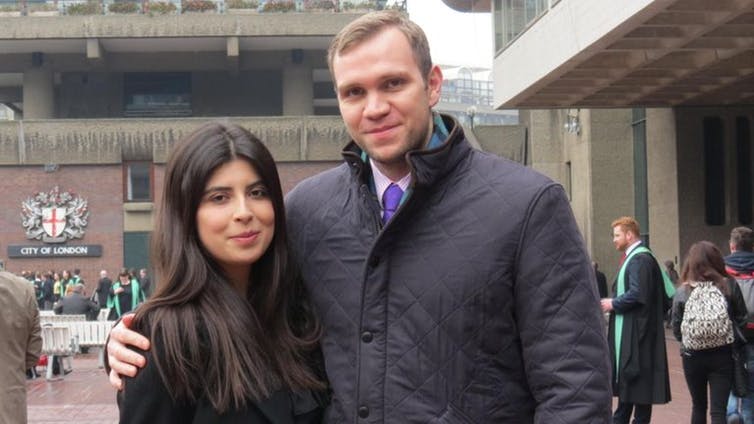
I had no reservations about conducting research in the UAE. And I underwent a rigorous ethical and fieldwork assessment and was sure to follow established protocols before and during my trip. Yet I was imprisoned for nearly seven months …
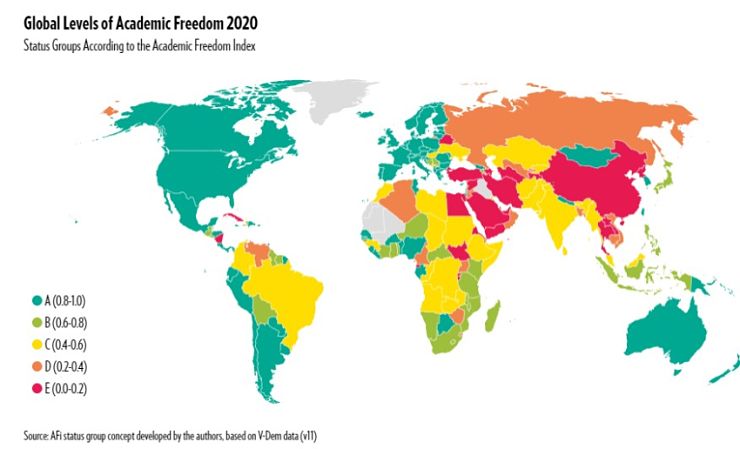
Academic freedom is under threat everywhere. Not only do some countries perpetrate direct attacks on students and scholars. But the internationalization of higher education has also created new global threats for both scholars and students. Here is how to defend academic freedom.
New bans and restrictions of research and teaching on topics such as constitutionalism and civil society have impeded independent scholarship in China. How should universities and academics outside of China react?
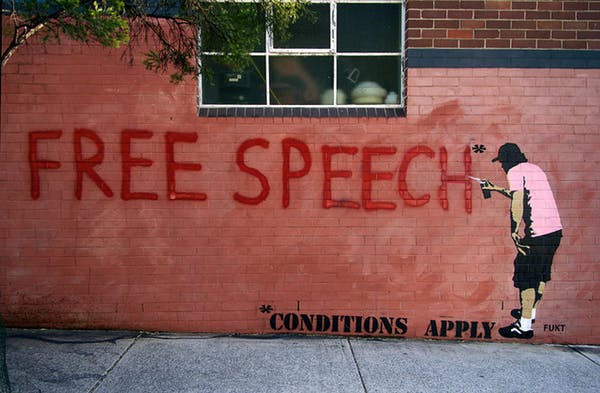
This is an edited version of a speech given by Glyn Davis, distinguished professor of political science at the Crawford School of Public Policy at Australian National University, at a summit to explore issues of academic freedom and autonomy hosted by the Australian National University.
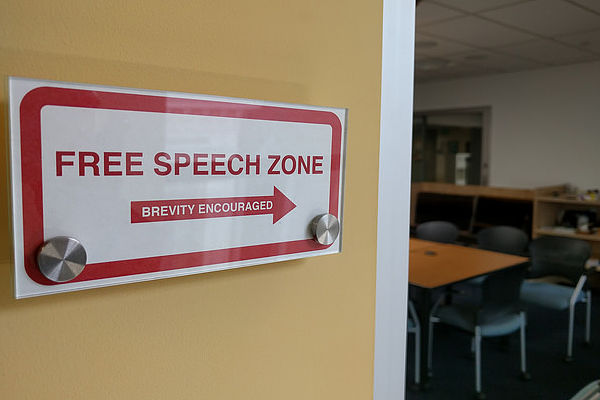
Researches at the University of Florida’s Brechner Center for Freedom of Information have studied the rights of public employees when they speak with the news media. Here, they look specifically at professors at public universities in the United States and find there are broad protections – within limits.
The former president of the University of Saskatchewan argues that freedom of expression is under attack in Canada’s universities through an accumulation of episodes that diminish its significance and through a vector of intellectual laziness accompanied by ideology and anger.
The same day that the U.S. Attorney General Jeff Sessions called for “a national recommitment to free speech on campus” before an audience at Georgetown University, the American Library Association’s Office for Intellectual Freedom, SAGE Publishing, and Index on Censorship magazine hosted a webinar on “Disinvited Speakers and Academic Freedom.”
Euan Adie, the founder of Altmetric and later of Overton, discusses the reasons the led to Overton’s focus on showing researchers how […] Here’s a couple of quick questions for you. What is the smallest of the eight discipline-based directorates at the United States’ National […] Sage’s 10-Year Impact Awards recognize academic papers appearing in Sage-published journals that have achieved lasting impact. The winning papers are the most […] I was adding some final flourishes on the topic of ‘iatrocracy’ to my forthcoming book with Natewindé Sawadogo – Sickness and Social […] How is AI changing the shape and space of higher education? Critical thinking continues to rank highly among key skills and attributes […] My colleagues and I recently spoke with a group of talented, interesting students who just completed their first year of college about […]
EXPLORE
Impact
Quick Insight: Euan Adie on Getting Academics Credit for Their Impact
READ MORE

NSF’s Embattled SBE Directorate Shown as Agency’s Policy Heavyweight
READ MORE
Sage’s 10-Year Impact Awards Capture Longer-Term Significance
READ MORE
Innovation

AI and ‘Iatrocracy’ – A Cautionary Tale
READ MORE

The Critical Student: How GenAI Reshapes Critical Skills and Higher Education’s Role Preparing Students For It
READ MORE

AI Doesn’t Drive Student Cheating. It Just Hitches a Ride
READ MORE