



Could Distributed Peer Review Better Decide Grant Funding?
The landscape of academic grant funding is notoriously competitive and plagued by lengthy, bureaucratic processes, exacerbated by difficulties in finding willing reviewers. Distributed […]
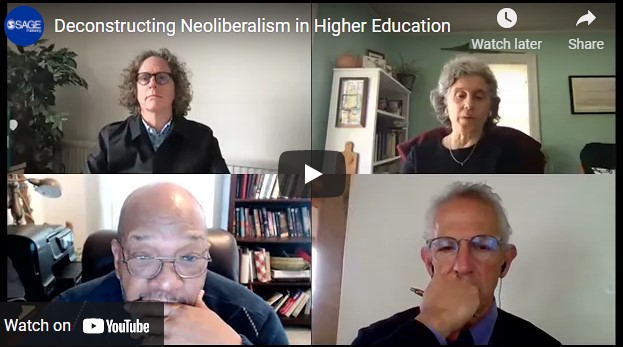
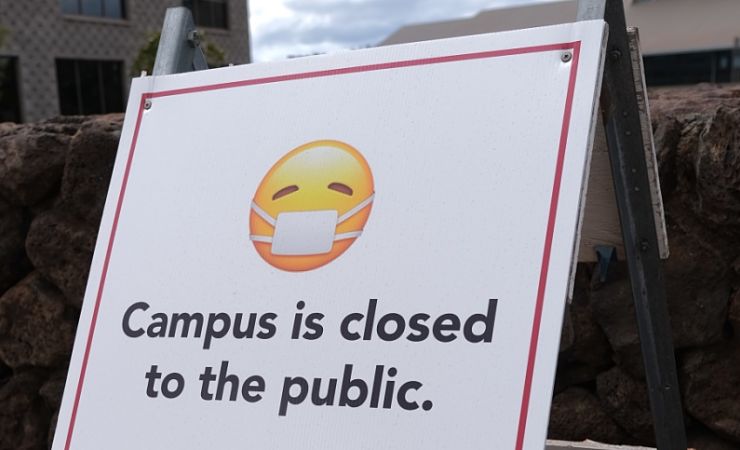
Higher education is striving to address problems such as access, inclusion, and elitism, but is a neoliberalist foundation undermining these efforts—or even the system itself? An online forum held on April 21, “Deconstructing Neoliberalism in Higher Education: How can we promote greater equity and re-professionalize the professoriate?” addressed this quandary.

Two speakers at the upcoming “Between the discourse of ‘resilience’ and death by committee – Reclaiming collective spaces for academic resistance” forum say they became interested in the state of the neoliberal university because of attempts to bandage wounds that the current system had inflicted.
In this second of a series of interviews conducted by Social Science Space’s Daniel Nehring, Ewan Mackenzie explains why he joined the May 4 ‘Reclaiming’ event at Newcastle, discusses hallmarks of the modern academic institutions and details some of the events that lead him to believe in both resilience and resistance.

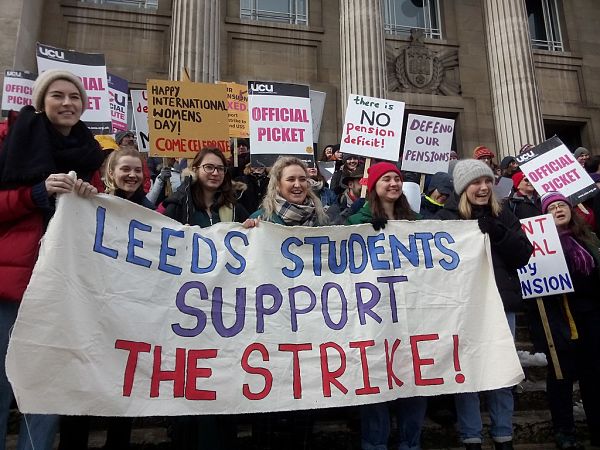
Craig Brandist compares aspects of British higher education to the old Soviet Union, with a similar tendency towards stagnation and strategies that workers adopt to absorb managerial pressure.
The boundaries of academic freedom in the US have shifted, argues Sam Binkley. What is at stake now is not only the freedom to think, speak and generate knowledge, but the freedom, even the requirement that one becomes a certain kind of person in order to think and speak in certain kinds of ways.
Critical scholarship and intellectual dissent are currently being closed down in favour of a model of academic life that accords scholars a limited role as purveyors of practically useful skills in ‘real-world’ labour markets.

Is OA the flip side to privatisation of Higher Education? Is there a way in which OA is a means of justifying the economic inaccessibility of HE by providing a public good?

Alan Bradshaw, University of London, and Mark Tadajewski, University of Strathclyde, published “Macromarketing Roundtable Commentary–The Export of Marketing Education” on September 20th, 2011 in […]


Jürgen Habermas, a globally known social theorist whose explorations of democracy, validity and communication have gained new prominence in the current moment, […] People often see science as a world apart: cool, rational and untouched by persuasion or performance. In this view, scientists simply discover […] “Research impact” means different things to different people. Some refer broadly to how science changes behaviors, beliefs, or practices outside academic institutions. […] David Canter considers informal places where people socialize, suggesting they’re an arena ChatGPT and other LLMs can’no’t replicate. As someone who lives […] It’s become cliche since Clive Humbly coined it in 2006, but data is indeed the new oil. It’s a mantra repeated by […] In September 2025, The Guardian reported about a lawyer in Australia having faced sanctions due to false citations. These citations were not […]
EXPLORE
Impact

Jürgen Habermas, 1929-2026: Exponent of the Public Sphere
READ MORE

Scientists Should Keep in Mind It’s Called the ‘Marketplace of Ideas’ for a Reason
READ MORE

Survey Finds Social Scientists Feel Unsupported in Seeking Societal Impact
READ MORE
Innovation

Reaching Parts to Which AI Has No Access
READ MORE

Andrea Medina-Smith on Making Research Data More FAIR
READ MORE

A Status Check on Hallucinated Case Law Incidents
READ MORE