


Could Distributed Peer Review Better Decide Grant Funding?
The landscape of academic grant funding is notoriously competitive and plagued by lengthy, bureaucratic processes, exacerbated by difficulties in finding willing reviewers. Distributed […]
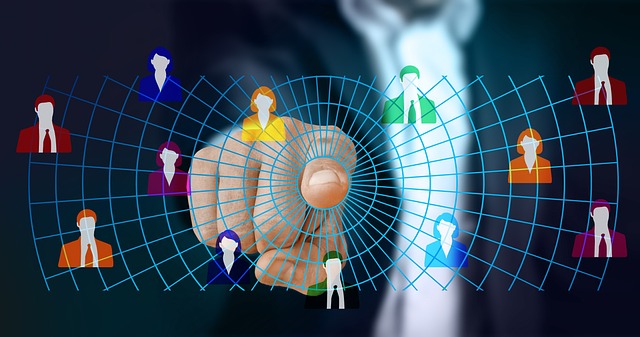
The double-blind review process, adopted by many publishers and funding agencies, plays a vital role in maintaining fairness and unbiasedness by concealing the identities of authors and reviewers. However, in the era of artificial intelligence (AI) and big data, a pressing question arises: can an author’s identity be deduced even from an anonymized paper (in cases where the authors do not advertise their submitted article on social media)?

Considering a series of proposed policy changes by the National Institutes of Health, Micah Altman and Philip N. Cohen, argue they highlight wider systematic gaps in the evaluation of operational science policies and signal an urgent need to increase funding for metascience.
An investigation by Undark and Retraction Watch finds that some journals’ special issue are being targeted by academic paper mills.

Sage is hosting ‘how to be a peer reviewer,’ a free webinar series that will explain the academic reviewing landscape. The event will be held on three occasions to accommodate audiences worldwide.

Six coping strategies drawn from positive psychology can help us cope with the sting of negative feedback.

In honor of Peer Review Week (September 19-23), the next in SAGE Publishing’s series of ‘how to get published’ webinars will shed […]
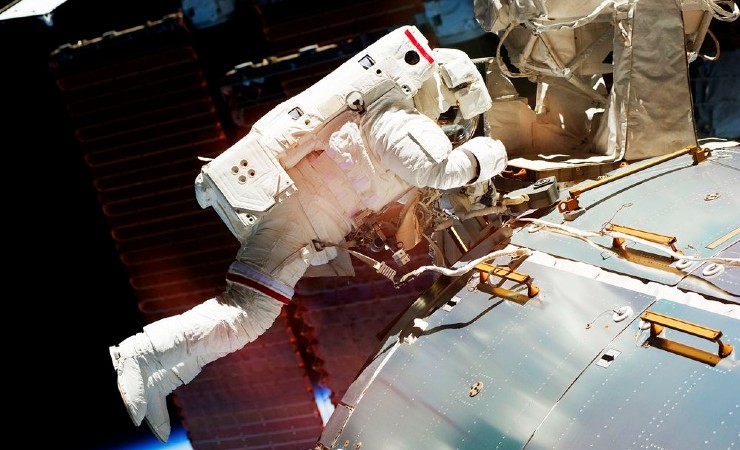
You don’t have to be a rocket scientist to fix peer review. An astronomic number of ideas to repair peer review followed a tweet about the system.
Ludo Waltman and Jessica Polka make the case for a more contextualized approach to open access publishing and preprinting, and introduce the Publish Your Reviews initiative.
Jürgen Habermas, a globally known social theorist whose explorations of democracy, validity and communication have gained new prominence in the current moment, […] People often see science as a world apart: cool, rational and untouched by persuasion or performance. In this view, scientists simply discover […] “Research impact” means different things to different people. Some refer broadly to how science changes behaviors, beliefs, or practices outside academic institutions. […] David Canter considers informal places where people socialize, suggesting they’re an arena ChatGPT and other LLMs can’no’t replicate. As someone who lives […] It’s become cliche since Clive Humbly coined it in 2006, but data is indeed the new oil. It’s a mantra repeated by […] In September 2025, The Guardian reported about a lawyer in Australia having faced sanctions due to false citations. These citations were not […]
EXPLORE
Impact

Jürgen Habermas, 1929-2026: Exponent of the Public Sphere
READ MORE

Scientists Should Keep in Mind It’s Called the ‘Marketplace of Ideas’ for a Reason
READ MORE

Survey Finds Social Scientists Feel Unsupported in Seeking Societal Impact
READ MORE
Innovation

Reaching Parts to Which AI Has No Access
READ MORE

Andrea Medina-Smith on Making Research Data More FAIR
READ MORE

A Status Check on Hallucinated Case Law Incidents
READ MORE