


Could Distributed Peer Review Better Decide Grant Funding?
The landscape of academic grant funding is notoriously competitive and plagued by lengthy, bureaucratic processes, exacerbated by difficulties in finding willing reviewers. Distributed […]

We need honest researchers who monitor their own behavior; we need to have scrutiny by other researchers in the field; and we need an engaged public. But what do we have, asks Judith Stark.
If Garrett Hardin were with us today, argues Rob Brooks, he would have saved a special place on the degraded commons to relegate those who inflict upon us all the burden of collecting meaningless data and unheeded opinion.

The values of a university education are many and generally agreed upon. But is holding a degree the same thing?

The impact of John Nash’s initial work has been immense over the past 65 years. It seems certain that in his absence, the frameworks and mathematical language he refined and developed will continue to provide new insights into a diverse range of problems.

The appointment of climate skeptic Bjorn Lomborg has focused attention on a newish metric for assessing academic importance, the H-Index.

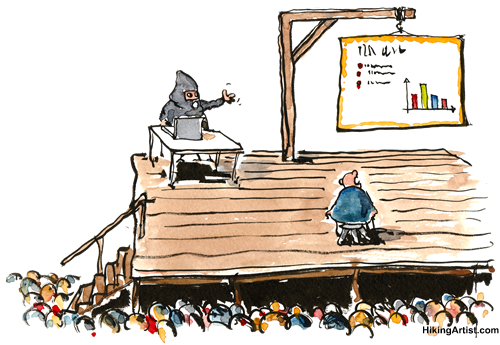
Take away PowerPoint, and what do professors have left? Students! As it should be, argues Bent Meier Sørensen.

Critics of various bits of research often go to great lengths to make the studies seem silly, not serious. But ‘silly’ endeavors often result in serious societal gains — and maybe a boost for your career.

Kevin Carey deftly explains how a series of historical contingencies combined to create the peculiar mash-up that is the contemporary research university, according to a new book by Kevin Carey.

The Royal Swedish Academy of Sciences has awarded this year’s Nobel Prize in Economic Sciences to the American economists Robert E. Hall […] Four Americans working in the social and behavioral sciences are among the 20 people named MacArthur Fellows this year. Recipients may be […] Euan Adie, the founder of Altmetric and later of Overton, discusses the reasons the led to Overton’s focus on showing researchers how […] The following is an adapted extract from The Cultural Industries, fifth edition, by David Hesmondhalgh. The increasing presence of information technology (IT) […] Developers of AI data centers have a public trust problem. According to multiple surveys, a majority of Americans say they would oppose […] I was adding some final flourishes on the topic of ‘iatrocracy’ to my forthcoming book with Natewindé Sawadogo – Sickness and Social […]
EXPLORE
Impact

Economic Peaks, Troughs and This Year’s Nobelists in Economics
READ MORE

Four From Social Science World Receive 2026 MacArthur Fellowships
READ MORE

Quick Insight: Euan Adie on Getting Academics Credit for Their Impact
READ MORE
Innovation

IT Giants and Their Operations: Should We Be Concerned?
READ MORE

What We Miss When We Study Public Trust with Surveys Alone
READ MORE

AI and ‘Iatrocracy’ – A Cautionary Tale
READ MORE