


Could Distributed Peer Review Better Decide Grant Funding?
The landscape of academic grant funding is notoriously competitive and plagued by lengthy, bureaucratic processes, exacerbated by difficulties in finding willing reviewers. Distributed […]

Status List of 2020 Social and Behavioral Science Conferences Amid concerns about the spread of the new coronavirus and its accompanying disease, […]

The move towards including the first person perspective is becoming more acceptable in academia, notes the University of Queensland’s Peter Ellerton, who adds, there are times when invoking the first person is more meaningful and even rigorous than not.
Each year, NYU researchers analyze New York State Medicaid, New York City Department of Education, and New York City subsidized housing data to discover new patterns of family experiences and outcomes and inform new approaches to fighting poverty, reducing inequality, and expanding opportunity in our communities.
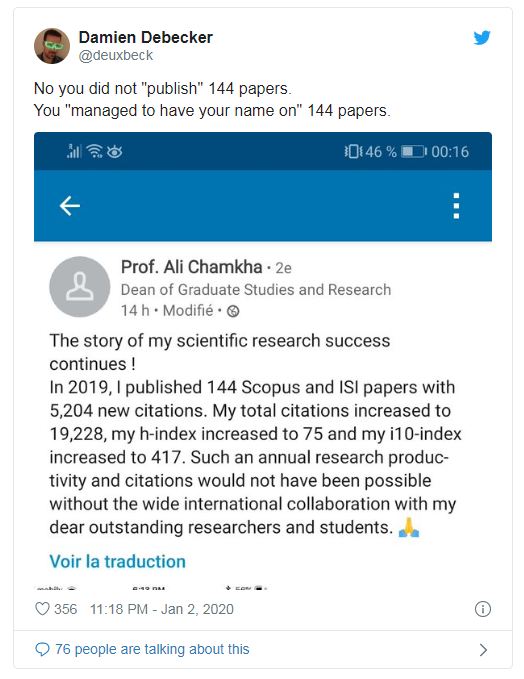
Do sociology graduate students need to publish more today than they did a generation ago to get a faculty position? Do assistant professors need to publish more to get tenure?
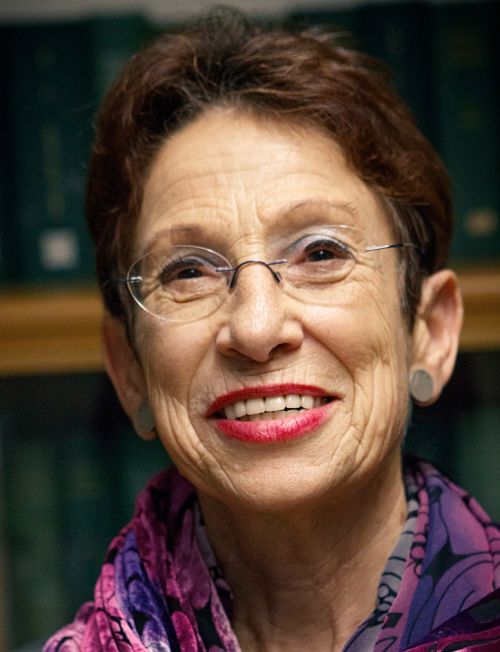
Depending on your views, far-right populism can represent a welcome return to the past , or a worrying one. The former, argues sociolinguist Ruth Wodak in this Social Science Bites podcast, is one of the hallmarks of far-right populism – a yearning for an often mythical past where the “true people” were ascendant and comfortable.

What can I do to increase the chances of having my paper accepted? How long does it take for an article to get published? Who are good contacts to reach out to for more information about my article along the way? How can I play a role in the dissemination of my paper? Our free webinar will guide you through the author journey, from beginning to end. Featuring Jessica Lipowski, Publishing Editor at SAGE, and a panel of Editors-in-Chief from various disciplines, including management, medicine, and health, this webinar will break down each step of the process and detail best practices for authors or those who want to be authors, as well as answer your questions about the process.

Swelling its total roll call of fellows to 140 elected in the past two decades, the directors of the American Academy of Political and Social Science have elected five distinguished scholars to be inducted as fellows of the AAPSS. Katherine Cramer, Eric Foner, Helen Milner, Mario Small, and Bruce Western will be inducted at a ceremony in October.
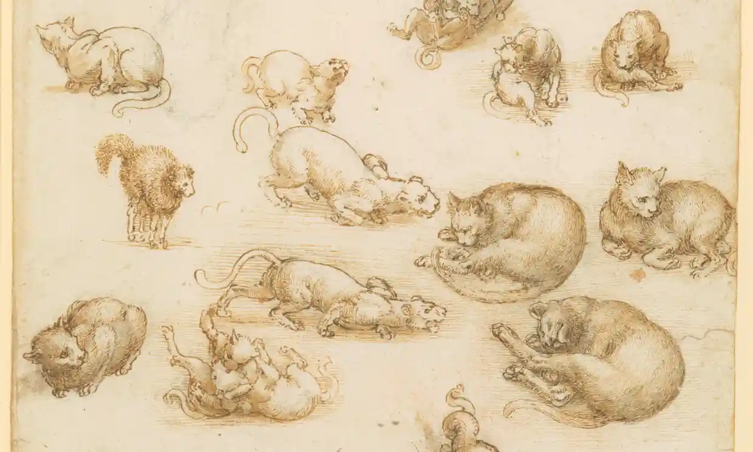
Stoyan V. Sgourev, possibly the only management professor teaching (and indulging in) art history, argues that many of the key principles that guided the evolution of painting during the Italian Renaissance can be usefully applied to the domain of academic writing. Leonardo quite likely never intended to articulate advice on writing as an intellectual activity, but Stoyan borrows generously from his style and writings in formulating a number of basic principles that can help connect with the reader in a similar way to his paintings.
People often see science as a world apart: cool, rational and untouched by persuasion or performance. In this view, scientists simply discover […] “Research impact” means different things to different people. Some refer broadly to how science changes behaviors, beliefs, or practices outside academic institutions. […] One researcher studies how war affects children, another took a literal worm’s eye view to examine rural development, while two others scrutinized […] David Canter considers informal places where people socialize, suggesting they’re an arena ChatGPT and other LLMs can’no’t replicate. As someone who lives […] It’s become cliche since Clive Humbly coined it in 2006, but data is indeed the new oil. It’s a mantra repeated by […] In September 2025, The Guardian reported about a lawyer in Australia having faced sanctions due to false citations. These citations were not […]
EXPLORE
Impact

Scientists Should Keep in Mind It’s Called the ‘Marketplace of Ideas’ for a Reason
READ MORE

Survey Finds Social Scientists Feel Unsupported in Seeking Societal Impact
READ MORE

Canada’s SSHRC Names 2025 Impact Winners
READ MORE
Innovation

Reaching Parts to Which AI Has No Access
READ MORE

Andrea Medina-Smith on Making Research Data More FAIR
READ MORE

A Status Check on Hallucinated Case Law Incidents
READ MORE