


Could Distributed Peer Review Better Decide Grant Funding?
The landscape of academic grant funding is notoriously competitive and plagued by lengthy, bureaucratic processes, exacerbated by difficulties in finding willing reviewers. Distributed […]

As part of a pioneering effort to systematically use privacy-protected Facebook data to study the platform’s impact on democracy, the Social Science Research Council and its partner Social Science One have named the inaugural recipients of the Social Media and Democracy Research Grants.

Daniel Nehring describes China’s social networking platform WeChat as ‘Facebook on steroids,’ and notes it has long surpassed e-mail as the main tool of mediating communication at Chinese universities while obliterating boundaries between work and home. Is this a cautionary tale for academe outside of China?
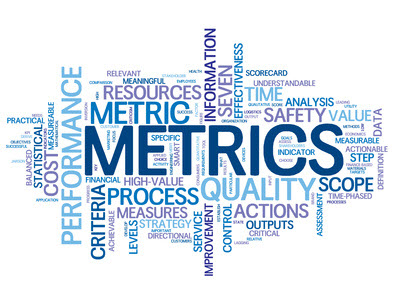
A new survey of university faculty finds that the idea of altmetrics – using something aside from journal citations as the measure of scholarly impact – has made less headway among faculty than might be expected given the hoopla surrounding altmetrics. These new measures are the most familiar in the social science community (barely) and least familiar in the arts and humanities (dramatically so).

Sociologist Lauren O’Connell, a postgraduate research student at the University of Essex, holds a scholarship from the Economic and Social Research Council for her doctoral research exploring how clinical diagnosis and treatment shapes the experience of anorexia nervosa. In this shortlisted essay from the ESRC Better Lives Writing Competition, in which PhD students who have received money from the ESRC write short essays about how their research leads too better lives, she details how her own experiences influenced her work.
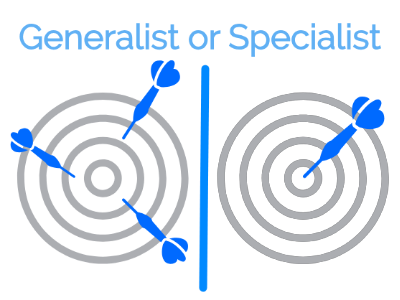
Hashem ElAssad argues that the failure to appreciate the trade-off that comes with an espoused view is doing harm to the public. The specialization vs generalization debate is no exception to this. The aim of this article is to provide quality resources exploring whether or not specializing in a trade or generalizing in multiple is a better route.
Humanitarian aid organizations often find themselves torn by reasonable expectations – to address a pressing crisis and to show that what they are doing is actually helping. While these might not seem at odds, in practice, says sociologist Monika Krause, they often do. Krause, is the author of The Good Project, an award-winning book from 2014, and guest of this Social Science Bites podcast.
Ranging from jurisprudence to autism, the loss of a baby to the growth of equality in science education, the work of the finalists in the seventh annual Celebrating Impact Prize competition—announced today — represent a broad cross-section of meaningful work from Britain’s social and behavioral researchers.

How can researchers use social media data in their research? The digitalization of social life offers researchers an unprecedented world of data with which to study human life and social systems. However, accessing this data has become increasingly difficult. Jason Radford here is to help you figure out what approach is right for you.
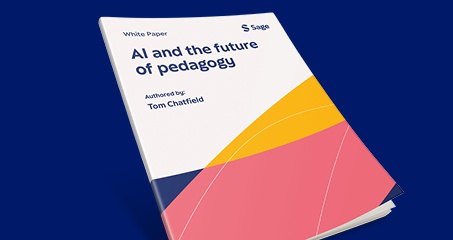
When people trust science, they can make better decisions, follow helpful rules and work together on big problems like health, climate change […] Do you know a social or behavioral science researcher whose work resonates across disciplines and which has made a significant impact in […] Please note: this contest has now closed. The winner will be contacted in due course. This November, Sage and Overton invite you to share the unexpected […] The latest generation of artificial intelligence models is sharper and smoother, producing polished text with fewer errors and hallucinations. As a philosophy […] In a new white paper by Tom Chatfield, the philosopher of tech and critical thinking outlines a practical roadmap for integrating artificial intelligence into […] Distance learning far precedes the digital age. Before online courses, people relied on print materials (and later radio and other technologies) to […]
EXPLORE
Impact
There Is a Cost to Being Honest About Science
READ MORE
Outstanding Social and Behavioral Scientists Sought for Sage-CASBS Award
READ MORE
![Share Your Most Surprising Policy Citation for Chance to Win $500 [Closed]](https://www.socialsciencespace.com/wp-content/themes/conferpress/images/default_thumbnail-new-border.jpg "Share Your Most Surprising Policy Citation for Chance to Win $500 [Closed]")
Share Your Most Surprising Policy Citation for Chance to Win $500 [Closed]
READ MORE
Innovation

An AI Authorship Protocol Aims to Sharpen a Sometimes-Fuzzy Line
READ MORE

A Box Unlocked, Not A Box Ticked: Tom Chatfield on AI and Pedagogy
READ MORE

AI Gaming of Some Online Courses Threatens Their Credibility
READ MORE