
Could Distributed Peer Review Better Decide Grant Funding?
The landscape of academic grant funding is notoriously competitive and plagued by lengthy, bureaucratic processes, exacerbated by difficulties in finding willing reviewers. Distributed […]
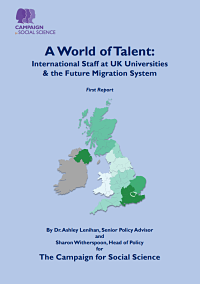
Three out of every 10 academics working in UK universities, finds a new report from the Campaign for Social Science, are nationals […]

The ESRC describes Knowledge Transfer Partnerships as a relationship between a company/organization and staff in a knowledge base institution in which the the institution’s knowledge base is applied to a challenge presented by the organization. Here, Farida Mustafazade describes her experience in such a partnership.
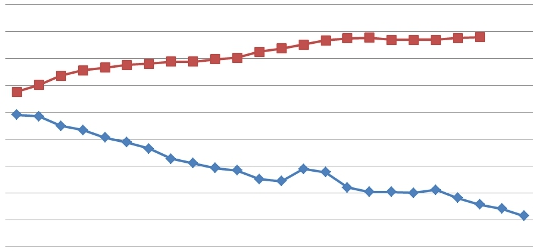
Are Americans now stuck in animosity and anger that will undermine democracy, or can the nation pull out of it? Here, Jennifer McCoy shares some of the findings of a collaborative research project she led that examined political polarization in 11 countries, including the United States. Their research shows that the most democratic of actions – participating in elections – is exactly the thing to do to help reduce polarization.
Gleb Tsipursky is addressing fake news, but not by trying to educate consumers about the viper already in their newsfeed. He harnessed his own skills as a behavioral scientist and is asking newsmakers themselves to not speak or spread fake news in the first place.
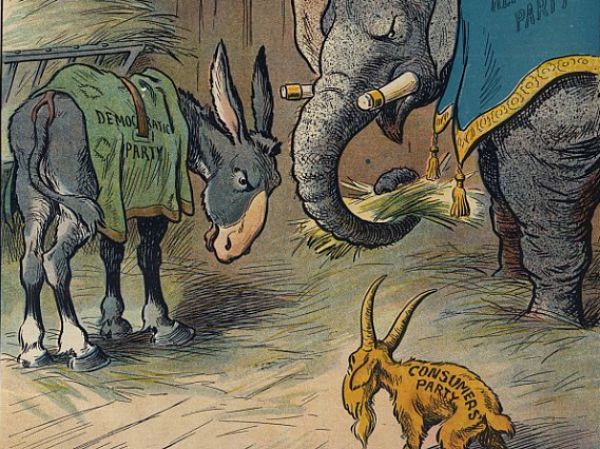
According to the Gallup polling firm, writes Christopher Devine, the identity that people choose most often is actually “independent” – not Democratic or Republican. In 2017, 42 percent of Americans chose this label – up from the low 30s just 14 years ago, in 2004. However, three-quarters of these “independents” admit, when asked, that they lean toward favoring the Democratic or Republican Party.
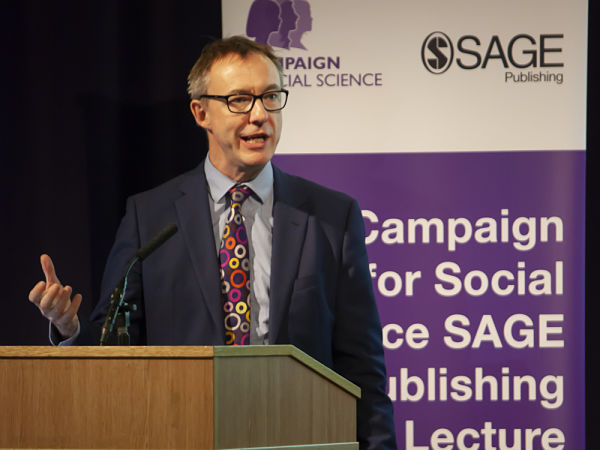
Paul Johnson had one key theme in his SAGE Publishing lecture for the Campaign for Social Science: Long-term policy needs to be developed across government based on a broad understanding of the social and economic trends. And there is little evidence that this lesson is being heeded.
At SAGE, we believe that education and engaged scholarship make up the foundation of a healthy society. So for this election season, we challenge you to bring the election into your classrooms. For the next few days, we will be providing you with new content to help facilitate conversation within the classroom.
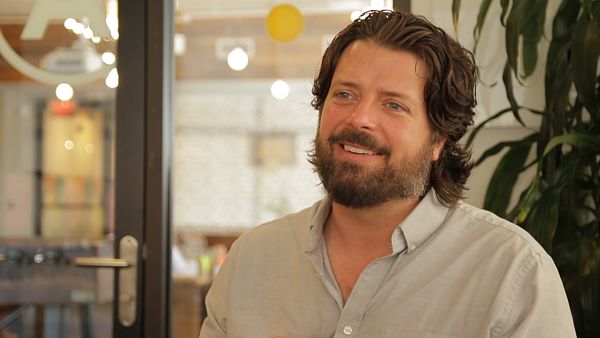
Fake news, whether truly phony or merely unpalatable, has become an inescapable trope for modern media consumers. But apart from its propagandist provenance, misinformation and disinformation in our media diets is a genuine threat. Sociologist Nick Adams, in this Social Science Bites podcast, offers hope that a tool he’s developed can improve the media literacy of the populace.
People often see science as a world apart: cool, rational and untouched by persuasion or performance. In this view, scientists simply discover […] “Research impact” means different things to different people. Some refer broadly to how science changes behaviors, beliefs, or practices outside academic institutions. […] One researcher studies how war affects children, another took a literal worm’s eye view to examine rural development, while two others scrutinized […] David Canter considers informal places where people socialize, suggesting they’re an arena ChatGPT and other LLMs can’no’t replicate. As someone who lives […] It’s become cliche since Clive Humbly coined it in 2006, but data is indeed the new oil. It’s a mantra repeated by […] In September 2025, The Guardian reported about a lawyer in Australia having faced sanctions due to false citations. These citations were not […]
EXPLORE
Impact

Scientists Should Keep in Mind It’s Called the ‘Marketplace of Ideas’ for a Reason
READ MORE

Survey Finds Social Scientists Feel Unsupported in Seeking Societal Impact
READ MORE
Canada’s SSHRC Names 2025 Impact Winners
READ MORE
Innovation

Reaching Parts to Which AI Has No Access
READ MORE

Andrea Medina-Smith on Making Research Data More FAIR
READ MORE

A Status Check on Hallucinated Case Law Incidents
READ MORE