


Could Distributed Peer Review Better Decide Grant Funding?
The landscape of academic grant funding is notoriously competitive and plagued by lengthy, bureaucratic processes, exacerbated by difficulties in finding willing reviewers. Distributed […]
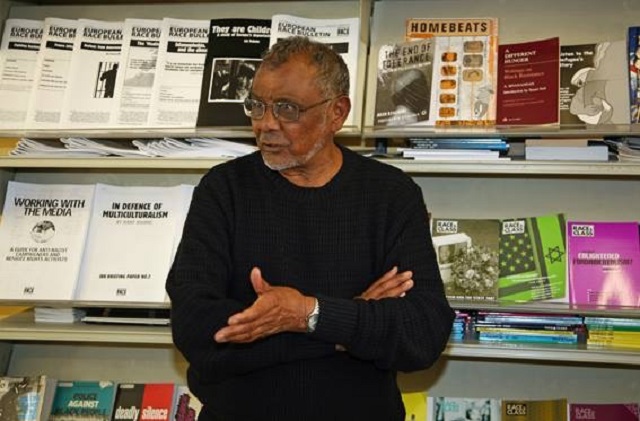
Ambalavener Sivanandan, a former bank manager and then librarian who became an award-winning novelist and one of Britain’s foremost political thinkers on race, will be honored this Saturday at London’s Red Lion Square.
Researchers whose work has made a real difference to society or the economy, ranging from detailing the true numbers of modern slavery to transforming how we teach about sexuality, were celebrated at the ESRC’s sixth annual Impact Prize awards ceremony at the Royal Society on today.
The winners of the annual ESRC Celebrating Impact Prize will be announced Wednesday in an afternoon ceremony at the Royal Society. The Impact awards, now in their sixth year, are awarded to ESRC-funded social science researchers or ESRC associates who have achieved impact through outstanding research, collaborative partnerships, engagement or knowledge exchange activities.

Attending a workshop conducted by John Creswell changed Cheryl Poth’s academic trajectory, confirming an earlier epiphany that purely quantitative approaches weren’t telling the whole story that methodology can reveal. A decade and half later, Poth -joined Creswell to craft a fourth edition of his venerable “Qualitative Inquiry and Research Design.”.
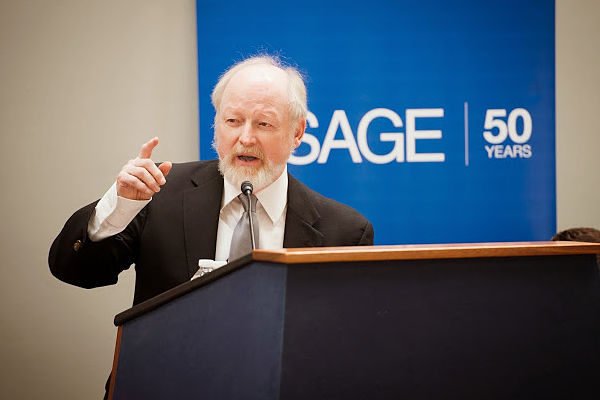
The the Textbook & Academic Authors Association has awarded the fourth edition of “Qualitative Inquiry and Research Design” its longevity award. In recognition of that, we talk with John Creswell, who has been behind the beloved book since its debut in the 1990s.

Funding for basic research, visas for scholars from outside the United States, and streamlining regulations that get in the way of research are areas of concern for a consortium of business and academic interests that annually reviews the state of American government’s commitment to innovation.

The academic world has the power to transform events in redefining its social mission, by responding to this highly ambitious EU action plan with the emergence of courses that match the expectations not only of businesses but, above all, society.

David Canter reviews results of studies on the challenges of sustaining natural resources.

People often see science as a world apart: cool, rational and untouched by persuasion or performance. In this view, scientists simply discover […] “Research impact” means different things to different people. Some refer broadly to how science changes behaviors, beliefs, or practices outside academic institutions. […] One researcher studies how war affects children, another took a literal worm’s eye view to examine rural development, while two others scrutinized […] David Canter considers informal places where people socialize, suggesting they’re an arena ChatGPT and other LLMs can’no’t replicate. As someone who lives […] It’s become cliche since Clive Humbly coined it in 2006, but data is indeed the new oil. It’s a mantra repeated by […] In September 2025, The Guardian reported about a lawyer in Australia having faced sanctions due to false citations. These citations were not […]
EXPLORE
Impact

Scientists Should Keep in Mind It’s Called the ‘Marketplace of Ideas’ for a Reason
READ MORE

Survey Finds Social Scientists Feel Unsupported in Seeking Societal Impact
READ MORE
Canada’s SSHRC Names 2025 Impact Winners
READ MORE
Innovation

Reaching Parts to Which AI Has No Access
READ MORE

Andrea Medina-Smith on Making Research Data More FAIR
READ MORE

A Status Check on Hallucinated Case Law Incidents
READ MORE