




Could Distributed Peer Review Better Decide Grant Funding?
The landscape of academic grant funding is notoriously competitive and plagued by lengthy, bureaucratic processes, exacerbated by difficulties in finding willing reviewers. Distributed […]

Cybercrime, mass surveillance and migration are among the areas studied by the new cohort of MacArthur Foundation fellows announced today. The fellowships, often referred to as “genius grants,” offer a no-strings-attached $625,000 cash grant to exceptionally creative people expected to achieve something important using their outstanding talent going forward.

Increasingly, write Ashley Frawley and Daniel Nehring, the waning societal valuation of the arts and social sciences is seen in these terms—if their value to a company’s bottom line is at all in question, then their entire raison d’etre is in doubt. Reversing this trend may involve some unpalatable decisions.

The same day that the U.S. Attorney General Jeff Sessions called for “a national recommitment to free speech on campus” before an audience at Georgetown University, the American Library Association’s Office for Intellectual Freedom, SAGE Publishing, and Index on Censorship magazine hosted a webinar on “Disinvited Speakers and Academic Freedom.”

Richard Thaler was not the first proponent of behavioral economics to be awarded a Nobel Prize, notes Sergey Popov. But Thaler’s star turn came when the Great Recession and it orgy or irrationality brought a lot of attention to research that extensively cites the University of Chicago’s economist’s 40-year-long academic career.
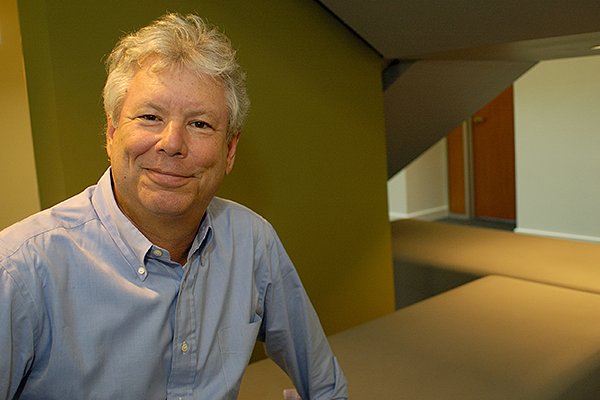
Richard H. Thaler, the University of Chicago economist whose contributions linking psychology to the ‘dismal science’ caught the public’s eye in his co-authored bestselling book Nudge, has received this year’s Nobel Prize in economic sciences.

After returning from summer recess, the House in September approved an Omnibus Appropriations Act comprised of several appropriations bills, including the Commerce-Justice-Science and Labor-Health and Human Services-Education Appropriations Act.

Congressman Daniel Lipinski says “we should encourage interdisciplinary collaboration, but we must also maintain support for core social science research.” He will moderate the congressional briefing on “Social Science Solutions for Health, Public Safety, Computing, and Other National Priorities” on Wednesday.

Philosopher Tom Chatfield’s media presence – which is substantial – is often directly linked to his writings on technology. But his new book is on critical thinking, and while that involves humanity’s oldest computer, the brain, Chatfield explains in this Social Science Bites podcast that new digital realities interact with old human biases.


People often see science as a world apart: cool, rational and untouched by persuasion or performance. In this view, scientists simply discover […] “Research impact” means different things to different people. Some refer broadly to how science changes behaviors, beliefs, or practices outside academic institutions. […] One researcher studies how war affects children, another took a literal worm’s eye view to examine rural development, while two others scrutinized […] David Canter considers informal places where people socialize, suggesting they’re an arena ChatGPT and other LLMs can’no’t replicate. As someone who lives […] It’s become cliche since Clive Humbly coined it in 2006, but data is indeed the new oil. It’s a mantra repeated by […] In September 2025, The Guardian reported about a lawyer in Australia having faced sanctions due to false citations. These citations were not […]
EXPLORE
Impact

Scientists Should Keep in Mind It’s Called the ‘Marketplace of Ideas’ for a Reason
READ MORE

Survey Finds Social Scientists Feel Unsupported in Seeking Societal Impact
READ MORE

Canada’s SSHRC Names 2025 Impact Winners
READ MORE
Innovation

Reaching Parts to Which AI Has No Access
READ MORE

Andrea Medina-Smith on Making Research Data More FAIR
READ MORE

A Status Check on Hallucinated Case Law Incidents
READ MORE