


Could Distributed Peer Review Better Decide Grant Funding?
The landscape of academic grant funding is notoriously competitive and plagued by lengthy, bureaucratic processes, exacerbated by difficulties in finding willing reviewers. Distributed […]

The shortlist for the Online Achievement in International Studies (OAIS) Awards, otherwise known as the Duckies, has been announced. This year’s awards ceremony will feature talks by three expert bloggers on their craft.
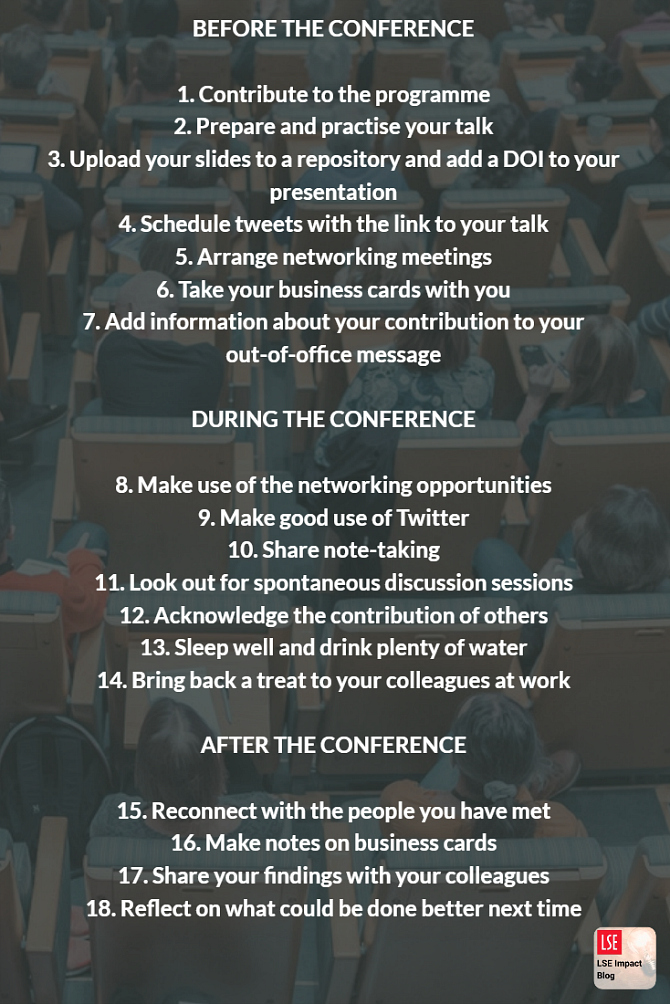
Going to an academic conference is an exciting opportunity to connect with like-minded individuals and exchange stimulating ideas. However, to make the most of a conference requires a lot of hard work before, during, and after the meeting itself. Marta Teperek provides a checklist of things to do at each of these stages.
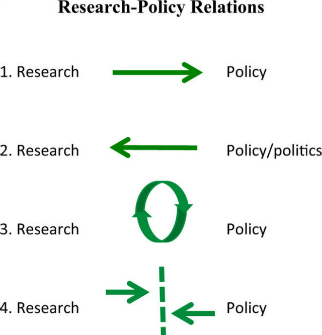
Christina Boswell and Katherine Smith set out four different approaches to theorizing the relationship between knowledge and policy and consider what each of these suggests about approaches to incentivising and measuring research impact.

In the first of what will be a monthly series, SAGE Publishing will open up articles in a specific area of public […]

Anna-Sigrid Keck and colleagues designed a structured doctoral program focused on transdisciplinary research and compared students’ publication patterns to students in traditional programmes. While rates of productivity were broadly similar, citation rates were found to be higher for transdisciplinary students, as were indicators of collaboration such as co-authorship.
Usha Haley shares findings of a recent Academy of Management report that sought to answer the impact of scholarly research. By surveying 20,000 members & conducting a selection of interviews, most scholars felt the present system of evaluation and rankings has led to an over reliance on traditional techniques and methodologies, and even “junk science”.
While Congress will have the final say on the fiscal year 2019 budget, the budget proposal offered by President Trump would cut the National Science Foundation’s spending on social science would be cut by more than 10 percent.

Recently Holly Campbell, a student from University College London, won the EGRG Undergraduate Dissertation Prize . We reached out to Holly to find out a little bit more about her award-winning dissertation, entitled ‘Moments of Progress: An exploration of the interaction between female enterprise and patriarchal norms in Selcuck, Turkey.’

Euan Adie, the founder of Altmetric and later of Overton, discusses the reasons the led to Overton’s focus on showing researchers how […] Here’s a couple of quick questions for you. What is the smallest of the eight discipline-based directorates at the United States’ National […] Sage’s 10-Year Impact Awards recognize academic papers appearing in Sage-published journals that have achieved lasting impact. The winning papers are the most […] I was adding some final flourishes on the topic of ‘iatrocracy’ to my forthcoming book with Natewindé Sawadogo – Sickness and Social […] How is AI changing the shape and space of higher education? Critical thinking continues to rank highly among key skills and attributes […] My colleagues and I recently spoke with a group of talented, interesting students who just completed their first year of college about […]
EXPLORE
Impact

Quick Insight: Euan Adie on Getting Academics Credit for Their Impact
READ MORE

NSF’s Embattled SBE Directorate Shown as Agency’s Policy Heavyweight
READ MORE

Sage’s 10-Year Impact Awards Capture Longer-Term Significance
READ MORE
Innovation

AI and ‘Iatrocracy’ – A Cautionary Tale
READ MORE

The Critical Student: How GenAI Reshapes Critical Skills and Higher Education’s Role Preparing Students For It
READ MORE

AI Doesn’t Drive Student Cheating. It Just Hitches a Ride
READ MORE