



Could Distributed Peer Review Better Decide Grant Funding?
The landscape of academic grant funding is notoriously competitive and plagued by lengthy, bureaucratic processes, exacerbated by difficulties in finding willing reviewers. Distributed […]
Hamish Robertson and Joanne Travaglia argue that big data quantification is now not only a mechanism for extracting information but has become an idea with social and political power in its own right. The lack of critique of quantitative methods and their application contributes to the existing and potentially coercive power of digital information systems and their attendant methods, and enhances the potential for collateral damage.

Developing an effective response to sexual harassment in the academic industry — by no means a new phenomenon, notes Robert Dingwall — requires us to consider questions about institutional memory, occupational cultures, and organizational silos, rather than badly behaved individuals.

The Division of Behavioral and Social Sciences and Education, or DBASSE, of the National Academies of Sciences, Engineering and Medicine has an idea for giving social science a little extra oomph on the policy front — giving a gift to the Hauser Policy Impact Fund.

By drawing on a plethora of psychological and sociological research, marketers subtly give us permission to buy and not to think too much, or too deeply, about why we’re buying. Not thinking all the time is a very efficient way for us to get by. It conserves energy, and allows us to live relatively easily by responding to our psychological predispositions, social norms, and general cognitive imperfections.
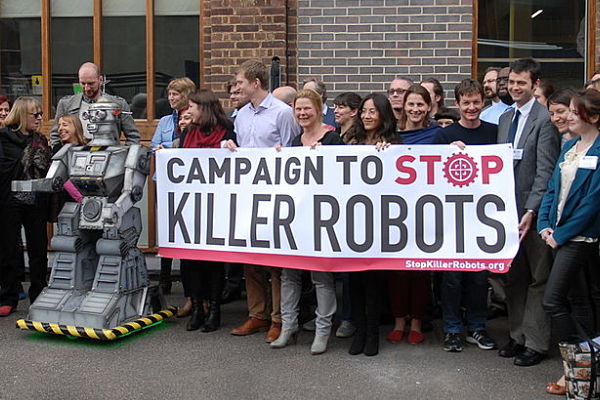
The big questions posed by our digital future sit at the intersection of technology and ethics. This is complex territory that requires input from experts in many different fields, including the social sciences, if we are to navigate it successfully. A new report makes an effort to give a first draft of that necessary input.
The applications of big data provide a very mixed picture about its uses and abuses, in government, academe and private industry. And while where you stand on the net impact depends, as the cliche goes, on where you sit, a panel at the recent ESRC Festival of Social Science came out qualitatively optimistic about the future.
The last few weeks have seen a growing public debate about the pay packages of Britain’s academic CEOs. The vice chancellors at a number of universities, including Birmingham, Bath, Bath Spa and others, have come under heavy pressure to justify salaries that far exceed £100,000, Oddly, all the arguments for and against this start with the assumption that universities are just like any other business.
The House and Senate approved their respective versions of a tax reform package (the Tax Cuts and Jobs Act). The House also approved the Protecting Seniors Access to Medicare Act, the Community Health and Medical Professionals Improve Our Nation Act, and the 21st Century Flood Reform Act. The House and Senate also cleared the final House-Senate conference report to the fiscal year 2018 National Defense Authorization Act.

Euan Adie, the founder of Altmetric and later of Overton, discusses the reasons the led to Overton’s focus on showing researchers how […] Here’s a couple of quick questions for you. What is the smallest of the eight discipline-based directorates at the United States’ National […] Sage’s 10-Year Impact Awards recognize academic papers appearing in Sage-published journals that have achieved lasting impact. The winning papers are the most […] I was adding some final flourishes on the topic of ‘iatrocracy’ to my forthcoming book with Natewindé Sawadogo – Sickness and Social […] How is AI changing the shape and space of higher education? Critical thinking continues to rank highly among key skills and attributes […] My colleagues and I recently spoke with a group of talented, interesting students who just completed their first year of college about […]
EXPLORE
Impact

Quick Insight: Euan Adie on Getting Academics Credit for Their Impact
READ MORE

NSF’s Embattled SBE Directorate Shown as Agency’s Policy Heavyweight
READ MORE

Sage’s 10-Year Impact Awards Capture Longer-Term Significance
READ MORE
Innovation

AI and ‘Iatrocracy’ – A Cautionary Tale
READ MORE

The Critical Student: How GenAI Reshapes Critical Skills and Higher Education’s Role Preparing Students For It
READ MORE

AI Doesn’t Drive Student Cheating. It Just Hitches a Ride
READ MORE