


Could Distributed Peer Review Better Decide Grant Funding?
The landscape of academic grant funding is notoriously competitive and plagued by lengthy, bureaucratic processes, exacerbated by difficulties in finding willing reviewers. Distributed […]

Republican-penned legislation that among other things cuts in half National Science Foundation funding for social science research passed the House of Representatives today.
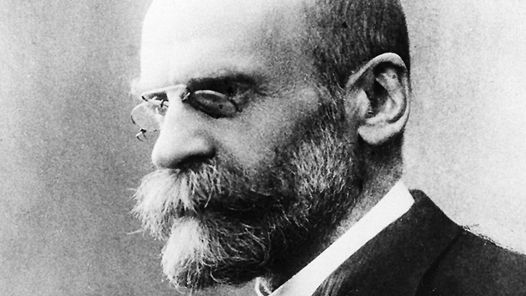
In this Social Science Bites podcast, social theorist Steven Lukes tells interviewer Nigel Warburton how Émile Durkheim’s exploration of issues like labor, suicide and religion proved intriguing to a young academic and enduring for an established one.
Options for changing legislation that would almost halve social science funding from the National Science Foundation are narrowing.

There is no point in improving the innovation pipeline for antibiotics, argues Robert Dingwall, if the drugs that come out at the end all fall into the same chaotic patterns of use as today.
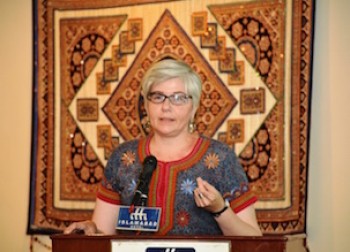
Paula Kantor, an American social scientist working to improve the lot of women and children in Afghanistan, was among 13 civilians killed Thursday in an attack on a guesthouse in Kabul.

The National science Foundation sees a number of contradictions in the funding reauthorization bill known as America COMPETES that it reckons would reduce the nation’s competitiveness.

In a society in which the remit of critical public debate is narrowing, in which protest and dissent are increasingly being criminalised, in which public space is being supplanted by private and commercial space, and in which the meaning of democracy is now altogether questionable, critically and politically engaged scholars may come to be figures of suspicion.

Combining a little detective work on what some says — even more so than how they say it — gives an advantage in detecting a liar.
People often see science as a world apart: cool, rational and untouched by persuasion or performance. In this view, scientists simply discover […] “Research impact” means different things to different people. Some refer broadly to how science changes behaviors, beliefs, or practices outside academic institutions. […] One researcher studies how war affects children, another took a literal worm’s eye view to examine rural development, while two others scrutinized […] David Canter considers informal places where people socialize, suggesting they’re an arena ChatGPT and other LLMs can’no’t replicate. As someone who lives […] It’s become cliche since Clive Humbly coined it in 2006, but data is indeed the new oil. It’s a mantra repeated by […] In September 2025, The Guardian reported about a lawyer in Australia having faced sanctions due to false citations. These citations were not […]
EXPLORE
Impact

Scientists Should Keep in Mind It’s Called the ‘Marketplace of Ideas’ for a Reason
READ MORE

Survey Finds Social Scientists Feel Unsupported in Seeking Societal Impact
READ MORE
Canada’s SSHRC Names 2025 Impact Winners
READ MORE
Innovation

Reaching Parts to Which AI Has No Access
READ MORE

Andrea Medina-Smith on Making Research Data More FAIR
READ MORE

A Status Check on Hallucinated Case Law Incidents
READ MORE