

Could Distributed Peer Review Better Decide Grant Funding?
The landscape of academic grant funding is notoriously competitive and plagued by lengthy, bureaucratic processes, exacerbated by difficulties in finding willing reviewers. Distributed […]

The evidence-based policymaking movement has grown substantially over the past 25 years in the United States. Government officials, researchers, and the public […]

Political economist and journalist Will Hutton, author of the influential 1995 book The State We’re In, offers a state-of-the-field report on the social sciences in this Social Science Bites podcast.
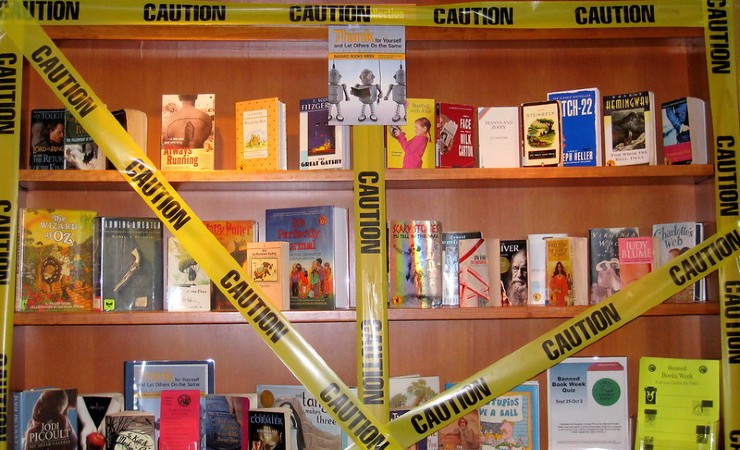
While book bans themselves remain sadly frequent across the United States, increasingly those efforts have zeroed in on campuses.
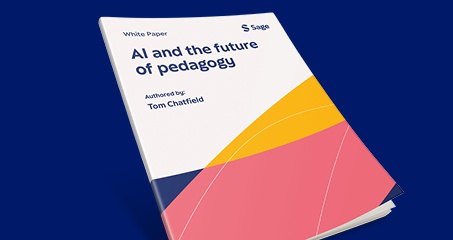
SAGE’s 2022 pedagogy survey, building on prior annual surveys launched in 2020 and repeated in 2021, show some exciting developments in faculty […]
Randomized controlled trials (RCTs) have historically been regarded as the gold standard for evaluating medical interventions. Evidence-based medicine (EBM) developed during the […]

Think of a time when you felt vulnerable. Perhaps you were in a hospital corridor, or an exam hall, about to be tested. Now, focus on the building you were in. What if, without you knowing, the design of that space was affecting you?

The Breakthrough Prize Foundation announced a $3 million donation to a group of scientific organizations aiming to rebuild global scientific infrastructure in Ukraine on Oct. 24. The U.S. National Academy of Sciences (NAS) and the Polish Academy of Sciences will lead the organizations, which will include groups from Ukraine, Germany, the United Kingdom, Denmark, France and Australia.
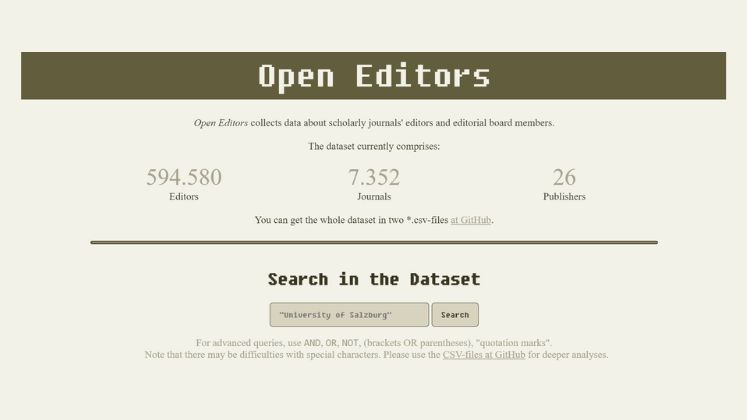
There is little available information about aggregate patterns of scholarly journal editorships. This may change soon, as Andreas Nishikawa-Pacher writes, thanks to a novel dataset created in collaboration with Kerstin Shoch and Tamara Heck that provides new insights into the landscape of journal editing.
People often see science as a world apart: cool, rational and untouched by persuasion or performance. In this view, scientists simply discover […] “Research impact” means different things to different people. Some refer broadly to how science changes behaviors, beliefs, or practices outside academic institutions. […] One researcher studies how war affects children, another took a literal worm’s eye view to examine rural development, while two others scrutinized […] David Canter considers informal places where people socialize, suggesting they’re an arena ChatGPT and other LLMs can’no’t replicate. As someone who lives […] It’s become cliche since Clive Humbly coined it in 2006, but data is indeed the new oil. It’s a mantra repeated by […] In September 2025, The Guardian reported about a lawyer in Australia having faced sanctions due to false citations. These citations were not […]
EXPLORE
Impact

Scientists Should Keep in Mind It’s Called the ‘Marketplace of Ideas’ for a Reason
READ MORE

Survey Finds Social Scientists Feel Unsupported in Seeking Societal Impact
READ MORE
Canada’s SSHRC Names 2025 Impact Winners
READ MORE
Innovation

Reaching Parts to Which AI Has No Access
READ MORE

Andrea Medina-Smith on Making Research Data More FAIR
READ MORE

A Status Check on Hallucinated Case Law Incidents
READ MORE