

Could Distributed Peer Review Better Decide Grant Funding?
The landscape of academic grant funding is notoriously competitive and plagued by lengthy, bureaucratic processes, exacerbated by difficulties in finding willing reviewers. Distributed […]
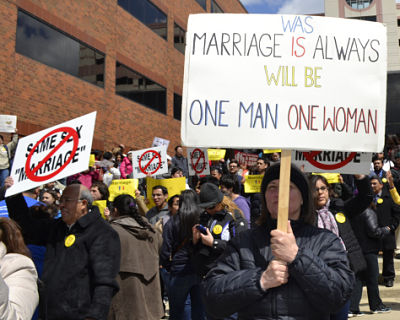
A friend of the court brief just filed by the American Sociological Association in defense of legalizing gay marriage offers a perch for observing how scholarly organizations sometimes weigh in when matters of public policy reach the courtroom.

Whether it’s the DREAM Act in the United States or the crackdown sought by the UK Visas and Immigration in Britain, universities are becoming a flashpoint of immigration policy.

Hoax papers, whether meant as a corrective demonstration or for more malign purposes, are a high-profile issue in academic publishing. But Achilleas Kostoulas argues that something more pernicious derived from a ‘culture of accountability’ is dogging the industry.

[We are pleased to welcome Dr. Alexander Benlian. His article titled “Are We Aligned…Enough? The Effects of Perceptual Congruence Between Service Teams and […]
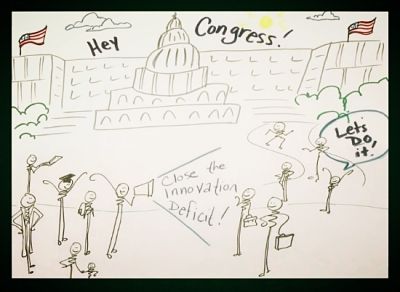
With a little more wiggle room in the U.S. budget this year, proponents of strong federal support for R&D and higher education are trying to get their message out about America’s lagging innovation. Social science and the STEM fields are making common cause in the campaign.

An informative title for an article or chapter maximizes the likelihood that your audience correctly remembers enough about your arguments to re-discover what they are looking for. Without embedded cues, your work will sit undisturbed on other scholars’ PDF libraries, or languish unread among hundreds of millions of other documents on the Web. That must be what what we want, based on on what we do.
Interested in developing your marketing instruction? Check out the Journal of Marketing Education‘s new Editor’s Choice collection titled “Evidence-Based Methods for Improving […]

In a study drawn from the world of book awards, two academics suggest that overt and high-profile recognition can reduce the public’s perception of a winning work.
When people trust science, they can make better decisions, follow helpful rules and work together on big problems like health, climate change […] Do you know a social or behavioral science researcher whose work resonates across disciplines and which has made a significant impact in […] Please note: this contest has now closed. The winner will be contacted in due course. This November, Sage and Overton invite you to share the unexpected […] The latest generation of artificial intelligence models is sharper and smoother, producing polished text with fewer errors and hallucinations. As a philosophy […] In a new white paper by Tom Chatfield, the philosopher of tech and critical thinking outlines a practical roadmap for integrating artificial intelligence into […] Distance learning far precedes the digital age. Before online courses, people relied on print materials (and later radio and other technologies) to […]
EXPLORE
Impact

There Is a Cost to Being Honest About Science
READ MORE
Outstanding Social and Behavioral Scientists Sought for Sage-CASBS Award
READ MORE
Share Your Most Surprising Policy Citation for Chance to Win $500 [Closed]
READ MORE
Innovation

An AI Authorship Protocol Aims to Sharpen a Sometimes-Fuzzy Line
READ MORE

A Box Unlocked, Not A Box Ticked: Tom Chatfield on AI and Pedagogy
READ MORE

AI Gaming of Some Online Courses Threatens Their Credibility
READ MORE