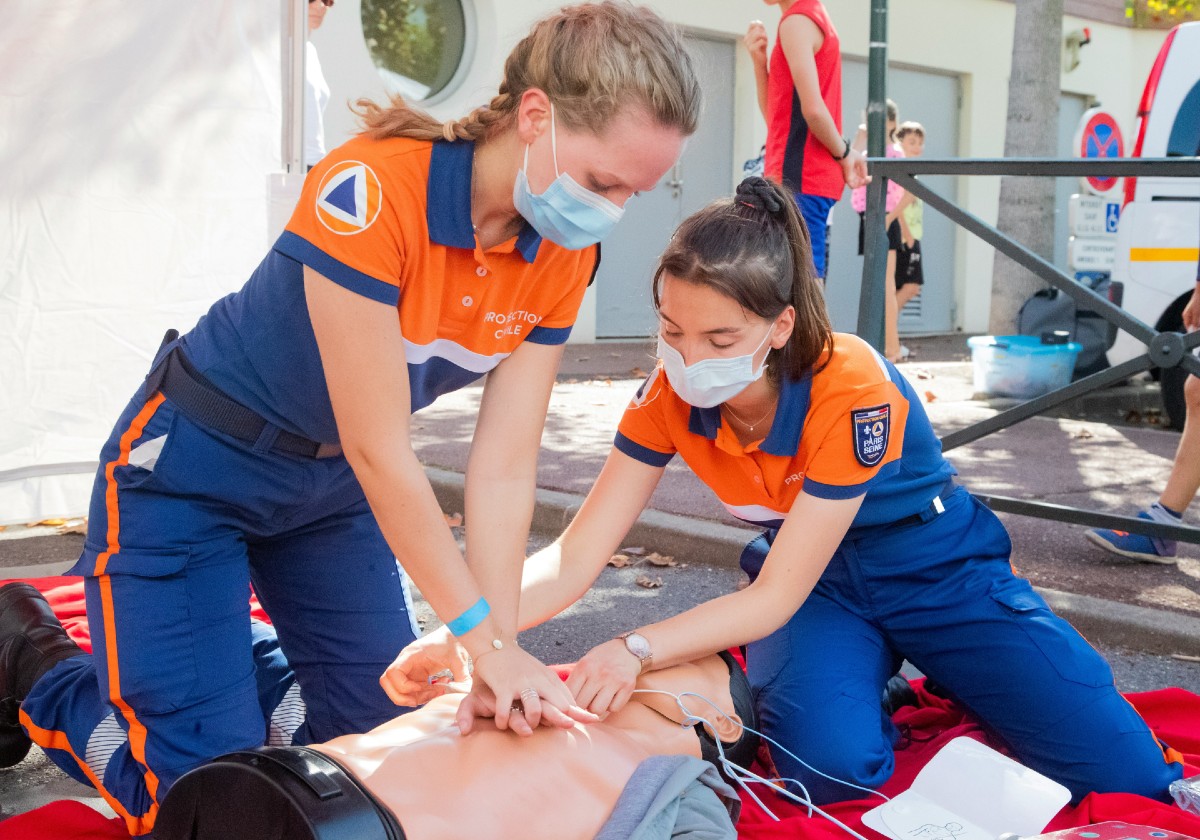
Eleventh Edition of The Evidence: Why Don’t CPR Dummies Have Breasts?
In this month’s issue of The Evidence newsletter, Josephine Lethbridge examines the overlooked gender bias in CPR training equipment.
While attending mandatory Basic Life Support training, healthcare assistant Jess Noulton noticed something troubling: CPR dummies, commonly known as “Annie,” lack female anatomical features despite being modelled after a woman.
Upon hearing the instructor use female pronouns to describe the manikin’s chest, Noulton felt compelled to ask, “Where are her breasts? If we’re calling her a she, why doesn’t she present as female?”
She learned that the first CPR dummy, designed using the death mask of a young woman believed to have drowned in Paris, was called Resusci Annie. And from that point onwards, the name stuck – even though most of the dolls available today resemble a slim, white, adult man.
A new study found that 95 percent of CPR manikins available for purchase are flat-chested; of the 20 dummies examined, only one had breasts, and only one other model had a breast overlay.
This absence is not merely a design oversight. Rather, it has significant implications for real-world medical outcomes. Research indicates that women are less likely to receive CPR from bystanders and have markedly lower survival rates in cardiac arrest situations. This disparity is partly attributed to the lack of training on female bodies, leading to improper technique when performing CPR on women.
Researcher Simone McCarthy explains how financial pressures have contributed to this inequality, as “corporations have a primary objective to maximize profits and to often act in the interests of the company.” Better policy design, argues McCarthy, is vital in getting to grips with the issue.
But what steps can we take to help tackle these deep-rooted disparities in our social and economic systems? How can we advocate for higher quality emergency care for women?
Read this month’s full newsletter to learn how we can address gender biases in medical practice and CPR training in our communities, workplaces, and in policy. An archive of past issues can be accessed through Social Science Space.