Quick Insight: Carrie Hill on the Broader Effects of Censorship in Higher Education

Carrie Hill, digital scholarship librarian at Auburn University Libraries, has seen firsthand how censorship is affecting higher education. In this Quick Insight, Hill discusses the ripple effects of censorship both within and beyond libraries and universities. She specifically calls out pre-emptive actions that do a censors work for them; “when you’re in that environment of fear and you have these aggressive voices, there’s a tendency to self-censor and to silence something that you would otherwise be speaking about.”
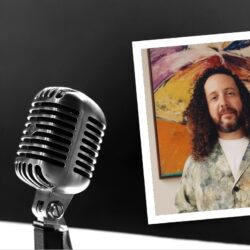
Hi, I’m Carrie Hill and I’m the digital scholarship librarian at Auburn University Libraries.
So I think one way it’s showing up is in library research can be one way. Recently I wrote a book chapter and I had people asking me if I wasn’t afraid to have it being published, if I was okay with the idea that it might get put on a list. And so there’s just sort of an atmosphere of fear around some of the research and publishing that we’re doing. So there’s fear there just as a librarian, but then also faculty are facing that in an even bigger way, because especially where I’m from, there are students who are putting together databases of professors who have “dangerous views,” controversial views, and that can be very frightening. It’s a very intimidating thing.
And then finally, I think self-censorship is one thing that really ties that together, just because when you’re in that environment of fear and you have these aggressive voices, there’s a tendency to self-censor and to silence something that you would otherwise be speaking about because of very valid fears of what could happen to you if you are loud about what you are wanting to say and what you’re wanting to research and the questions that you’re wanting to ask.
And those stories that you’re looking into, that research that you’re trying to do is important, but no matter how much you feel that way, it still can be hard to continue in that work when you may not be supported by your university, when people may attack you personally or professionally. So I think the atmosphere of fear and that tendency to self-censor because of it is one big way that it’s showing up in academic libraries.
I think that censorship is affecting all of us because it affects our communities. So even if it isn’t affecting you personally as a researcher, as a person, it is affecting who wants to come to your community. It’s affecting your library and who you can attract and retain in terms of employment. Because even if it’s not affecting you, marginalized groups are disproportionately affected by all of this. And so you’re very likely to be missing out on quality applicants, quality talent being attracted to your institution because people are afraid to come and live there.
So because people are afraid of what it would mean to live in a place that’s basically a small town in a deep red state, you might have trouble attracting people who would be a really great match for the role at your library, but don’t see themselves being able to live where your library is located. So in that way, this affects all of us. This affects anyone that’s in a place where censorship is really happening and where that atmosphere of fear is being created because library workers are important and attracting and importantly retaining people who contribute to the mission of your library is definitely something that’s affected, whether you realize it or not, because you can’t realize what great employee you weren’t able to get.