




Could Distributed Peer Review Better Decide Grant Funding?
The landscape of academic grant funding is notoriously competitive and plagued by lengthy, bureaucratic processes, exacerbated by difficulties in finding willing reviewers. Distributed […]

In this second of a series of interviews conducted by Social Science Space’s Daniel Nehring, Ewan Mackenzie explains why he joined the May 4 ‘Reclaiming’ event at Newcastle, discusses hallmarks of the modern academic institutions and details some of the events that lead him to believe in both resilience and resistance.

There is no doubt that good communications and framing research for your audience is important to influencing policy and having impact. But shouldn’t we be aiming higher than producing and packaging research that simply meets the demands of policy actors? James Georgalakis argues that research and researchers need to challenge dominant paradigms and expose inconvenient truths.

Tina Basi and Mona Sloane argue that REF 2021 offers the opportunity to frame a discussion on the purpose of universities that is less focused on economics and more focused on people and public engagement, returning closer to the Humboldtian model of higher education.

In this debut interview conducted by Social Science Space’s Daniel Nehring, Audrey Verma explains her inspirations in organizing the forum, how her claims of the feminization and racialization of higher ed are borne out in academe, and why critiques of neoliberal impulses in universities have had so little traction in the past four decades.
In the coming weeks, Social Science Space will publish a series of interviews on academic capitalism and academic resistance. These interviews pertain to the event “Between the discourse of ‘resilience’ and death by committee – Reclaiming collective spaces for academic resistance,” organised by the Early Career Forum of the British Sociological Association and hosted by Newcastle University.

Increasingly, says Robert Dingwall, UK universities are taking a more paternal role in the lives of their students, taking — or perhaps resuming — more active roles in addressing their charges’ mental health, criminal conduct and self-care.
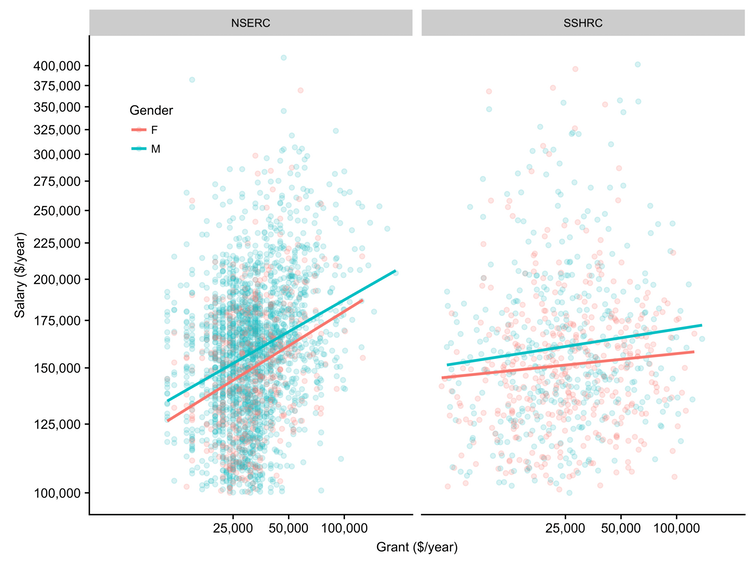
There is still a gender pay gap at nearly all Canadian universities, with especially big gaps at Canada’s 15 research-intensive universities, Megan Frederickson shows. It’s not accounted for by greater talent or solely the ghost of sexism past.

The former president of the University of Saskatchewan argues that freedom of expression is under attack in Canada’s universities through an accumulation of episodes that diminish its significance and through a vector of intellectual laziness accompanied by ideology and anger.

The Royal Swedish Academy of Sciences has awarded this year’s Nobel Prize in Economic Sciences to the American economists Robert E. Hall […] Four Americans working in the social and behavioral sciences are among the 20 people named MacArthur Fellows this year. Recipients may be […] Euan Adie, the founder of Altmetric and later of Overton, discusses the reasons the led to Overton’s focus on showing researchers how […] The following is an adapted extract from The Cultural Industries, fifth edition, by David Hesmondhalgh. The increasing presence of information technology (IT) […] Developers of AI data centers have a public trust problem. According to multiple surveys, a majority of Americans say they would oppose […] I was adding some final flourishes on the topic of ‘iatrocracy’ to my forthcoming book with Natewindé Sawadogo – Sickness and Social […]
EXPLORE
Impact

Economic Peaks, Troughs and This Year’s Nobelists in Economics
READ MORE

Four From Social Science World Receive 2026 MacArthur Fellowships
READ MORE

Quick Insight: Euan Adie on Getting Academics Credit for Their Impact
READ MORE
Innovation

IT Giants and Their Operations: Should We Be Concerned?
READ MORE

What We Miss When We Study Public Trust with Surveys Alone
READ MORE

AI and ‘Iatrocracy’ – A Cautionary Tale
READ MORE