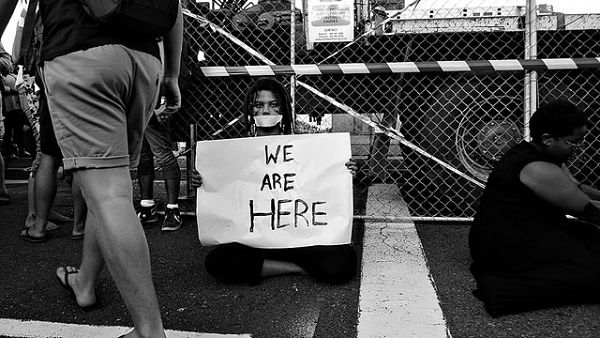


Could Distributed Peer Review Better Decide Grant Funding?
The landscape of academic grant funding is notoriously competitive and plagued by lengthy, bureaucratic processes, exacerbated by difficulties in finding willing reviewers. Distributed […]
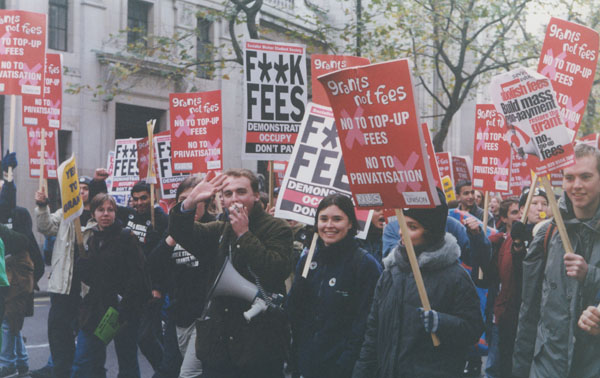

An introduction to a series of short essays exploring contemporary issues of academic freedom from a range of perspectives, focusing both on British and international trends.

The decolonization debate in African universities raises critical issues about the relationship between power, knowledge and learning, argues Ahmed Essop. It also provides an opportunity to rethink the role of universities in social and economic development and in fashioning a common nation.

Recent findings suggest interdisciplinary research is less likely to be funded than discipline-based research proposals, reports Gabriele Bammer, who argues different review processes may well be required to do justice to these different kinds of interdisciplinarity.
Teacher observations are both costly and time intensive, but perhaps it’s time to invest in better teacher evaluation to get better student results. So argues Robert Pianta, who has personally helped develop some measures that might achieve such high hopes, in a an article in the journal PIBBS..
Researchers decided to conduct behavioral testing on competition and the process of peer review. What they learned offers some prescriptions for improving peer review going forward.
The new report of the REF from Lord Stern hopefully may shift the spotlight away from individual researchers themselves and onto the organizational practice of their universities, argues Richard Watermeyer.

Universities need faculty who are dedicated to teaching, but the most persuasive argument in support of tenure – its role in protecting academic freedom– has come to be too narrowly associated with research.

German-born Daniel Nehring insists that the upcoming Brexit vote is founded less on reason and more on xenophobia, and argues that the toxic atmosphere surrounding the vote is already doing harm to Britain’s fabled academic enterprise.

The Royal Swedish Academy of Sciences has awarded this year’s Nobel Prize in Economic Sciences to the American economists Robert E. Hall […] Four Americans working in the social and behavioral sciences are among the 20 people named MacArthur Fellows this year. Recipients may be […] Euan Adie, the founder of Altmetric and later of Overton, discusses the reasons the led to Overton’s focus on showing researchers how […] The following is an adapted extract from The Cultural Industries, fifth edition, by David Hesmondhalgh. The increasing presence of information technology (IT) […] Developers of AI data centers have a public trust problem. According to multiple surveys, a majority of Americans say they would oppose […] I was adding some final flourishes on the topic of ‘iatrocracy’ to my forthcoming book with Natewindé Sawadogo – Sickness and Social […]
EXPLORE
Impact

Economic Peaks, Troughs and This Year’s Nobelists in Economics
READ MORE

Four From Social Science World Receive 2026 MacArthur Fellowships
READ MORE
Quick Insight: Euan Adie on Getting Academics Credit for Their Impact
READ MORE
Innovation

IT Giants and Their Operations: Should We Be Concerned?
READ MORE

What We Miss When We Study Public Trust with Surveys Alone
READ MORE

AI and ‘Iatrocracy’ – A Cautionary Tale
READ MORE