
Could Distributed Peer Review Better Decide Grant Funding?
The landscape of academic grant funding is notoriously competitive and plagued by lengthy, bureaucratic processes, exacerbated by difficulties in finding willing reviewers. Distributed […]

It is not surprising that in the midst of the COVID-19 crisis, aside from infection fears, gatherings of people on beaches, public transport and in parks were met with concern and even alarm. Crowds are associated with trouble. But crowds can be both destructive and constructive forces.
In an excerpt from Together Apart, three officials with Public Health England argue that he consequences of shared identity, which have been shown to be so important in building an effective community response to the pandemic — the mutual trust, influence and support — are equally important when it comes to community–authority relations.
While the pandemic is different other emergencies, there are important similarities: there is a mortal threat which can create fear; there is not enough protection for everyone under threat; and human action can mitigate (or exacerbate) that threat.
Countries across the world have been turning to behavioral science in the fight against coronavirus. In May, The New Scientist proclaimed that ‘behavioral science is […]

Given the import of its subject matter, SAGE Publishing (the parent of Social Science Space) had agreed to make an e-book o the psychology of COVID-19 freely available.

In The Scopus Diaries and the (Il)Logics of Academic Survival, Abel Polese helps to demystify many of the inner workings of academia for researchers and the challenges that these present through a FAQ format that readers can dip in and out of to explore topics ranging from organizing a panel at a conference to arranging your bibliography and writing good abstracts. This is a useful eye-opening guide for new academics that emphasizes the value of setting one’s own goals and personal boundaries when navigating academia, writes Hind Hussein.
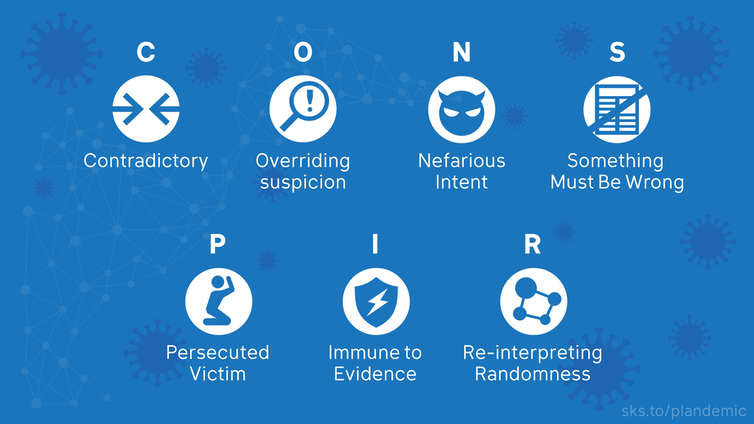
As scholars who research how to counter science misinformation and conspiracy theories, we believe there is also value in exposing the rhetorical techniques used in the viral video Plandemic. There are seven distinctive traits of conspiratorial thinking. Plandemic offers textbook examples of them all.
The big idea The scientific community worldwide has mobilized with unprecedented speed to tackle the COVID-19 pandemic, and the emerging research output […]
Jürgen Habermas, a globally known social theorist whose explorations of democracy, validity and communication have gained new prominence in the current moment, […] People often see science as a world apart: cool, rational and untouched by persuasion or performance. In this view, scientists simply discover […] “Research impact” means different things to different people. Some refer broadly to how science changes behaviors, beliefs, or practices outside academic institutions. […] David Canter considers informal places where people socialize, suggesting they’re an arena ChatGPT and other LLMs can’no’t replicate. As someone who lives […] It’s become cliche since Clive Humbly coined it in 2006, but data is indeed the new oil. It’s a mantra repeated by […] In September 2025, The Guardian reported about a lawyer in Australia having faced sanctions due to false citations. These citations were not […]
EXPLORE
Impact

Jürgen Habermas, 1929-2026: Exponent of the Public Sphere
READ MORE

Scientists Should Keep in Mind It’s Called the ‘Marketplace of Ideas’ for a Reason
READ MORE

Survey Finds Social Scientists Feel Unsupported in Seeking Societal Impact
READ MORE
Innovation

Reaching Parts to Which AI Has No Access
READ MORE

Andrea Medina-Smith on Making Research Data More FAIR
READ MORE

A Status Check on Hallucinated Case Law Incidents
READ MORE