

Could Distributed Peer Review Better Decide Grant Funding?
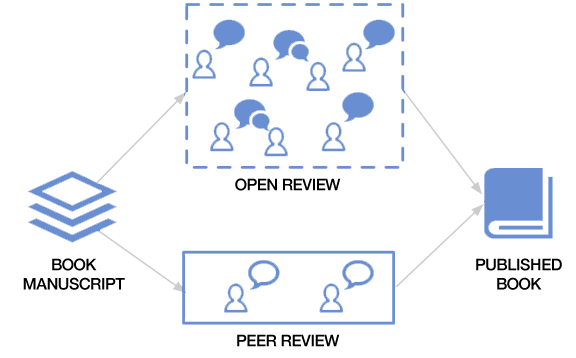
The landscape of academic grant funding is notoriously competitive and plagued by lengthy, bureaucratic processes, exacerbated by difficulties in finding willing reviewers. Distributed […]
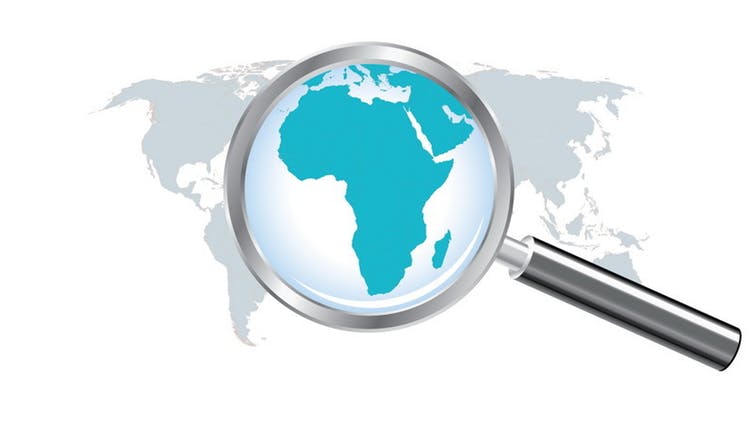
Africa has a real challenge when it comes to using academic research and evidence to design policies. “The problem is twofold,” says author Ruth Stewart, “policymakers sometimes don’t call on available research, while for their part academics don’t know how to engage with policymakers.” But this isn’t stopping the continent from taking strides in the right direction.

Herbert Spencer’s examination of ‘militant’ societies, argues our Robert Dingwall, proves to be a cautionary tale for the present Chinese government and its attempts to micro-manage society through the ‘social credit’ scheme.
SAGE’s Ziyad Marar describes his recent time at the 2018 SciFoo and some of his impressions mingling with its 330 assembled scientists, technologists, writers and more (the largest ever SciFoo) and compares it to the first SciFoo he attended five years ago.

Graduate research candidates are the powerhouse of research in universities, yet many have reported feelings of isolation, burnout, and career uncertainty. Karen Barry reports on a study of Australian research candidates which found that increasing numbers are suffering from heightened levels of depression, anxiety, and stress, often citing reasons related to academia’s general work processes, such as writing or publishing research or maintaining motivation while working alone on a single topic.
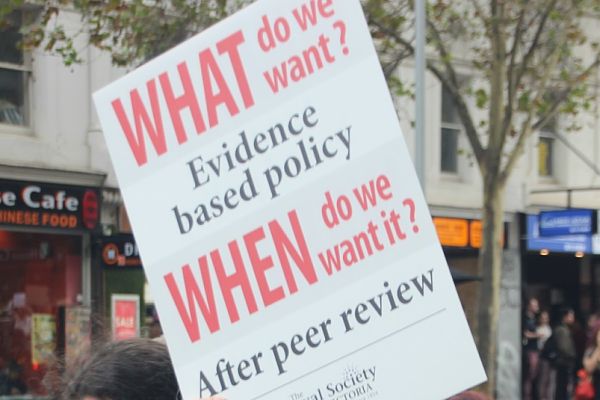
Ziyad Marar, the president of global publishing for SAGE, explains how SAGE’s values and its mission “to build bridges to knowledge” overlap with the intent of the United Kingdom’s Evidence Week, which takes place later this June.
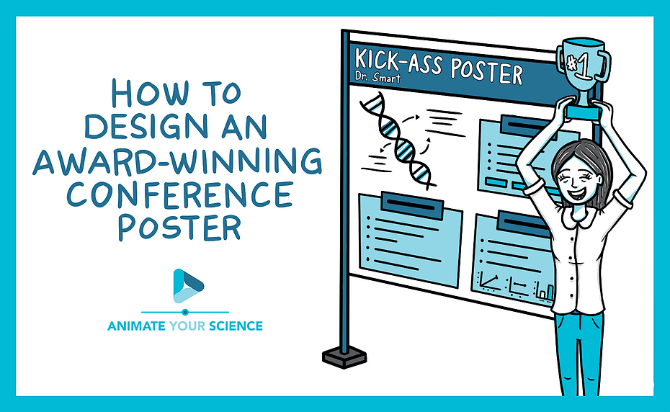
A good academic conference poster serves a dual purpose: it is both an effective networking tool and a way to communicate your research. But many academics fail to produce a truly visually arresting conference poster which make connections are lost. Tullio Rossi offers guidance on how to produce an outstanding conference poster.
Researches at the University of Florida’s Brechner Center for Freedom of Information have studied the rights of public employees when they speak with the news media. Here, they look specifically at professors at public universities in the United States and find there are broad protections – within limits.

A report from the National Association of Scholars takes on the reproducibility crisis in science. Not everyone views the group’s motives as pure.

The Royal Swedish Academy of Sciences has awarded this year’s Nobel Prize in Economic Sciences to the American economists Robert E. Hall […] Four Americans working in the social and behavioral sciences are among the 20 people named MacArthur Fellows this year. Recipients may be […] Euan Adie, the founder of Altmetric and later of Overton, discusses the reasons the led to Overton’s focus on showing researchers how […] The following is an adapted extract from The Cultural Industries, fifth edition, by David Hesmondhalgh. The increasing presence of information technology (IT) […] Developers of AI data centers have a public trust problem. According to multiple surveys, a majority of Americans say they would oppose […] I was adding some final flourishes on the topic of ‘iatrocracy’ to my forthcoming book with Natewindé Sawadogo – Sickness and Social […]
EXPLORE
Impact
Economic Peaks, Troughs and This Year’s Nobelists in Economics
READ MORE

Four From Social Science World Receive 2026 MacArthur Fellowships
READ MORE

Quick Insight: Euan Adie on Getting Academics Credit for Their Impact
READ MORE
Innovation

IT Giants and Their Operations: Should We Be Concerned?
READ MORE

What We Miss When We Study Public Trust with Surveys Alone
READ MORE

AI and ‘Iatrocracy’ – A Cautionary Tale
READ MORE












































































