



Could Distributed Peer Review Better Decide Grant Funding?
The landscape of academic grant funding is notoriously competitive and plagued by lengthy, bureaucratic processes, exacerbated by difficulties in finding willing reviewers. Distributed […]
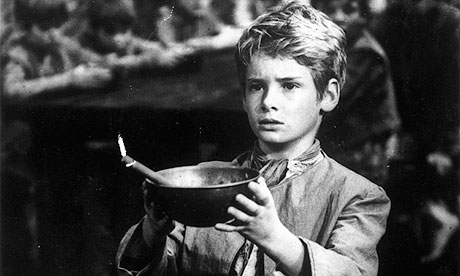
Unintended consequences and little practical improvement could result from England’s plan to give poor students priority in school placement, especially if schools can decide to opt in or out, argue Stephen Gorard and Rebecca Morris.
Contradictory diet advice is everywhere – Katy Perry’s acupunctured fish, Matthew McConaughey and the caveman diet, Gwyneth Paltrow’s macrobiotic meals. It seems […]

The signatories of the San Francisco Declaration on Research Assessment continue to explore ways to dethrone the reigning monarch of research assessment, the impact factor.

“America has achieved the distinction of being the country with the highest level of income inequality among the advanced countries,” prefaced economist […]

The latest attempt to show a machine can pass itself off as human relied a little too heavily on letter of Turing’s test and not its spirit.

On May 29, the National Science Foundation issued an Important Notice to Presidents of Universities and Colleges and Heads of Other National […]

Here’s a very ‘meta’ experiment for you: What behavioral insights can you gather at a global behavioral insights conference?

Social scientists don’t always study subjects whose actions please the authorities. Is the freedom to associate with these people for research purposes under attack? Should researchers have their own ‘shield law’?
Jürgen Habermas, a globally known social theorist whose explorations of democracy, validity and communication have gained new prominence in the current moment, […] People often see science as a world apart: cool, rational and untouched by persuasion or performance. In this view, scientists simply discover […] “Research impact” means different things to different people. Some refer broadly to how science changes behaviors, beliefs, or practices outside academic institutions. […] David Canter considers informal places where people socialize, suggesting they’re an arena ChatGPT and other LLMs can’no’t replicate. As someone who lives […] It’s become cliche since Clive Humbly coined it in 2006, but data is indeed the new oil. It’s a mantra repeated by […] In September 2025, The Guardian reported about a lawyer in Australia having faced sanctions due to false citations. These citations were not […]
EXPLORE
Impact

Jürgen Habermas, 1929-2026: Exponent of the Public Sphere
READ MORE

Scientists Should Keep in Mind It’s Called the ‘Marketplace of Ideas’ for a Reason
READ MORE

Survey Finds Social Scientists Feel Unsupported in Seeking Societal Impact
READ MORE
Innovation

Reaching Parts to Which AI Has No Access
READ MORE

Andrea Medina-Smith on Making Research Data More FAIR
READ MORE

A Status Check on Hallucinated Case Law Incidents
READ MORE