



Could Distributed Peer Review Better Decide Grant Funding?
The landscape of academic grant funding is notoriously competitive and plagued by lengthy, bureaucratic processes, exacerbated by difficulties in finding willing reviewers. Distributed […]

In June we will launch the latest Making the Case for the Social Sciences booklet, which highlights important recent longitudinal research into education, health and other social issues.

SAGE’s Global Publishing Director, Ziyad Marar talks with Nigel Warburton and David Edmonds about the one year anniversary of Social Science Bites.

The recent and on-going reforms of higher education are enforcing an individualisation of academic labour. That academics would gamely play along with such a system is astonishing.

Sociology is a brand. To survive or even thrive in the academic marketplace, sociology needs to take care of its image. But at what cost?
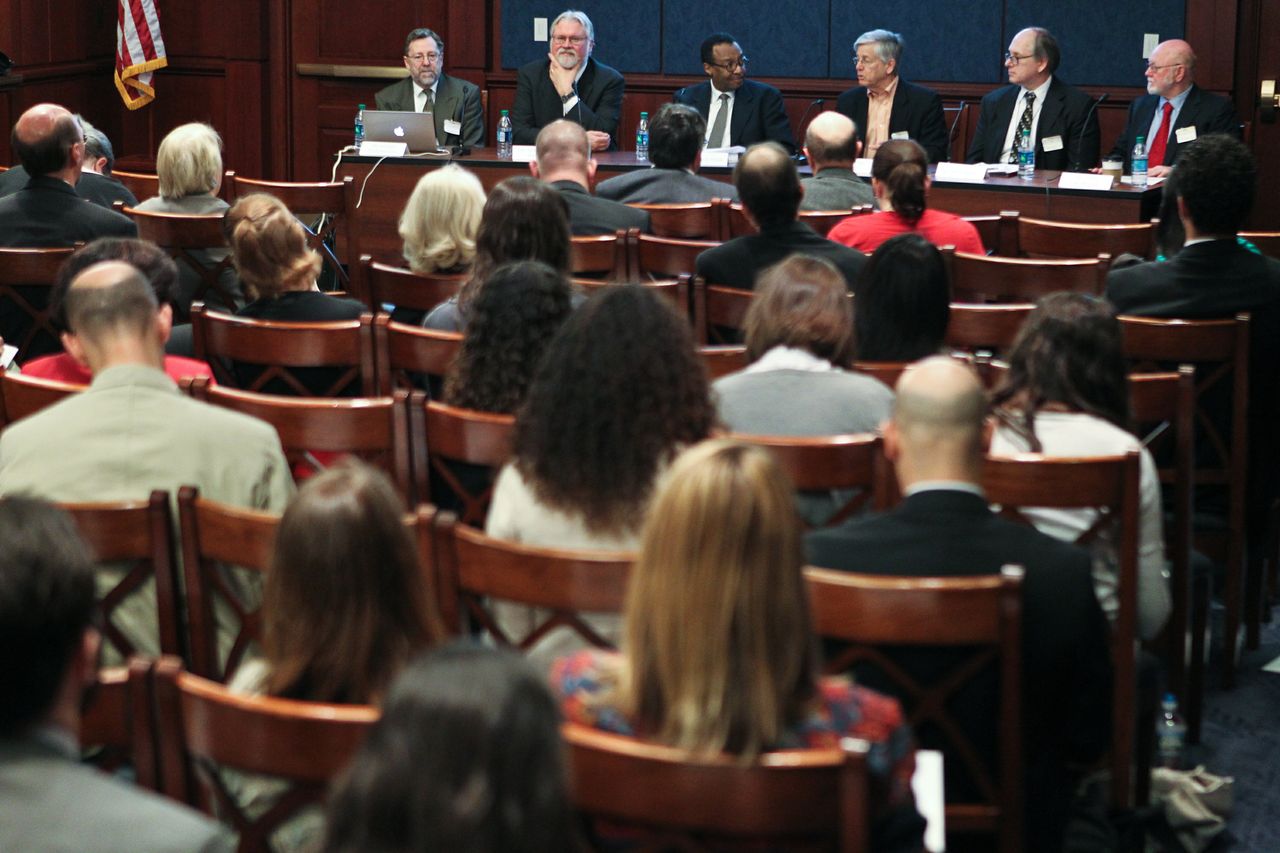
Last month The American Academy of Political and Social Science (AAPSS) put together a Congressional Briefing on the impact of falling response rates to social surveys and what can be done about it.

Survey researchers are increasingly unable to get people to respond to surveys. This is a real worry because nonresponse can lead to biased research and because nonresponse poses a significant threat to the federal statistical system in its entirety.

Federal surveys have been getting more expensive to administer, in part because the number of people who actually respond to surveys has been progressively declining.

The British Academy recently published a guide for students encouraging those studying the humanities and social sciences to become statistically savvy.

The Royal Swedish Academy of Sciences has awarded this year’s Nobel Prize in Economic Sciences to the American economists Robert E. Hall […] Four Americans working in the social and behavioral sciences are among the 20 people named MacArthur Fellows this year. Recipients may be […] Euan Adie, the founder of Altmetric and later of Overton, discusses the reasons the led to Overton’s focus on showing researchers how […] The following is an adapted extract from The Cultural Industries, fifth edition, by David Hesmondhalgh. The increasing presence of information technology (IT) […] Developers of AI data centers have a public trust problem. According to multiple surveys, a majority of Americans say they would oppose […] I was adding some final flourishes on the topic of ‘iatrocracy’ to my forthcoming book with Natewindé Sawadogo – Sickness and Social […]
EXPLORE
Impact

Economic Peaks, Troughs and This Year’s Nobelists in Economics
READ MORE

Four From Social Science World Receive 2026 MacArthur Fellowships
READ MORE

Quick Insight: Euan Adie on Getting Academics Credit for Their Impact
READ MORE
Innovation

IT Giants and Their Operations: Should We Be Concerned?
READ MORE

What We Miss When We Study Public Trust with Surveys Alone
READ MORE

AI and ‘Iatrocracy’ – A Cautionary Tale
READ MORE