



Could Distributed Peer Review Better Decide Grant Funding?
The landscape of academic grant funding is notoriously competitive and plagued by lengthy, bureaucratic processes, exacerbated by difficulties in finding willing reviewers. Distributed […]

The rich and diverse ways in which students and scholars of diverse national and cultural origins collaborate at British universities, argues Daniel Nehring, belie the economic reductionism currently fashionable in public debates about higher education.
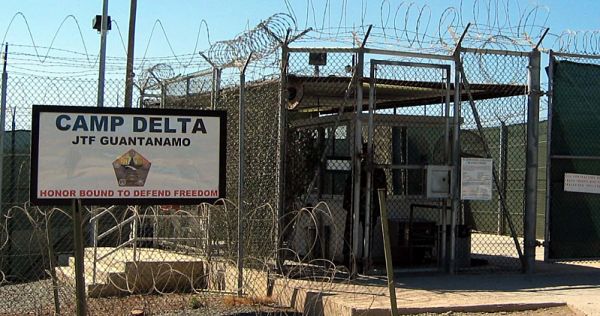
Game theory neatly — and sadly — predicted the futility of using torture to extract meaning information from terror suspects, neatly predicting the results of the recent U.S. Senate report years before its release.

In a cross-posting with Social Science Space partner Viva Voce podcasts, Helen Underhill at the University of Manchester describes how Egyptians living outside their native land respond to the political turmoil there, and how there is not single ‘Egyptian voice’ that speaks for them all.
Consciously we might be talking about the impending sustainability crisis, but unconsciously we find ways to actually maintain the status quo.

There is a genuine cost from ignoring lessons from social science in the fight against Ebola. What’s even sadder — these lessons were taught in blood three decades ago in the fights against AIDS. Are we ready for the next malady?

Behavioral scientists have seized on social media and their massive data sets as a way to quickly and cheaply figure out what people are thinking and doing. But some of those tweets and thumbs ups can be misleading.
Concerns about gender equity in academia are persistent and sadly not new. A recent paper details evidence that women may inadvertently contribute to gender disparities in conference presentations by requesting lower profile roles. What can be done to address that?

It’s not necessarily the type of peer review that makes an academic article scholarly, argues Christoper Sampson, but the transparency of how the conclusions were reached.

As part of his 2026 budget proposal, Andy Burnham, the United Kingdom’s prime minister, has called for “good growth in every postcode.” […] The Royal Swedish Academy of Sciences has awarded this year’s Nobel Prize in Economic Sciences to the American economists Robert E. Hall […] Four Americans working in the social and behavioral sciences are among the 20 people named MacArthur Fellows this year. Recipients may be […] The following is an adapted extract from The Cultural Industries, fifth edition, by David Hesmondhalgh. The increasing presence of information technology (IT) […] Developers of AI data centers have a public trust problem. According to multiple surveys, a majority of Americans say they would oppose […] I was adding some final flourishes on the topic of ‘iatrocracy’ to my forthcoming book with Natewindé Sawadogo – Sickness and Social […]
EXPLORE
Impact

A Conversation with Diane Coyle on Bridging Media, Government and Academe
READ MORE
Economic Peaks, Troughs and This Year’s Nobelists in Economics
READ MORE

Four From Social Science World Receive 2026 MacArthur Fellowships
READ MORE
Innovation

IT Giants and Their Operations: Should We Be Concerned?
READ MORE

What We Miss When We Study Public Trust with Surveys Alone
READ MORE

AI and ‘Iatrocracy’ – A Cautionary Tale
READ MORE