




Could Distributed Peer Review Better Decide Grant Funding?
The landscape of academic grant funding is notoriously competitive and plagued by lengthy, bureaucratic processes, exacerbated by difficulties in finding willing reviewers. Distributed […]

Recently, The Independent published a brief piece on the ‘slave-like’ working conditions of PhD students at UK universities. This sounds dramatic, but it’s hardly news – the problem has been around for years. The question arises why dissent did not emerge earlier and more forcefully.
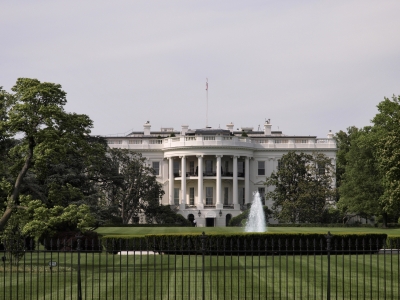
On May 9, the House of Representatives adopted a provision that would preclude the National Science Foundation (NSF) from supporting research in the field of political science.

Recently, the US House of Representatives passed off an amendment offered by Representative Jeff Flake (R-AZ) that would prohibit funding for the Political Science Program with the National Science Foundation. If enacted into law, this amendment would set an extraordinary and disturbing precedent in which Congress chooses which scientific disciplines should be funded and not funded within the NSF’s research portfolio.

We have reached a stage in the scientific understanding human behavior where very significant improvements in human wellbeing can be achieved.

While parts of Aditya Chakrabortty’s recent piece in the Guardian were sensible and informed, its central claim was unfair – that social science disciplines have been unable or unwilling to explore, explain, and confront the ‘Great Financial Crash’ of 2007-9

Across the world in the media, in policy, government discussions, and in our daily lives, there is evidence of social science at work. Whether it’s analysis of a cultural phenomenon like crime, or a major international concern such how climate change leads to changing lifestyles or inequality, social scientists help us understand cultures and behaviours.
Open Access to academic journal papers is a hot button issue. The UK government is in favour, along with major UK research […]

On 16 April, Aditya Chakrabortty wrote an article for the Guardian’s Comment is Free, arguing that social scientists have failed to step up and offer alternatives in the wake of the economic crisis. Here, Andrew Gamble FBA responds.

Jürgen Habermas, a globally known social theorist whose explorations of democracy, validity and communication have gained new prominence in the current moment, […] People often see science as a world apart: cool, rational and untouched by persuasion or performance. In this view, scientists simply discover […] “Research impact” means different things to different people. Some refer broadly to how science changes behaviors, beliefs, or practices outside academic institutions. […] David Canter considers informal places where people socialize, suggesting they’re an arena ChatGPT and other LLMs can’no’t replicate. As someone who lives […] It’s become cliche since Clive Humbly coined it in 2006, but data is indeed the new oil. It’s a mantra repeated by […] In September 2025, The Guardian reported about a lawyer in Australia having faced sanctions due to false citations. These citations were not […]
EXPLORE
Impact

Jürgen Habermas, 1929-2026: Exponent of the Public Sphere
READ MORE

Scientists Should Keep in Mind It’s Called the ‘Marketplace of Ideas’ for a Reason
READ MORE

Survey Finds Social Scientists Feel Unsupported in Seeking Societal Impact
READ MORE
Innovation

Reaching Parts to Which AI Has No Access
READ MORE

Andrea Medina-Smith on Making Research Data More FAIR
READ MORE

A Status Check on Hallucinated Case Law Incidents
READ MORE