



Could Distributed Peer Review Better Decide Grant Funding?
The landscape of academic grant funding is notoriously competitive and plagued by lengthy, bureaucratic processes, exacerbated by difficulties in finding willing reviewers. Distributed […]
From vaccinations to climate change, getting science wrong has very real consequences. But journal articles, a primary way science is communicated in […]

SAGE Publishing, the parent of Social Science Space, is expanding its SAGE Campus product from its original focus on online data science courses to now offer high […]
With nearly 2.5 quintillion bytes of data produced daily, how might we leverage the potential of data to address the socio-economic challenges […]

As COVID-19 forces the world in into a predominately digital state, censorship and the spread of misinformation have not been far behind. Our experiences dealing with […]

Would you like a deeper understanding of NSF’s Broader Impacts (BI) criterion? Would you like tips and strategies for addressing the BI […]
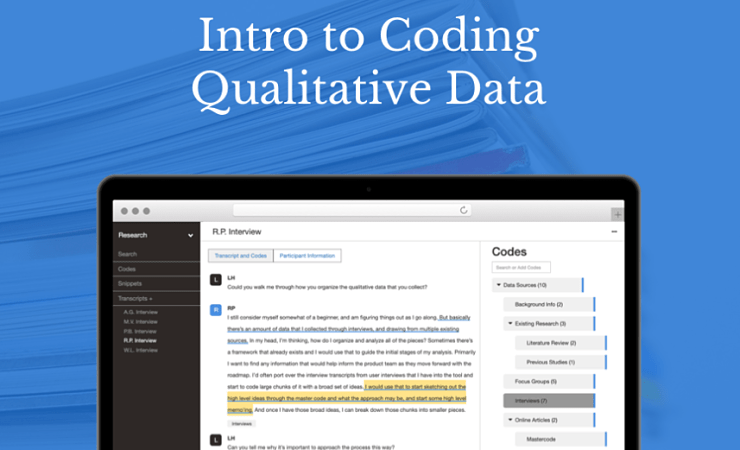
After conducting qualitative interviews, how do you analyze and make sense of the data? Join a free online tutorial to get an […]

A half-century of increasingly sophisticated research (e.g., on early childhood interventions, residential segregation, and neighborhood effects) and conceptual advances (e.g., critical race theory, intergroup relations, and stereotype threat) have given the country a much deeper understanding of inequality’s causes and consequences.

Picture a standard corporate meeting room, participants crowded around a video of multi-racial actors acting out hypothetical office scenarios. They fill out […]

The Royal Swedish Academy of Sciences has awarded this year’s Nobel Prize in Economic Sciences to the American economists Robert E. Hall […] Four Americans working in the social and behavioral sciences are among the 20 people named MacArthur Fellows this year. Recipients may be […] Euan Adie, the founder of Altmetric and later of Overton, discusses the reasons the led to Overton’s focus on showing researchers how […] The following is an adapted extract from The Cultural Industries, fifth edition, by David Hesmondhalgh. The increasing presence of information technology (IT) […] Developers of AI data centers have a public trust problem. According to multiple surveys, a majority of Americans say they would oppose […] I was adding some final flourishes on the topic of ‘iatrocracy’ to my forthcoming book with Natewindé Sawadogo – Sickness and Social […]
EXPLORE
Impact

Economic Peaks, Troughs and This Year’s Nobelists in Economics
READ MORE

Four From Social Science World Receive 2026 MacArthur Fellowships
READ MORE
Quick Insight: Euan Adie on Getting Academics Credit for Their Impact
READ MORE
Innovation
IT Giants and Their Operations: Should We Be Concerned?
READ MORE

What We Miss When We Study Public Trust with Surveys Alone
READ MORE

AI and ‘Iatrocracy’ – A Cautionary Tale
READ MORE