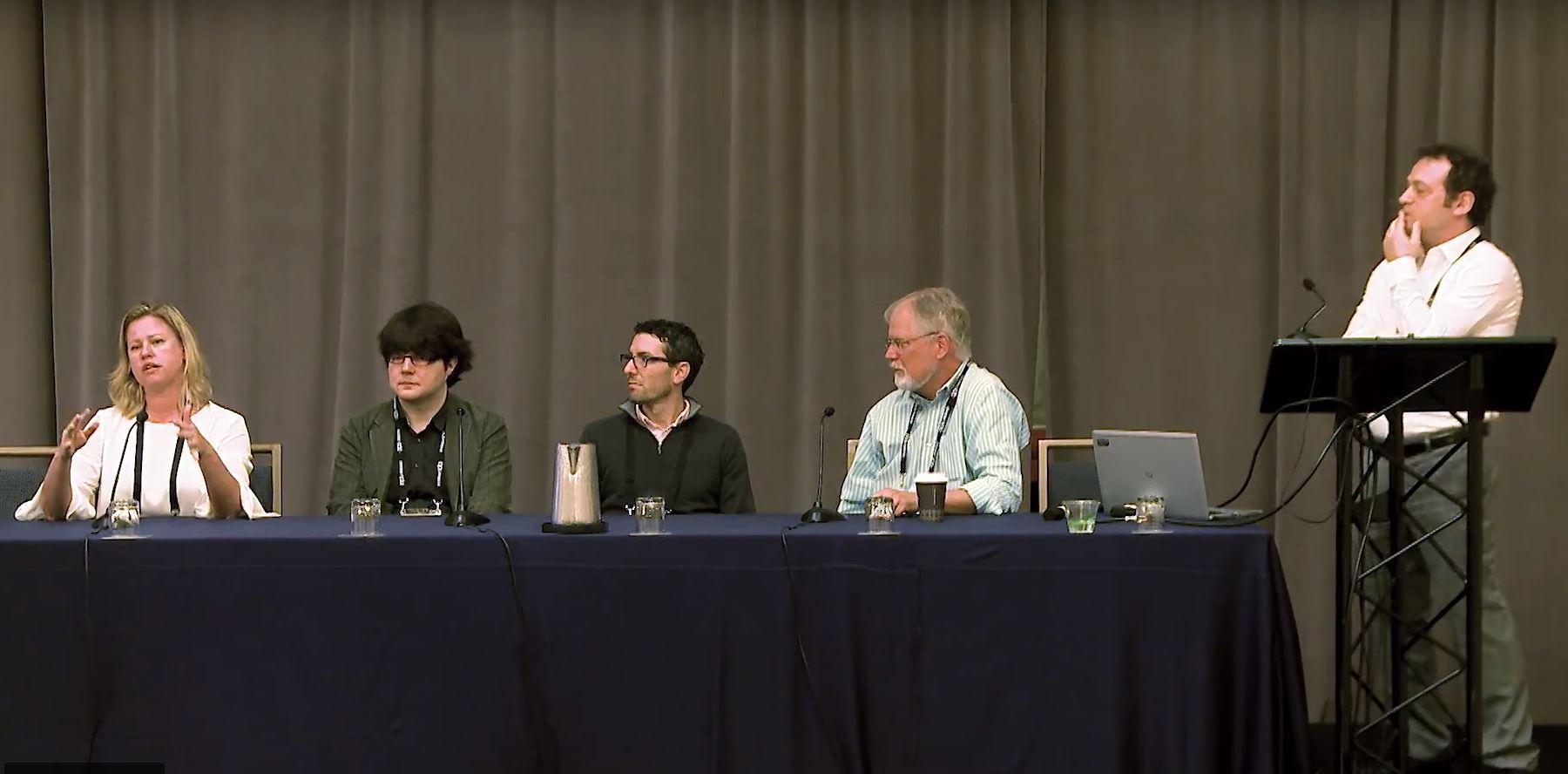

Could Distributed Peer Review Better Decide Grant Funding?
The landscape of academic grant funding is notoriously competitive and plagued by lengthy, bureaucratic processes, exacerbated by difficulties in finding willing reviewers. Distributed […]

The Coalition for National Science Funding hosted a webinar titled “Communicating the Value of NSF to Elected Officials”; Focusing on the need to engage with elected officials while they’re at home in their district. An issue of importance as US Government continues to go back and forth on its funding for the next fiscal year.

New Video highlighting the July 19th session held at the Brookings Institution on the new 2018 volume of The ANNALS of the American Academy of Political and Social Science. Featuring Sen. Todd Young (R) & Sen. Tom Carper (D), assessing how ‘evidence in public policy is faring, currently, in the Trump administration.

Tom Chatfield, author of the new SAGE Publishing book Critical Thinking, and Mark Kingwell, the University of Toronto, held a lively conversation on the import of technology on how we think and act ‘critically.’ Chatfield, described as a ‘tech philosopher,’ and Kingwell, a more traditional professor of philosophy, traded perspectives, insights into the digital, and purportedly post-truth, era in this one-hour webinar.

In a keynote address delivered to the London Info International conference, Ziyad Marar, president of global publishing for SAGE Publishing, outlines the intersection between big data and social science research. He notes that social and behavioral researchers have seen some opportunities as beyond their grasp, and that SAGE is working to bridge that gap.
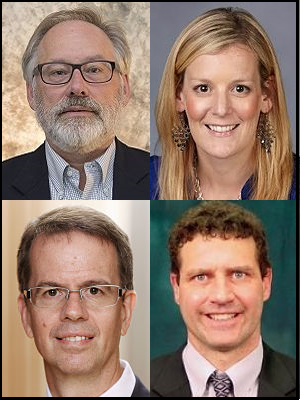
America’s rural-urban divide, it seems, has never been greater, a point reinforced by large geographic disparities in support for Donald Trump in the 2016 presidential election. But it is also the case that big cities and rural communities are more tightly integrated than ever and are increasingly interdependent, both economically and socially. That was the starting point for a recent webinar which is archived here.
It’s not easy being an early career researcher! Establishing your professional identity, developing your independence as a researcher, teaching, competing for grants, coping with increasing levels of administration and – oh yes – developing your ‘output’ – that dreadful word so often used to describe the writing born of your research.

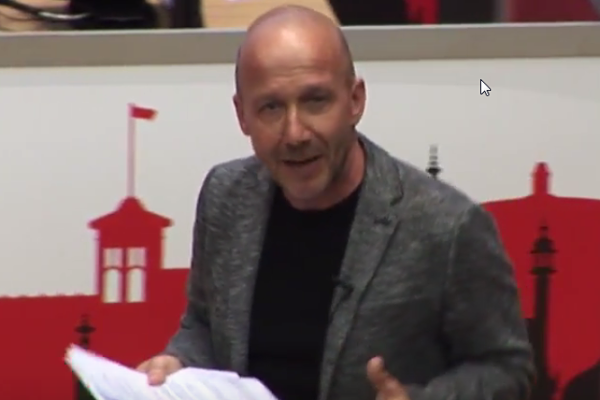
American labor law and social programs were developed in an age where workers labored for a company and could plan to be there for years, if not a lifetime. The velocity of the gig economy’s expansion has left policymakers far behind, says economist Alan Kruger, and he’d like to bring them up to speed.
Crystal clear graphs, slides, and reports are valuable – they save an audience’s mental energies, keep a reader engaged, and make you look smart. This webinar covers the science behind presenting data effectively and will leave viewers with direct, pointed changes that can be immediately administered to significantly increase impact.

Four Americans working in the social and behavioral sciences are among the 20 people named MacArthur Fellows this year. Recipients may be […] Euan Adie, the founder of Altmetric and later of Overton, discusses the reasons the led to Overton’s focus on showing researchers how […] Here’s a couple of quick questions for you. What is the smallest of the eight discipline-based directorates at the United States’ National […] I was adding some final flourishes on the topic of ‘iatrocracy’ to my forthcoming book with Natewindé Sawadogo – Sickness and Social […] How is AI changing the shape and space of higher education? Critical thinking continues to rank highly among key skills and attributes […] My colleagues and I recently spoke with a group of talented, interesting students who just completed their first year of college about […]
EXPLORE
Impact
Four From Social Science World Receive 2026 MacArthur Fellowships
READ MORE

Quick Insight: Euan Adie on Getting Academics Credit for Their Impact
READ MORE

NSF’s Embattled SBE Directorate Shown as Agency’s Policy Heavyweight
READ MORE
Innovation

AI and ‘Iatrocracy’ – A Cautionary Tale
READ MORE

The Critical Student: How GenAI Reshapes Critical Skills and Higher Education’s Role Preparing Students For It
READ MORE

AI Doesn’t Drive Student Cheating. It Just Hitches a Ride
READ MORE