

Could Distributed Peer Review Better Decide Grant Funding?
The landscape of academic grant funding is notoriously competitive and plagued by lengthy, bureaucratic processes, exacerbated by difficulties in finding willing reviewers. Distributed […]

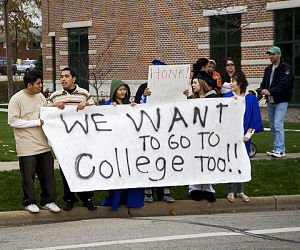
Along with good SAT scores, it now takes passing a background check to get into many colleges as universities explore new ways […]
Fifteen universities across the UK will receive £19.5 million to overhaul their social science teaching over […]

In the context of consulting projects there may be very little room for the sociological imagination, the questioning of common sense, and, least of all, challenges to the status quo.


Critical scholarship and intellectual dissent are currently being closed down in favour of a model of academic life that accords scholars a limited role as purveyors of practically useful skills in ‘real-world’ labour markets.

Around the educational mission we are now spinning a web of ‘accountability’ that has little to do with explaining or justifying our activities, and much to do with obscuring our responsibility through the creation of elaborate processes.

The authors of “Why Does College Cost So Much?” take a look at the root causes and determine that we can reduce the price of higher education, but not dramatically.

Just a few years ago, critical voices could still speak through mainstream media to highlight the dangers of the quickly accelerating commercialisation of academia. These commentators have now been pushed to the margins.
Jürgen Habermas, a globally known social theorist whose explorations of democracy, validity and communication have gained new prominence in the current moment, […] People often see science as a world apart: cool, rational and untouched by persuasion or performance. In this view, scientists simply discover […] “Research impact” means different things to different people. Some refer broadly to how science changes behaviors, beliefs, or practices outside academic institutions. […] David Canter considers informal places where people socialize, suggesting they’re an arena ChatGPT and other LLMs can’no’t replicate. As someone who lives […] It’s become cliche since Clive Humbly coined it in 2006, but data is indeed the new oil. It’s a mantra repeated by […] In September 2025, The Guardian reported about a lawyer in Australia having faced sanctions due to false citations. These citations were not […]
EXPLORE
Impact

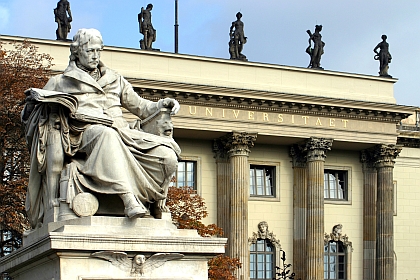
Jürgen Habermas, 1929-2026: Exponent of the Public Sphere
READ MORE

Scientists Should Keep in Mind It’s Called the ‘Marketplace of Ideas’ for a Reason
READ MORE

Survey Finds Social Scientists Feel Unsupported in Seeking Societal Impact
READ MORE
Innovation

Reaching Parts to Which AI Has No Access
READ MORE

Andrea Medina-Smith on Making Research Data More FAIR
READ MORE

A Status Check on Hallucinated Case Law Incidents
READ MORE