


Could Distributed Peer Review Better Decide Grant Funding?
The landscape of academic grant funding is notoriously competitive and plagued by lengthy, bureaucratic processes, exacerbated by difficulties in finding willing reviewers. Distributed […]
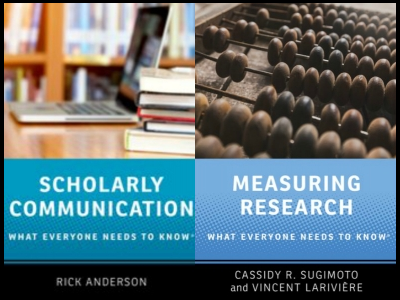
Academics are required to not only find effective ways to communicate their research, but also to increasingly measure and quantify its quality, impact and reach. In Scholarly Communication: What Everyone Needs to Know, Rick Anderson puts us in the picture. And in Measuring Research: What Everyone Needs to Know, Cassidy Sugimoto and Vincent Lariviere critically assess over 20 tools currently available for evaluating the quality of research.

Psychologist Abby Dunn is a doctoral researcher at the University of Sussex whose work has focused on parenting, and in particular parenting for those with complex needs. In this shortlisted essay from the ESRC Better Lives Writing Competition, in which PhD students who have received money from the ESRC write short essays about how their research leads too better lives, she examines how mental health practitioners interact with patients who are also parents.
The social science community has a large stake in the accuracy of the U.S. Census for the community’s contued research. Here, law professor Jonathan Entin discusses the legal controversy swirling around the impact a question on citizenship has on the census, something the U.S. Supreme Court is hearing about this week.

In their new video series entitled “Science in the District: Cognitive Psychology in the Real World,” the Federation of Associations in Behavioral & Brain Sciences explores different ways in which cognitive science is at play in the world, particularly to keep individuals safe and healthy.
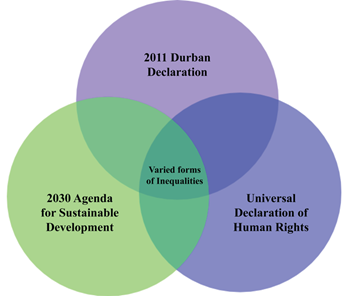
Evidence suggests that one effect of the growing phenomenon of online hate speech is that it fosters varied forms of inequalities (e.g. class, race, gender, and place of origin) and, consequently, also (in)directly undermines important United Nations declarations promoting human rights.

Outsourcing our memories — or actually forgetting once-vital skills that no longer matter in our daily lives — has always been with humanity. But how does the drift to artificial intelligence reflect what’s always been the case versus what should be a special case?
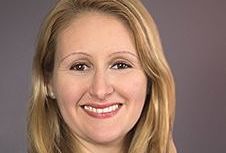
In this shortlisted essay from the ESRC Better Lives Writing Competition, in which PhD students who have received money from the ESRC write short essays about how their research leads too better lives, new mother Rosa Daiger von Gleichen describes the exertions required to both work and be a parent. The PhD candidate in social policy at the University of Oxford studies employer-based and public family policies, primarily in the United Kingdom, the United States and Germany, to understand how employers, families and individuals will manage both work and care in the future.
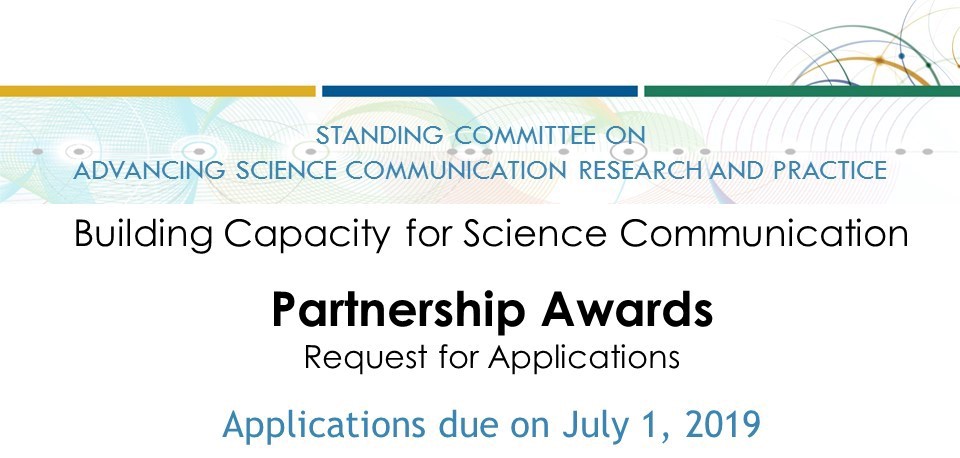
The Rita Allen Foundation, and NASEM are offering awards to support the formation and development of collaborative researcher–practitioner partnerships. To apply for these awards, submit a joint proposal that describes the rationale for your partnership. Apply by July 1st.
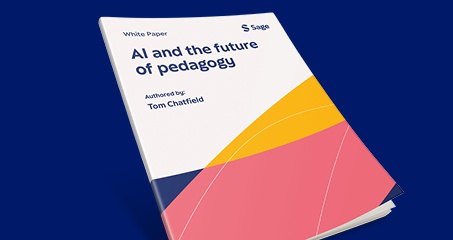
When people trust science, they can make better decisions, follow helpful rules and work together on big problems like health, climate change […] Do you know a social or behavioral science researcher whose work resonates across disciplines and which has made a significant impact in […] Please note: this contest has now closed. The winner will be contacted in due course. This November, Sage and Overton invite you to share the unexpected […] The latest generation of artificial intelligence models is sharper and smoother, producing polished text with fewer errors and hallucinations. As a philosophy […] In a new white paper by Tom Chatfield, the philosopher of tech and critical thinking outlines a practical roadmap for integrating artificial intelligence into […] Distance learning far precedes the digital age. Before online courses, people relied on print materials (and later radio and other technologies) to […]
EXPLORE
Impact

There Is a Cost to Being Honest About Science
READ MORE
Outstanding Social and Behavioral Scientists Sought for Sage-CASBS Award
READ MORE
![Share Your Most Surprising Policy Citation for Chance to Win $500 [Closed]](https://www.socialsciencespace.com/wp-content/themes/conferpress/images/default_thumbnail-new-border.jpg "Share Your Most Surprising Policy Citation for Chance to Win $500 [Closed]")
Share Your Most Surprising Policy Citation for Chance to Win $500 [Closed]
READ MORE
Innovation

An AI Authorship Protocol Aims to Sharpen a Sometimes-Fuzzy Line
READ MORE

A Box Unlocked, Not A Box Ticked: Tom Chatfield on AI and Pedagogy
READ MORE

AI Gaming of Some Online Courses Threatens Their Credibility
READ MORE