


Could Distributed Peer Review Better Decide Grant Funding?
The landscape of academic grant funding is notoriously competitive and plagued by lengthy, bureaucratic processes, exacerbated by difficulties in finding willing reviewers. Distributed […]

The post-referendum public debates in the United Kingdom have been about the future of Britain and British citizens, and questions about the lives and futures of EU citizens in Britain have faded into the background, argues our Daniel Nehring. This absence of an open-ended public conversation about immigration speaks to the ways in which power organizes truth.

Efforts to assess scholarly impacts must account for the great diversity of scholarly work and ensure that researchers themselves play a leading role in selecting those indicators that best suit their work. Peter Severinson reports on work published by the Federation for the Humanities and Social Sciences in Canada that hopes will provide guidance to university administrators, public servants, and other members of the research community undertaking the demanding work of impact assessment.
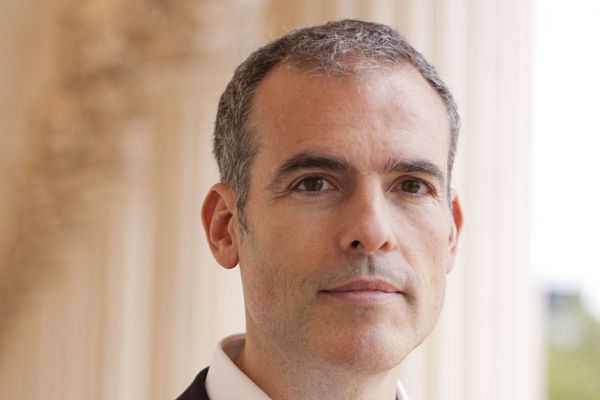
In a keynote address delivered to the London Info International conference, Ziyad Marar, president of global publishing for SAGE Publishing, outlines the intersection between big data and social science research. He notes that social and behavioral researchers have seen some opportunities as beyond their grasp, and that SAGE is working to bridge that gap.

With the exception of star academics and leading figures of the United Kingdom’s academic establishment, lecturers today are held in little regard, argues our Daniel Nehring. The specialized aspects of the academic experience are little recognized and even less honored.

Last year Social Science Space presented more than 200 articles on the impact, infrastructure and industry surrounding social and behavioral science and research. Looking back over those articles, we’ve chosen a few of special merit. Social Science Space plans to continue to provide the latest that the new year has to offer. Stay up to date with us to see what is in store.
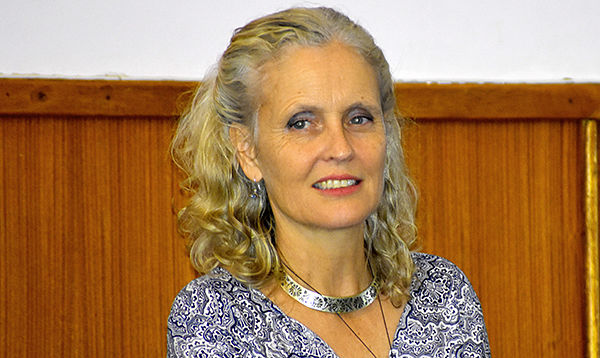
Catriona Macleod received the 2017 Psychology and Social Change Award from her home institution, Rhodes University, late last year in large part for recognizing and then critiquing the psychology of Africa.

In a recent survey of over 1,500 scientists, more than 70 percent of them reported having been unable to reproduce other scientists’ findings at least once. Reproducibility of findings is a core foundation of science and realizing how difficult it is to assess novelty should give funding agencies and scientists pause. Progress in science depends on new discoveries and following unexplored paths – but solid, reproducible research requires an equal emphasis on the robustness of the work.
The House and Senate cleared the final version of the Tax Cuts and Jobs Act, which was signed into law on December 22. Congress also approved a short-term continuing resolution to keep the government funded through January 19, and cleared a disaster assistance package for victims of hurricanes and wildfires
People often see science as a world apart: cool, rational and untouched by persuasion or performance. In this view, scientists simply discover […] “Research impact” means different things to different people. Some refer broadly to how science changes behaviors, beliefs, or practices outside academic institutions. […] One researcher studies how war affects children, another took a literal worm’s eye view to examine rural development, while two others scrutinized […] David Canter considers informal places where people socialize, suggesting they’re an arena ChatGPT and other LLMs can’no’t replicate. As someone who lives […] It’s become cliche since Clive Humbly coined it in 2006, but data is indeed the new oil. It’s a mantra repeated by […] In September 2025, The Guardian reported about a lawyer in Australia having faced sanctions due to false citations. These citations were not […]
EXPLORE
Impact

Scientists Should Keep in Mind It’s Called the ‘Marketplace of Ideas’ for a Reason
READ MORE

Survey Finds Social Scientists Feel Unsupported in Seeking Societal Impact
READ MORE

Canada’s SSHRC Names 2025 Impact Winners
READ MORE
Innovation

Reaching Parts to Which AI Has No Access
READ MORE

Andrea Medina-Smith on Making Research Data More FAIR
READ MORE

A Status Check on Hallucinated Case Law Incidents
READ MORE