
Could Distributed Peer Review Better Decide Grant Funding?
The landscape of academic grant funding is notoriously competitive and plagued by lengthy, bureaucratic processes, exacerbated by difficulties in finding willing reviewers. Distributed […]
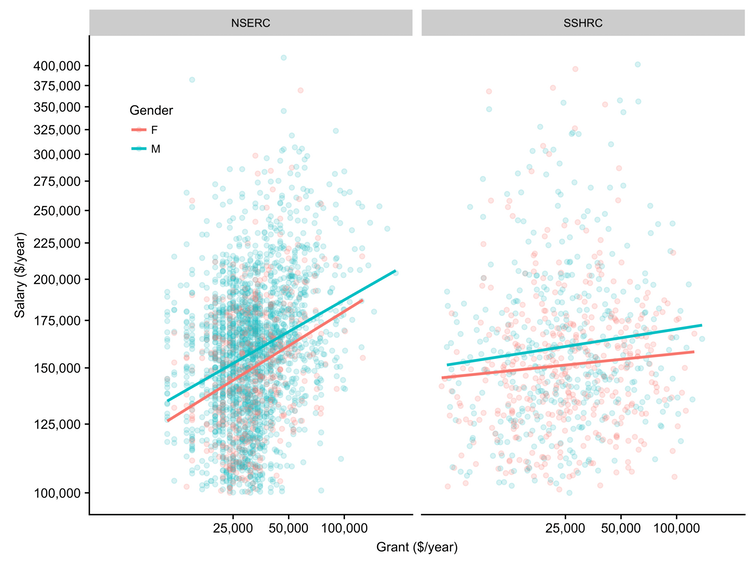
There is still a gender pay gap at nearly all Canadian universities, with especially big gaps at Canada’s 15 research-intensive universities, Megan Frederickson shows. It’s not accounted for by greater talent or solely the ghost of sexism past.
Congress cleared the final fiscal year 2018 Omnibus Appropriations Act, and the president signed the measure into law, narrowly averting another government shutdown. The House and Senate approved separate several financial services bills related to the Dodd-Frank Act. The House also approved several regulatory relief bills, and the “Right to Try” Act. The Senate also approved and cleared for the president’s signature the “Allow States and Victims to Fight Online Sex Trafficking Act.”
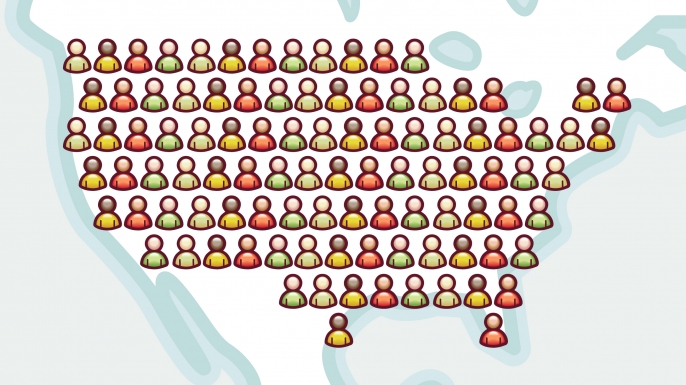
The 2020 U.S. Census is still two years away, but experts and civil rights groups are already disputing the results. Professor Emily Merchant’s research on the international history of demography demonstrates that the question of how to equitably count the population is not new, nor is it unique to the United States.
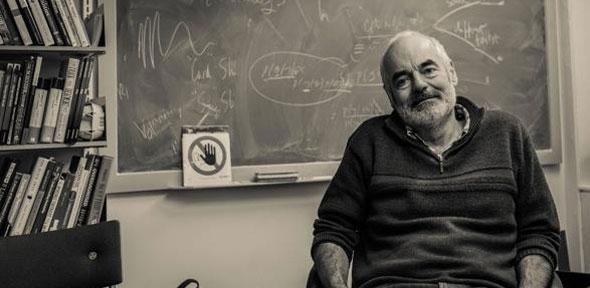
While they aren’t as unpopular as politicians or journalists, people who work with statistics come in for their share of abuse. “Figures lie and liars figure,” goes one maxim. And don’t forget, “There are three kinds of lies: lies, damned lies, and statistics.” But some people are the good guys, doing their best to combat the flawed or dishonest use of numbers. One of those good guys is the guest of this Social Science Bites podcast, David Spiegelhalter, professor of the public understanding of risk at Cambridge and current president of the Royal Statistical Society.
The recent revelation that Cambridge Analytica was able to acquire the Facebook data led to a surge of interest and questions around what companies do with people’s data. Amidst all of this, little attention has been paid to the feelings of those whose data are used, shared, and acted upon.
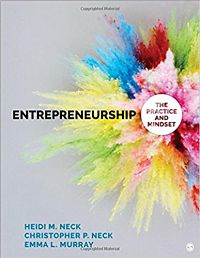
How do you teach someone to be entrepreneurial? That’s the challenge presented to Heidi Neck, the Jeffry A. Timmons Professor of Entrepreneurial Studies at Babson College and director of the Babson Entrepreneur Experience Lab, every day. We asked her some questions in the wake of her new textbook on those issues won an award.
UPDATED: Many academic groups that use U.S Census data for research fear the negative effects of including a question about citizenship on the 2020 count. “Adding a new citizenship question to the 2020 Census would destroy any chance for an accurate count, discard years of careful research, and increase costs significantly,” wrote The Leadership Conference, an umbrella group.

In the latest iteration of a survey series she’s been running for four decades, Carol Tenopir aims to assess the value of access to scholarly journals by examining patterns of use and reading. Your input is sought.
Euan Adie, the founder of Altmetric and later of Overton, discusses the reasons the led to Overton’s focus on showing researchers how […] Here’s a couple of quick questions for you. What is the smallest of the eight discipline-based directorates at the United States’ National […] Sage’s 10-Year Impact Awards recognize academic papers appearing in Sage-published journals that have achieved lasting impact. The winning papers are the most […] I was adding some final flourishes on the topic of ‘iatrocracy’ to my forthcoming book with Natewindé Sawadogo – Sickness and Social […] How is AI changing the shape and space of higher education? Critical thinking continues to rank highly among key skills and attributes […] My colleagues and I recently spoke with a group of talented, interesting students who just completed their first year of college about […]
EXPLORE
Impact
Quick Insight: Euan Adie on Getting Academics Credit for Their Impact
READ MORE

NSF’s Embattled SBE Directorate Shown as Agency’s Policy Heavyweight
READ MORE
Sage’s 10-Year Impact Awards Capture Longer-Term Significance
READ MORE
Innovation

AI and ‘Iatrocracy’ – A Cautionary Tale
READ MORE

The Critical Student: How GenAI Reshapes Critical Skills and Higher Education’s Role Preparing Students For It
READ MORE

AI Doesn’t Drive Student Cheating. It Just Hitches a Ride
READ MORE