CASBS Announces 2019-20 Fellows
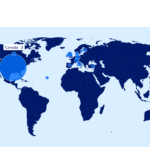
The Center for Advanced Study in the Behavioral Sciences (CASBS) at Stanford University has announced its 2019-20 fellows class of 37 scholars. The cohort, 21 of which are female, represents 23 U.S. institutions and seven international institutions and programs.
“Each year, CASBS becomes a vibrant community thanks to its fellows,” said Sally Schroeder, the center’s associate director. “The success of that annual renewal depends on attracting and selecting some of the greatest minds and deepest thinkers worldwide.”
All of the fellows are worthy of acclaim in their own rights. Among them: Christine Blasey Ford, who plans to read correspondence received regarding her testimony before the US Senate during the year, Nicole Ellison, who plans to use the year to write a book on the psychological and social implications of social media use, and David Ciepley, who plans to use his time to write a book on American efforts to keep corporate economy compatible with constitutional democracy.
Founded in 1954, the center under the leadership of Margaret Levi has shifted from being a place where top-flight intellectuals would pursue their individual scholarly muses into a home for cross-disciplinary teams to address theoretical, empirical, and societally important questions. In addition to fellows, the center has three other appointment designations: visiting scholars (academics who are spouses/partners of fellows), research affiliates (non-Stanford scholars who lead CASBS-based projects), and faculty fellows (Stanford faculty who lead CASBS-based projects). The center will finalize these appointments by late spring.
The 2019-20 class of fellows, with home institution and field of study, is listed in alphabetical order below (additional fellows may be added later):
- Michael Albertus, University of Chicago, political science
- Rene Almeling, Yale University, sociology
- Sonja Amadae, University of Helsinki, political science
- W. Brian Arthur, Santa Fe Institute, economics
- Nina Bandelj, University of California-Irvine, sociology
- Donald Barr, Stanford University, medicine
- Kathleen Belew, University of Chicago, history
- Mario Biagioli, University of California-Davis, science and technology studies
- Michael Brownstein, City University of New York, philosophy
- Marco Casari, University of Bologna, economics
- R. Alta Charo, University of Wisconsin, law
- Wendy K. Tam Cho, University of Illinois, Urbana-Champaign, political science
- David Ciepley, University of Denver, political science
- Jefferson Cowie, Vanderbilt University, history
- Nicole Ellison, University of Michigan, communications
- Christine Blasey, Palo Alto University, statistics and probability
- Sandra Gonzalez-Bailon, University of Pennsylvania, communication
- Guy Grossman, University of Pennsylvania, political science
- Anita Hardon, University of Amsterdam, anthropology
- Mai Hassan, University of Michigan, political science
- Michael Hiscox, Harvard University, political science
- Robert Jackson, Stanford University, earth sciences
- Ruth Levine, William and Flora Hewlett Foundation, development economics
- Lianjiang Li, Chinese University of Hong Kong, political science
- Paula M. L. Moya, Stanford University, language and literature
- Noah Nathan, University of Michigan, political science
- Jennifer Pan, Stanford University, communication
- Camilo Perez-Bustillo, University of Texas at El Paso, law
- Bruno Perreau, Massachusetts Institute of Technology, global studies and languages
- Catherine Ramirez, University of California- Santa Cruz, American studies
- Laura Richman, Duke University, psychology
- Ramon Saldivar, Stanford University, comparative literature
- Elizabeth Shermer, Loyola University Chicago, history
- Yukiko Uchida, Kyoto University, psychology
- Mark Warren, University of Massachusetts Boston, sociology
- Leif Wenar, Kings College, philosophy
- Su-Ling Yeh, National Taiwan University, psychology