Survey Data Confirms Asian Americans Now Top Target for Harassment
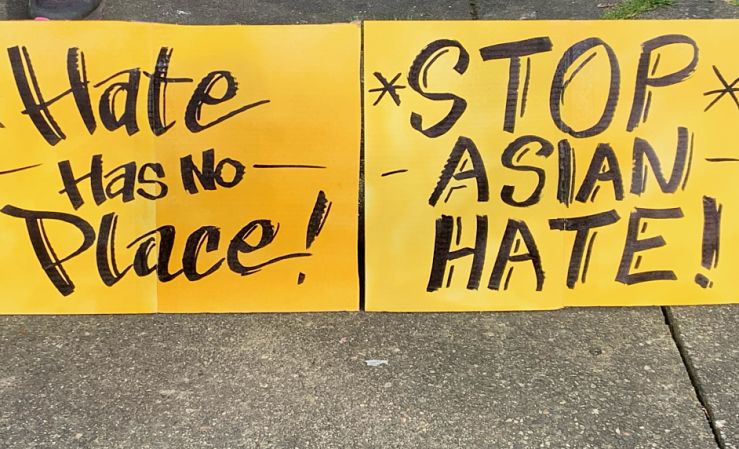
Since the very beginning of the pandemic, hate crimes toward Asians and Asian Americans have gotten increased media attention. Our data, from the Understanding Coronavirus in America Study, confirms that these events are happening more often – and are not just appearing more common because of press coverage or public awareness. Asian Americans experienced more threats and harassment than any other racial or ethnic group in the U.S. during the coronavirus pandemic.

From June 2020 through February 2021 – with particular spikes in late July and the month of November – Asian Americans reported being targeted by threats and harassment more frequently than members of other groups did. During this period, Asian Americans were accosted both physically and verbally even more than African Americans and Latinos, who are generally the ethnic groups most subjected to racial bias in the U.S.
We got this data from a nationally representative online panel of more than 7,000 adults who answer survey questions every two weeks about how the pandemic affects their attitudes, lives and behaviors. Among other questions, the survey asked people if and how often they were threatened or harassed in their day-to-day life in the previous two weeks.
Our most recent data, from a poll taken in late February, shows that in the previous two weeks, 11 percent of Asian Americans experienced threats or harassment – compared with 8 percent of African Americans, 6 percent of Latino Americans and 5 percent of white Americans. Asian Americans are also twice as likely as whites to have experienced repeated abuse.
We also asked about other, perhaps less severe encounters, such as being treated with less courtesy or respect than others, receiving poorer service at restaurants and stores, and being treated as if they were not smart or as if people were afraid of them. Asians did not report meaningfully different numbers of these lesser encounters from other nonwhite groups, though all nonwhite groups reported more of this lesser discrimination than whites did.
A pandemic connection?
Our analysis found that the coronavirus pandemic may be connected to the targeting of Asian Americans.
Our survey also asked the respondents if other people “thinking they might have the coronavirus” behaved in discriminatory ways, including acting as if afraid of them, threatening or harassing them, treating them with less courtesy and respect, or giving them poorer service at restaurants or stores.
Early in the pandemic, survey participants of all races reported experiencing this coronavirus-related discriminatory behavior because someone thought they might have the coronavirus. People of Asian descent were most often affected, followed by people of Black and Latino heritage, and then white people – who still did experience this type of discrimination, but less often than members of the other races.
Our more recent analysis has found that people who had previously been discriminated against because of perceived infection of the coronavirus – true or not – were five times more likely to be threatened or harassed later, for any reason, than those who had not experienced prior COVID-19-related discrimination. Again, this was true of all races, but particularly so for people of Asian heritage.
Still more to learn
We do not yet fully understand to what extent coronavirus-related discrimination has transformed into broader racial bias against people of Asian descent in situations where fear of disease is not a factor. After the pandemic ends, we hope that our research will be able to discover whether this level of threats and harassment of Asian Americans remains, or diminishes as fears of the disease ebb.
We also plan to explore how the discrimination, threats and harassment affected the health of the Asian Americans who were subjected to it. Prior research, including our own, has shown that being discriminated against can harm people’s health and well-being. We hope to find out what, if any, short- and long-term effects may result from these experiences during the pandemic.