


Could Distributed Peer Review Better Decide Grant Funding?
The landscape of academic grant funding is notoriously competitive and plagued by lengthy, bureaucratic processes, exacerbated by difficulties in finding willing reviewers. Distributed […]



“The question we must therefore ask is: are we all really working to the best available picture of what is going on in the world?” So asks a new report that summarizes the themes discussed in June’s first-ever Evidence Week.
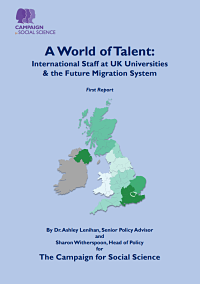
Three out of every 10 academics working in UK universities, finds a new report from the Campaign for Social Science, are nationals […]
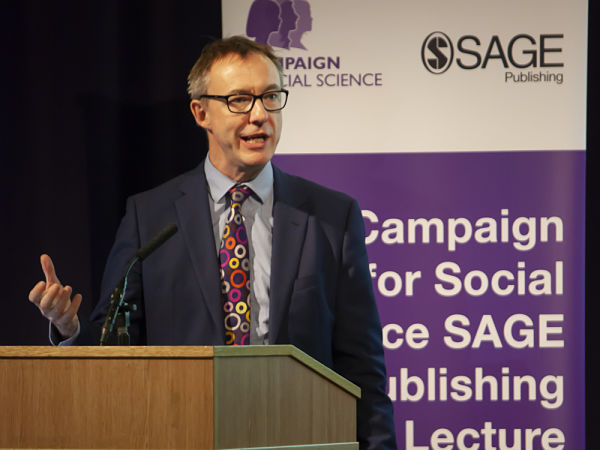
Paul Johnson had one key theme in his SAGE Publishing lecture for the Campaign for Social Science: Long-term policy needs to be developed across government based on a broad understanding of the social and economic trends. And there is little evidence that this lesson is being heeded.

Making its largest-ever grant in the social sciences and humanities, the Wolfson Foundation awarded the British Academy £10 million to promote high quality research. Under the initiative, the British Academy will create a fellowship program to support early career researchers, develop an international community of scholars and create an intellectual hub at the academy’s London home on Carlton House Terrace.

Canada’s Social Science and Humanities Research Council, now in its 40th year, handed out five Impact Prizes earlier this month to honor those showing the potential and applicability of government-funded research and exploration.
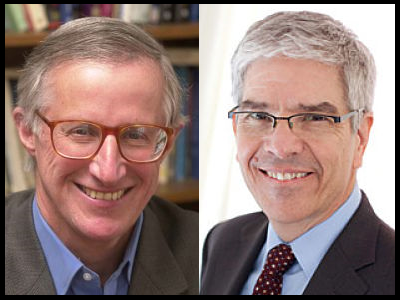
Two academics who have integrated what might have once seemed like non-economic externalities into economic models have been awarded the 2018 Nobel Prize in economics. The winners are William D. Nordhaus of Yale University, cited for integrating climate change into macroeconomic analysis, and Paul M. Romer of New York University’s Stern School of Business, cited doing the same with technological innovations.

Five people with backgrounds in social, behavioral or data science were among 25 named in the 2018 class of MacArthur Foundation fellows. The fellowship and grant program, sometimes referred to as the “genius grant,” awards exceptionally creative people with $625,000 – no strings attached — in expectation that based on their track record they will achieve something important in the future.

Walter Laquer, who fled the Holocaust, experienced the birth of Israel, founded the ‘Journal of Contemporary History,’ and was an unflinching sentinel against terrorism and an authoritarian Russia, died on September 30. He was 97.


Jürgen Habermas, a globally known social theorist whose explorations of democracy, validity and communication have gained new prominence in the current moment, […] People often see science as a world apart: cool, rational and untouched by persuasion or performance. In this view, scientists simply discover […] “Research impact” means different things to different people. Some refer broadly to how science changes behaviors, beliefs, or practices outside academic institutions. […] David Canter considers informal places where people socialize, suggesting they’re an arena ChatGPT and other LLMs can’no’t replicate. As someone who lives […] It’s become cliche since Clive Humbly coined it in 2006, but data is indeed the new oil. It’s a mantra repeated by […] In September 2025, The Guardian reported about a lawyer in Australia having faced sanctions due to false citations. These citations were not […]
EXPLORE
Impact

Jürgen Habermas, 1929-2026: Exponent of the Public Sphere
READ MORE

Scientists Should Keep in Mind It’s Called the ‘Marketplace of Ideas’ for a Reason
READ MORE

Survey Finds Social Scientists Feel Unsupported in Seeking Societal Impact
READ MORE
Innovation

Reaching Parts to Which AI Has No Access
READ MORE

Andrea Medina-Smith on Making Research Data More FAIR
READ MORE

A Status Check on Hallucinated Case Law Incidents
READ MORE