


Could Distributed Peer Review Better Decide Grant Funding?
The landscape of academic grant funding is notoriously competitive and plagued by lengthy, bureaucratic processes, exacerbated by difficulties in finding willing reviewers. Distributed […]

Research the author and colleagues conducted at Penn State shows that both the escalation and de-escalation of fear must occur for the message to be effective.

Reporting on their recent survey of websites cited in REF 2014 impact case studies, Kayvan Kousha, Mike Thelwall and Mahshid Abdoli, discuss which websites are most commonly used as supporting evidence for impact and how these vary across academic disciplines.

During the dramatic halt to in-person events in 2020, the use of video call software skyrocketed, transforming Zoom into a household name, […]

Making self-identification an everyday practice is one of trans activism’s most visible recent victories, particularly on campuses, and language is at the center of that change.
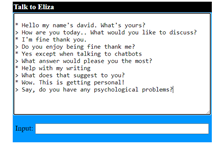
David Canter follows his concern that psychologists are losing contact with people by considering how computers are presented as replacements for human ‘intelligence’. This ignores the importance of in situ person to person contact, which has been shown by the COVID pandemic to be so crucial for people.

Mark Carrigan reflects on how research listening has shaped his own practice and how an implicit assumption of its secondary relationship to reading, may limit our appreciation of engaging with research in a multi-modal fashion.

At a time when there are so many concerns being raised about always-on work cultures and our right to disconnect, email is the bane of many of our working lives.

Professor Dan A. Segal responds to criticisms in an earlier Social Science Space article and argues that his stance on the BDS movement is consistent with academic freedom.

The Royal Swedish Academy of Sciences has awarded this year’s Nobel Prize in Economic Sciences to the American economists Robert E. Hall […] Four Americans working in the social and behavioral sciences are among the 20 people named MacArthur Fellows this year. Recipients may be […] Euan Adie, the founder of Altmetric and later of Overton, discusses the reasons the led to Overton’s focus on showing researchers how […] The following is an adapted extract from The Cultural Industries, fifth edition, by David Hesmondhalgh. The increasing presence of information technology (IT) […] Developers of AI data centers have a public trust problem. According to multiple surveys, a majority of Americans say they would oppose […] I was adding some final flourishes on the topic of ‘iatrocracy’ to my forthcoming book with Natewindé Sawadogo – Sickness and Social […]
EXPLORE
Impact

Economic Peaks, Troughs and This Year’s Nobelists in Economics
READ MORE
Four From Social Science World Receive 2026 MacArthur Fellowships
READ MORE
Quick Insight: Euan Adie on Getting Academics Credit for Their Impact
READ MORE
Innovation
IT Giants and Their Operations: Should We Be Concerned?
READ MORE

What We Miss When We Study Public Trust with Surveys Alone
READ MORE

AI and ‘Iatrocracy’ – A Cautionary Tale
READ MORE