



Could Distributed Peer Review Better Decide Grant Funding?
The landscape of academic grant funding is notoriously competitive and plagued by lengthy, bureaucratic processes, exacerbated by difficulties in finding willing reviewers. Distributed […]

The generalist degree has a big part to play in the emerging higher education landscape for graduates. Humanities, social science, general science, technology and creative industries fields such as design can deliver adaptable, flexible mindsets.
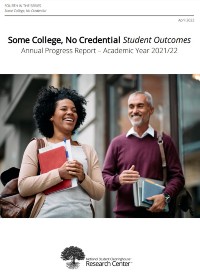
The population of ‘some college, no credential,’ or SCNC, individuals in the United States has reached 40.4 million (out of a total U.S. population of 331 million), which has resulted in a nationwide push for former students to return to college.

Critical ignoring is the ability to choose what to ignore and where to invest one’s limited attentional capacities.

Simone Natale and Leah Henrickson draw on their research into computational creativity and introduce the concept of the ‘Lovelace Effect’, to explain how creativity is often a product of social conventions and why as a consequence, educators and researchers should think carefully about what constitutes good writing in their fields.

Given the prevalence of trigger warnings, there is little consensus on the extent to which they are, in fact, an effective strategy for reducing the risk of trauma exposure, vicarious trauma, and re-traumatization.
A lack of public understanding, the decline of collegiality and poor framing of the underlying issues will all make the success of planned UK university strikes unlikely, argues Daniel Nehring.

SAGE’s 2022 pedagogy survey, building on prior annual surveys launched in 2020 and repeated in 2021, show some exciting developments in faculty […]

Academic freedom is simply the commonplace and understandable request of workers asking for the conditions they need to competently and effectively carry out their duties as expected, required and urgently needed by society.

The Royal Swedish Academy of Sciences has awarded this year’s Nobel Prize in Economic Sciences to the American economists Robert E. Hall […] Four Americans working in the social and behavioral sciences are among the 20 people named MacArthur Fellows this year. Recipients may be […] Euan Adie, the founder of Altmetric and later of Overton, discusses the reasons the led to Overton’s focus on showing researchers how […] The following is an adapted extract from The Cultural Industries, fifth edition, by David Hesmondhalgh. The increasing presence of information technology (IT) […] Developers of AI data centers have a public trust problem. According to multiple surveys, a majority of Americans say they would oppose […] I was adding some final flourishes on the topic of ‘iatrocracy’ to my forthcoming book with Natewindé Sawadogo – Sickness and Social […]
EXPLORE
Impact
Economic Peaks, Troughs and This Year’s Nobelists in Economics
READ MORE
Four From Social Science World Receive 2026 MacArthur Fellowships
READ MORE

Quick Insight: Euan Adie on Getting Academics Credit for Their Impact
READ MORE
Innovation
IT Giants and Their Operations: Should We Be Concerned?
READ MORE

What We Miss When We Study Public Trust with Surveys Alone
READ MORE

AI and ‘Iatrocracy’ – A Cautionary Tale
READ MORE