

Could Distributed Peer Review Better Decide Grant Funding?
The landscape of academic grant funding is notoriously competitive and plagued by lengthy, bureaucratic processes, exacerbated by difficulties in finding willing reviewers. Distributed […]
After more six years at the helm of Canada’s Federation for the Humanities and Social Sciences, Jean-Marc Mangin has stepped down. Christine Tausig Ford, formerly of Universities Canada,has been named interim executive director.
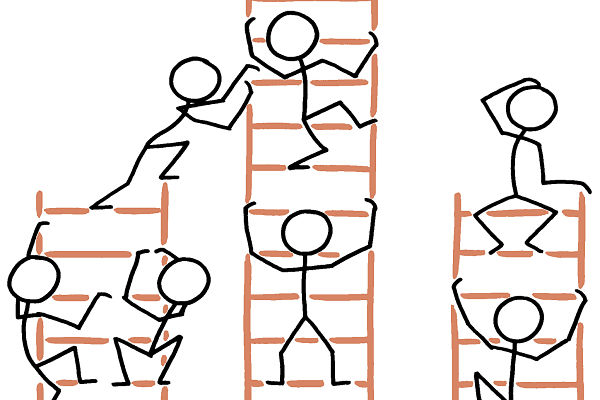
A culture of bad science can evolve as a result of institutional incentives that prioritize simple quantitative metrics as measures of success, argues Paul Smaldino. But, he adds, not all is lost as new initiatives such as open data and replication are making a positive difference.

In this archived hour-long seminar, Social Science Space blogger Robert Dingwall discusses the organizational requirements and the useful skills that can be built to support the individual who wants to be a reasearch manager and the ecosystem — in both social science and STEM settings — that can support such striving.

Anthropologists use ethnographic methods designed to facilitate their competency in another culture to understand what people do, think, feel and say that might seem strange to an outsider but are completely familiar to an insider. But what does that mean in practice?
Sharon Witherspoon, the former director of the Nuffield Foundation and a guiding light of the Q-Step initiative, has been named the acting […]

A blog post arguing that treating all Muslims as threats plays into the hands of ISIS and another showing a time lapse […]

The most frequent advice from Kip Jones to participants was, “Flip it!” Er, make that, “Flip it!” –Kip Jones’ most frequent workshop advice.

If you can really do communication in an accessible way, explains Patrick Dunleavy, your writing may also circulate widely in other disciplines and in the external world outside universities, enhancing your reputation there. And you are in luck – he also explains one way to do that.

The Royal Swedish Academy of Sciences has awarded this year’s Nobel Prize in Economic Sciences to the American economists Robert E. Hall […] Four Americans working in the social and behavioral sciences are among the 20 people named MacArthur Fellows this year. Recipients may be […] Euan Adie, the founder of Altmetric and later of Overton, discusses the reasons the led to Overton’s focus on showing researchers how […] The following is an adapted extract from The Cultural Industries, fifth edition, by David Hesmondhalgh. The increasing presence of information technology (IT) […] Developers of AI data centers have a public trust problem. According to multiple surveys, a majority of Americans say they would oppose […] I was adding some final flourishes on the topic of ‘iatrocracy’ to my forthcoming book with Natewindé Sawadogo – Sickness and Social […]
EXPLORE
Impact
Economic Peaks, Troughs and This Year’s Nobelists in Economics
READ MORE

Four From Social Science World Receive 2026 MacArthur Fellowships
READ MORE

Quick Insight: Euan Adie on Getting Academics Credit for Their Impact
READ MORE
Innovation

IT Giants and Their Operations: Should We Be Concerned?
READ MORE

What We Miss When We Study Public Trust with Surveys Alone
READ MORE

AI and ‘Iatrocracy’ – A Cautionary Tale
READ MORE












































































