



Could Distributed Peer Review Better Decide Grant Funding?
The landscape of academic grant funding is notoriously competitive and plagued by lengthy, bureaucratic processes, exacerbated by difficulties in finding willing reviewers. Distributed […]
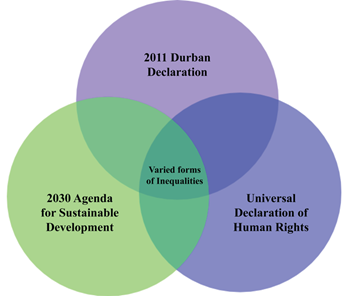
Evidence suggests that one effect of the growing phenomenon of online hate speech is that it fosters varied forms of inequalities (e.g. class, race, gender, and place of origin) and, consequently, also (in)directly undermines important United Nations declarations promoting human rights.
As details emerged on March 11 about the president’s fiscal year 2020 budget, it became increasingly clear that science funding would once again be targeted for significant spending cuts. But a new target also emerged – federal spending on education.

The two federal agencies that spend the most on making grants to social and behavioral science research in the United States, both have their budgets shaved by an eighth in the Fiscal Year 2020 budget proposal released by the Trump administration earlier this month. But the move is more symbolic than substantive.
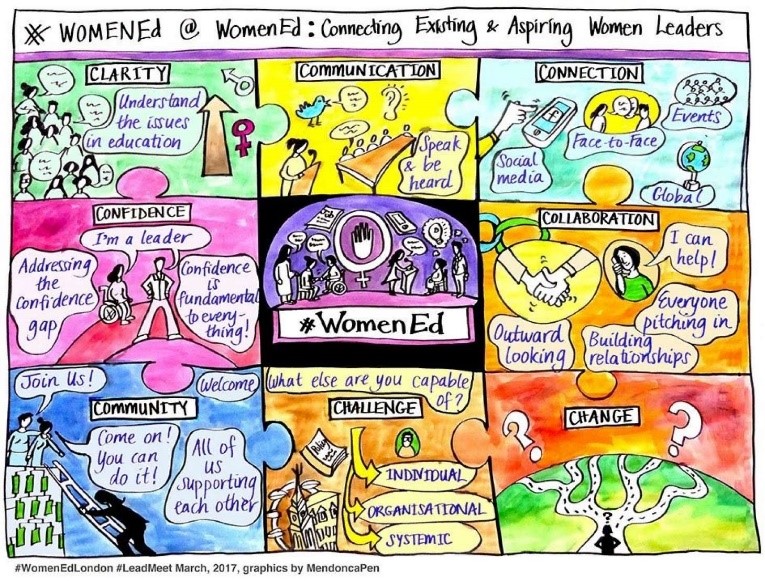
In honor of International Woman’s Day, Social Science Space highlights some past posts from innovative leaders in social science, academics whose work continues to lead social science and academia into the future.
The final agreement ending the most recent U.S. government shutdown provides $8.1 billion for the National Science Foundation, a $301 million increase over the amount appropriated in fiscal year 2018.

The Center for Migration Studies, has analyzed changes in the immigration rules for ‘lawful permanent residents’ and found the potential effect on “intending immigrants” would deny admission and adjustment to large numbers of working class persons who contribute substantially to the US economy, who have US citizen and lawful permanent resident family members
Even if Congress and the president succeed in breaking the logjam and approve the remaining fiscal year 2019 appropriations bills, the new Congress will find itself significantly behind schedule in the fiscal year 2020 budget and appropriations cycle. The president’s budget, which is usually delivered to Congress in early February, will likely be delayed by a month, and perhaps longer if another partial shutdown occurs on February 16. House and Senate appropriations committees typically set deadlines for requests by this time in the year, but that process is not even close to starting because of the shutdown.
How can we develop a new field of collective intelligence that pulls across disciplines and works between academic and practitioner domains? This was a key question addressed at the ‘Designing collective intelligence to address social needs’ event hosted by the global innovation foundation Nesta.
Jürgen Habermas, a globally known social theorist whose explorations of democracy, validity and communication have gained new prominence in the current moment, […] People often see science as a world apart: cool, rational and untouched by persuasion or performance. In this view, scientists simply discover […] “Research impact” means different things to different people. Some refer broadly to how science changes behaviors, beliefs, or practices outside academic institutions. […] David Canter considers informal places where people socialize, suggesting they’re an arena ChatGPT and other LLMs can’no’t replicate. As someone who lives […] It’s become cliche since Clive Humbly coined it in 2006, but data is indeed the new oil. It’s a mantra repeated by […] In September 2025, The Guardian reported about a lawyer in Australia having faced sanctions due to false citations. These citations were not […]
EXPLORE
Impact

Jürgen Habermas, 1929-2026: Exponent of the Public Sphere
READ MORE

Scientists Should Keep in Mind It’s Called the ‘Marketplace of Ideas’ for a Reason
READ MORE

Survey Finds Social Scientists Feel Unsupported in Seeking Societal Impact
READ MORE
Innovation

Reaching Parts to Which AI Has No Access
READ MORE

Andrea Medina-Smith on Making Research Data More FAIR
READ MORE

A Status Check on Hallucinated Case Law Incidents
READ MORE