

Could Distributed Peer Review Better Decide Grant Funding?
The landscape of academic grant funding is notoriously competitive and plagued by lengthy, bureaucratic processes, exacerbated by difficulties in finding willing reviewers. Distributed […]
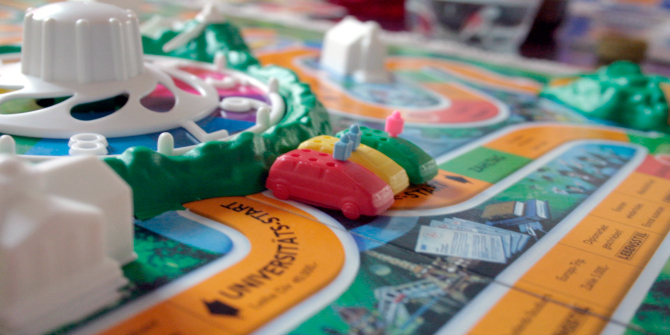
The managerialist logic that has permeated universities has had a clear impact on academic work. To Senia Kalfa, Adrian Wilkinson and Paul J. Gollan, academia has become like a game, with academics competing with each other for a handful of permanent positions & focused completely on accumulating the capital needed to secure one.

When Robert Dingwall was younger, sociology departments routinely taught a course on ‘industry,’, ‘work’ or ‘economic life.’ “Most of this turf has now been abandoned to business schools in the form of organization studies, where it increasingly struggles to resist the expansion of finance and accounting studies,” he says, and to our detriment.

How can the impact of an academic article be measured? It seems that everyone wants to find an answer to this question – from the researcher and author teams that create research articles, to the editors and peer reviewers who curate them, to the societies and publishers who ensure that the articles are released to the world.

The academic world has the power to transform events in redefining its social mission, by responding to this highly ambitious EU action plan with the emergence of courses that match the expectations not only of businesses but, above all, society.
One of the most important issues facing Congress this year is the opioid epidemic that has touched on the lives of so many Americans. On May 17, the House Committee on Energy and Commerce approved a package of 57 bills designed to address the crisis of health and behavior, and the full House is expected to debate these bills later this month.

Drawing on their new SAGE book for students and academics “How to be a Happy Academic,” Alex Clark and Bailey Sousa share strategies for successful student-supervisor meetings.
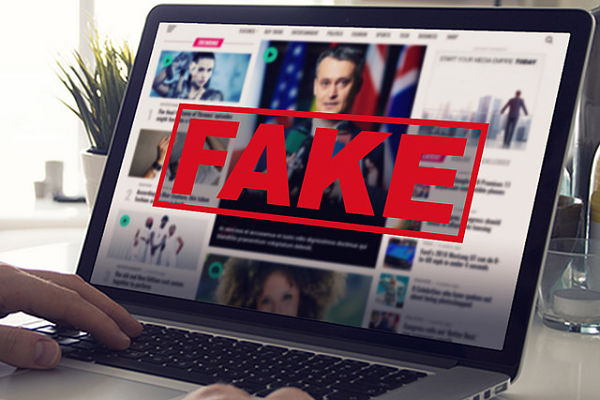
Facebook CEO Mark Zuckerberg recently acknowledged his company’s responsibility in helping create the enormous amount of fake news that plagued the 2016 election – after earlier denials. Yet he offered no concrete details on what Facebook could do about it. Fortunately, there’s a way to fight fake news that already exists and has behavioral science on its side: the Pro-Truth Pledge project.
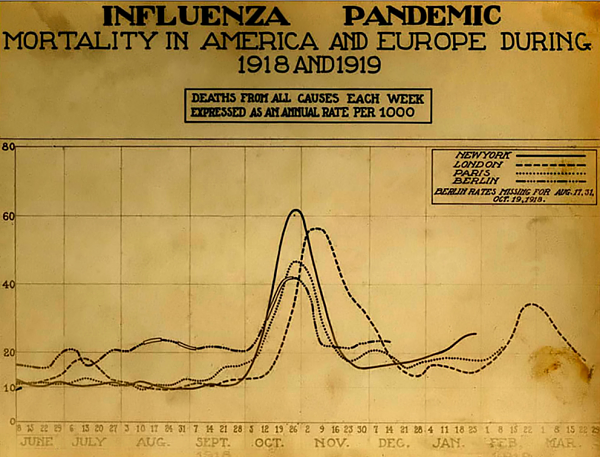
Although it won’t see the memorials and centenary events that the World War I Armistice will, it’s worth thinking back to the ravages of the ‘Spanish flu’ of a century ago and the implications that that pandemic of the past has for infections of the future.

The Royal Swedish Academy of Sciences has awarded this year’s Nobel Prize in Economic Sciences to the American economists Robert E. Hall […] Four Americans working in the social and behavioral sciences are among the 20 people named MacArthur Fellows this year. Recipients may be […] Euan Adie, the founder of Altmetric and later of Overton, discusses the reasons the led to Overton’s focus on showing researchers how […] The following is an adapted extract from The Cultural Industries, fifth edition, by David Hesmondhalgh. The increasing presence of information technology (IT) […] Developers of AI data centers have a public trust problem. According to multiple surveys, a majority of Americans say they would oppose […] I was adding some final flourishes on the topic of ‘iatrocracy’ to my forthcoming book with Natewindé Sawadogo – Sickness and Social […]
EXPLORE
Impact
Economic Peaks, Troughs and This Year’s Nobelists in Economics
READ MORE
Four From Social Science World Receive 2026 MacArthur Fellowships
READ MORE

Quick Insight: Euan Adie on Getting Academics Credit for Their Impact
READ MORE
Innovation

IT Giants and Their Operations: Should We Be Concerned?
READ MORE

What We Miss When We Study Public Trust with Surveys Alone
READ MORE

AI and ‘Iatrocracy’ – A Cautionary Tale
READ MORE