


Could Distributed Peer Review Better Decide Grant Funding?
The landscape of academic grant funding is notoriously competitive and plagued by lengthy, bureaucratic processes, exacerbated by difficulties in finding willing reviewers. Distributed […]

Current debates in higher education policy have drawn attention to the significant impacts of marketization, metrics, and performance management on the sector. Ben Williamson argues that a restructuring of the data infrastructure is shaping these HE trends.
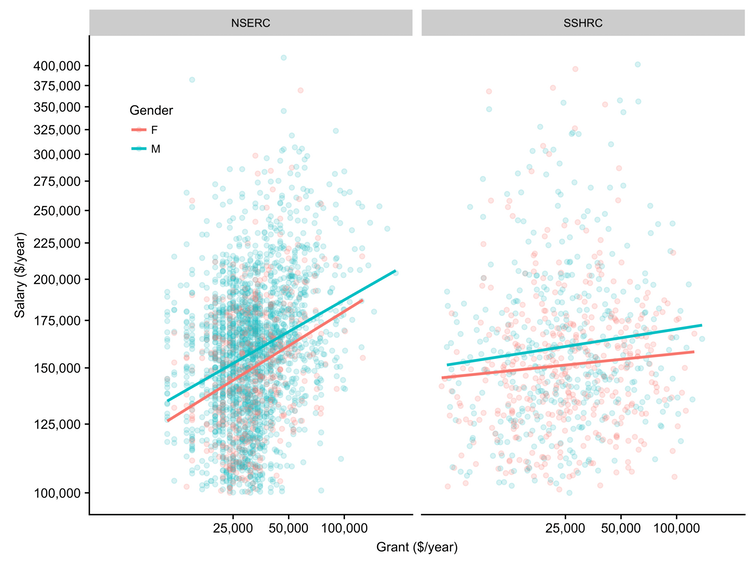
There is still a gender pay gap at nearly all Canadian universities, with especially big gaps at Canada’s 15 research-intensive universities, Megan Frederickson shows. It’s not accounted for by greater talent or solely the ghost of sexism past.
Congress cleared the final fiscal year 2018 Omnibus Appropriations Act, and the president signed the measure into law, narrowly averting another government shutdown. The House and Senate approved separate several financial services bills related to the Dodd-Frank Act. The House also approved several regulatory relief bills, and the “Right to Try” Act. The Senate also approved and cleared for the president’s signature the “Allow States and Victims to Fight Online Sex Trafficking Act.”
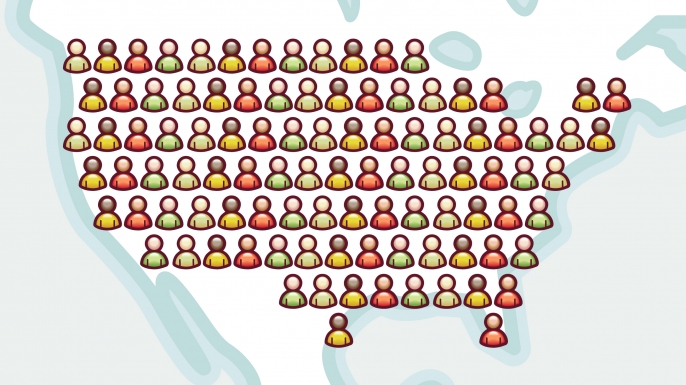
The 2020 U.S. Census is still two years away, but experts and civil rights groups are already disputing the results. Professor Emily Merchant’s research on the international history of demography demonstrates that the question of how to equitably count the population is not new, nor is it unique to the United States.
The recent revelation that Cambridge Analytica was able to acquire the Facebook data led to a surge of interest and questions around what companies do with people’s data. Amidst all of this, little attention has been paid to the feelings of those whose data are used, shared, and acted upon.
UPDATED: Many academic groups that use U.S Census data for research fear the negative effects of including a question about citizenship on the 2020 count. “Adding a new citizenship question to the 2020 Census would destroy any chance for an accurate count, discard years of careful research, and increase costs significantly,” wrote The Leadership Conference, an umbrella group.
Cambridge Analytica’s approach to crunching social media data represents a step change in how analytics can today be used as a tool to generate insights – and to exert influence.

Months into the 2018 fiscal year, the U.S. Congress approved and the president today signed a $1.3 trillion spending plan for the existing fiscal year that increases National Science Foundation funding to $7.77 billion and does not cut social science research funding.

The Royal Swedish Academy of Sciences has awarded this year’s Nobel Prize in Economic Sciences to the American economists Robert E. Hall […] Four Americans working in the social and behavioral sciences are among the 20 people named MacArthur Fellows this year. Recipients may be […] Euan Adie, the founder of Altmetric and later of Overton, discusses the reasons the led to Overton’s focus on showing researchers how […] The following is an adapted extract from The Cultural Industries, fifth edition, by David Hesmondhalgh. The increasing presence of information technology (IT) […] Developers of AI data centers have a public trust problem. According to multiple surveys, a majority of Americans say they would oppose […] I was adding some final flourishes on the topic of ‘iatrocracy’ to my forthcoming book with Natewindé Sawadogo – Sickness and Social […]
EXPLORE
Impact

Economic Peaks, Troughs and This Year’s Nobelists in Economics
READ MORE

Four From Social Science World Receive 2026 MacArthur Fellowships
READ MORE

Quick Insight: Euan Adie on Getting Academics Credit for Their Impact
READ MORE
Innovation

IT Giants and Their Operations: Should We Be Concerned?
READ MORE

What We Miss When We Study Public Trust with Surveys Alone
READ MORE

AI and ‘Iatrocracy’ – A Cautionary Tale
READ MORE












































































