


Could Distributed Peer Review Better Decide Grant Funding?
The landscape of academic grant funding is notoriously competitive and plagued by lengthy, bureaucratic processes, exacerbated by difficulties in finding willing reviewers. Distributed […]

In a case that outrages statisticians and partisans of good government, a Greek appeals court has convicted the former president of the Hellenic Statistical Authority of violation of duty for his actions in recalculating national statistics and showing that Greece’s financial situation was much more dire than had been advertised.
The US attorney general has been mocked for wanting to bring back a discredited drug-prevention program from the Reagan era. But have evidence-based researchers created a modern-day version that might actually perform as promised?

American labor law and social programs were developed in an age where workers labored for a company and could plan to be there for years, if not a lifetime. The velocity of the gig economy’s expansion has left policymakers far behind, says economist Alan Kruger, and he’d like to bring them up to speed.

The recently resigned head of the U.S. Census Bureau will head the umbrella organization that serves as an advocate and liaison to federal statistical organizations.
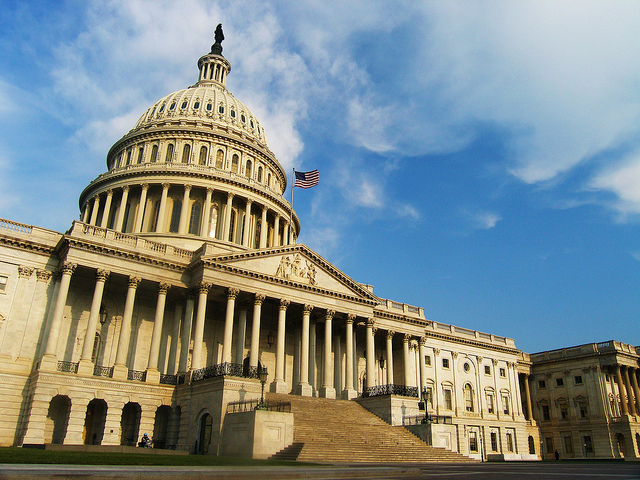
Advocates want $8 billion for NSF, and President Trump wants less than $7 billion. House appropriators seem to be navigating a path through the middle.
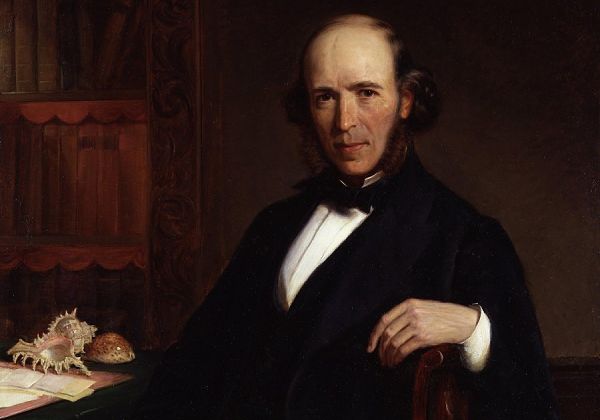
How well do sociology departments in the UK teach sociology that originated in the UK? Asking that surprisingly hard question may produce usable insights for academic Britain, argues our Robert Dingwall.
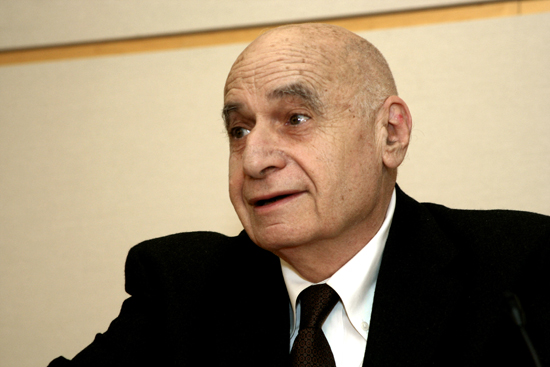
Peter Berger, a sociologist of religion, unlikely culture warrior and founder of the Institute on Culture, Religion, and World Affairs on Boston University, has died at age 88.
In a budget year where the U.S. Congress is far behind where it would usually be in appropriating decisions, the social, behavioral and economic directorate at the National Science Foundation is seeing normal funding, while the Census Bureau is feeling some pressure.

The Royal Swedish Academy of Sciences has awarded this year’s Nobel Prize in Economic Sciences to the American economists Robert E. Hall […] Four Americans working in the social and behavioral sciences are among the 20 people named MacArthur Fellows this year. Recipients may be […] Euan Adie, the founder of Altmetric and later of Overton, discusses the reasons the led to Overton’s focus on showing researchers how […] The following is an adapted extract from The Cultural Industries, fifth edition, by David Hesmondhalgh. The increasing presence of information technology (IT) […] Developers of AI data centers have a public trust problem. According to multiple surveys, a majority of Americans say they would oppose […] I was adding some final flourishes on the topic of ‘iatrocracy’ to my forthcoming book with Natewindé Sawadogo – Sickness and Social […]
EXPLORE
Impact
Economic Peaks, Troughs and This Year’s Nobelists in Economics
READ MORE

Four From Social Science World Receive 2026 MacArthur Fellowships
READ MORE

Quick Insight: Euan Adie on Getting Academics Credit for Their Impact
READ MORE
Innovation

IT Giants and Their Operations: Should We Be Concerned?
READ MORE

What We Miss When We Study Public Trust with Surveys Alone
READ MORE

AI and ‘Iatrocracy’ – A Cautionary Tale
READ MORE