



Could Distributed Peer Review Better Decide Grant Funding?
The landscape of academic grant funding is notoriously competitive and plagued by lengthy, bureaucratic processes, exacerbated by difficulties in finding willing reviewers. Distributed […]

Very, very little science makes its way to the public eye, and an even smaller amount of that makes an impact. Entrepreneurial scientist Robert Seigel is offering a way around the gatekeepers of knowledge.
Doctor Who’s sobriquet implies he’s earned a doctorate in something. The Doctor’s not telling what he might have studied, but his actions and attitudes make a strong case for one discipline …
Unintended consequences and little practical improvement could result from England’s plan to give poor students priority in school placement, especially if schools can decide to opt in or out, argue Stephen Gorard and Rebecca Morris.
Academic publishing creates incentives to simplify results, cull aberrations and focus on the exciting — often to the detriment of good research. Could more open access allows us to be good and boring?
Contradictory diet advice is everywhere – Katy Perry’s acupunctured fish, Matthew McConaughey and the caveman diet, Gwyneth Paltrow’s macrobiotic meals. It seems […]
How can the public learn the role of algorithms in their daily lives, evaluating the law and ethicality of systems like the Facebook News Feed, search engines, or airline booking systems? Earlier this month Harvard University’s Berkman Center for Internet and Society hosted a conversation about the idea of social science audits of algorithms, and J. Nathan Matias reports on the discourse.

A seminal figure in solidifying the importance and position of the social and behavioral sciences in the federal research infrastructure, sociologist Cora Marrett leaves the National Science Foundation next month.
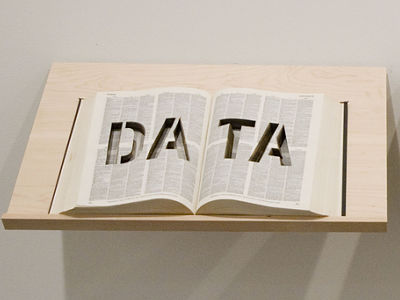
A new survey of the British public finds it has serious concerns about sharing data with just about everyone, even with institutions is otherwise respects deeply.
Jürgen Habermas, a globally known social theorist whose explorations of democracy, validity and communication have gained new prominence in the current moment, […] People often see science as a world apart: cool, rational and untouched by persuasion or performance. In this view, scientists simply discover […] “Research impact” means different things to different people. Some refer broadly to how science changes behaviors, beliefs, or practices outside academic institutions. […] David Canter considers informal places where people socialize, suggesting they’re an arena ChatGPT and other LLMs can’no’t replicate. As someone who lives […] It’s become cliche since Clive Humbly coined it in 2006, but data is indeed the new oil. It’s a mantra repeated by […] In September 2025, The Guardian reported about a lawyer in Australia having faced sanctions due to false citations. These citations were not […]
EXPLORE
Impact

Jürgen Habermas, 1929-2026: Exponent of the Public Sphere
READ MORE

Scientists Should Keep in Mind It’s Called the ‘Marketplace of Ideas’ for a Reason
READ MORE

Survey Finds Social Scientists Feel Unsupported in Seeking Societal Impact
READ MORE
Innovation

Reaching Parts to Which AI Has No Access
READ MORE

Andrea Medina-Smith on Making Research Data More FAIR
READ MORE

A Status Check on Hallucinated Case Law Incidents
READ MORE