


Could Distributed Peer Review Better Decide Grant Funding?
The landscape of academic grant funding is notoriously competitive and plagued by lengthy, bureaucratic processes, exacerbated by difficulties in finding willing reviewers. Distributed […]
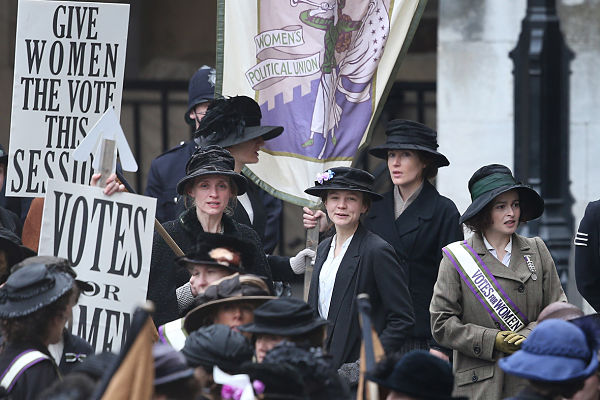
With most works of art looking at the past, the real focus is the present. The new movie ‘Suffragette,’ writes Robert Dingwall, invites us to think about the consequences of political systems that are supposedly democratic but systematically exclude many voices.

Crackerjack science communicators (and their partisans) have until August 15 to submit names and CVs as nominees for the American Association for […]

A new report from the World Health Organization on the response to the African Ebola outbreak backs up what our Robert Dingwall has been writing all along — by downplaying social science lives have been lost. The question now is whether a new WHO can improve.

After an unplanned visit to an American dentist, Robert Dingwall reflects on the power and the role of the case study

The arrival of a report calling for the British government to better support social science has raised questions about the role, responses and responsibilities of a ‘public sociology.’

The last two UK governments have invested heavily in social science research. But we still do not know how to use the results in order to start improving society. This has to change, and soon.
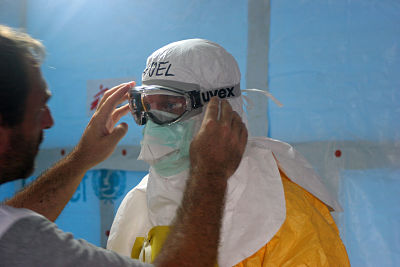
There is a genuine cost from ignoring lessons from social science in the fight against Ebola. What’s even sadder — these lessons were taught in blood three decades ago in the fights against AIDS. Are we ready for the next malady?

‘Neo-emotivism’ is a concept Kip Jones describes as intentionally using emotional responses for academic ends in large part by drawing from nontraditional source like art and literature for inspiration and even vocabulary.

The Royal Swedish Academy of Sciences has awarded this year’s Nobel Prize in Economic Sciences to the American economists Robert E. Hall […] Four Americans working in the social and behavioral sciences are among the 20 people named MacArthur Fellows this year. Recipients may be […] Euan Adie, the founder of Altmetric and later of Overton, discusses the reasons the led to Overton’s focus on showing researchers how […] The following is an adapted extract from The Cultural Industries, fifth edition, by David Hesmondhalgh. The increasing presence of information technology (IT) […] Developers of AI data centers have a public trust problem. According to multiple surveys, a majority of Americans say they would oppose […] I was adding some final flourishes on the topic of ‘iatrocracy’ to my forthcoming book with Natewindé Sawadogo – Sickness and Social […]
EXPLORE
Impact
Economic Peaks, Troughs and This Year’s Nobelists in Economics
READ MORE

Four From Social Science World Receive 2026 MacArthur Fellowships
READ MORE

Quick Insight: Euan Adie on Getting Academics Credit for Their Impact
READ MORE
Innovation
IT Giants and Their Operations: Should We Be Concerned?
READ MORE

What We Miss When We Study Public Trust with Surveys Alone
READ MORE

AI and ‘Iatrocracy’ – A Cautionary Tale
READ MORE












































































