

Could Distributed Peer Review Better Decide Grant Funding?
The landscape of academic grant funding is notoriously competitive and plagued by lengthy, bureaucratic processes, exacerbated by difficulties in finding willing reviewers. Distributed […]

The shortlist for the Online Achievement in International Studies (OAIS) Awards, otherwise known as the Duckies, has been announced. This year’s awards ceremony will feature talks by three expert bloggers on their craft.

Recently Holly Campbell, a student from University College London, won the EGRG Undergraduate Dissertation Prize . We reached out to Holly to find out a little bit more about her award-winning dissertation, entitled ‘Moments of Progress: An exploration of the interaction between female enterprise and patriarchal norms in Selcuck, Turkey.’
A combination of influences — practice, classroom and POWER — has made Patricia Goodson’s book ‘Becoming an Academic Writer: 50 Exercises for Paced, Productive, and Powerful Writing’ a winner for many academics around the world, and now the Textbook & Academic Authors Association has awarded Goodson’s book with one of its 2018 Textbook Excellence Awards. We talk to the author about writing, both her own and perhaps yours!
Britain’s Campaign for Social Science has announced the appointment of four new board members, drawing on extensive research, public policy and practitioner social science expertise.
The American Academy of Political and Social Science will induct the organizer of the American Opportunity Survey and a professor of social work who focuses on how public policy affects children and families as two of the five eminent scholars to be inducted as fellows of the academy this year.
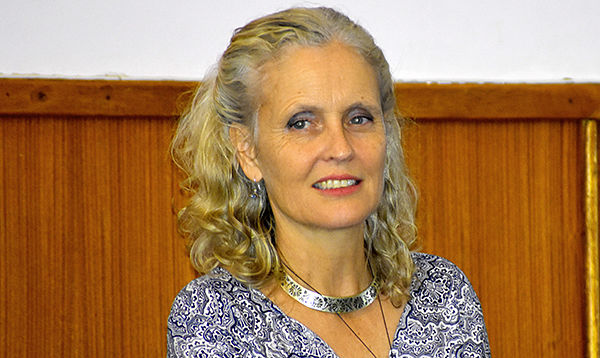
Catriona Macleod received the 2017 Psychology and Social Change Award from her home institution, Rhodes University, late last year in large part for recognizing and then critiquing the psychology of Africa.
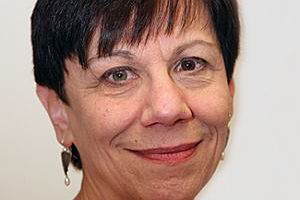
Jeanne Marecek, one of the pioneers in studying the nexus of feminisms and psychologies, has been awarded the Carolyn Wood Sherif Award from the American Psychological Association and the Society for the Psychology of Women.
The Federation of Associations in Behavioral & Brain Sciences has named six winners of its 2017 Early Career Impact Award. The award goes to early career scientists of FABBS member societies who have made major contributions to the sciences of mind, brain, and behavior, and who are within the 10 years of having received their PhD.
Jürgen Habermas, a globally known social theorist whose explorations of democracy, validity and communication have gained new prominence in the current moment, […] People often see science as a world apart: cool, rational and untouched by persuasion or performance. In this view, scientists simply discover […] “Research impact” means different things to different people. Some refer broadly to how science changes behaviors, beliefs, or practices outside academic institutions. […] David Canter considers informal places where people socialize, suggesting they’re an arena ChatGPT and other LLMs can’no’t replicate. As someone who lives […] It’s become cliche since Clive Humbly coined it in 2006, but data is indeed the new oil. It’s a mantra repeated by […] In September 2025, The Guardian reported about a lawyer in Australia having faced sanctions due to false citations. These citations were not […]
EXPLORE
Impact
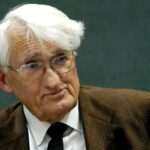
Jürgen Habermas, 1929-2026: Exponent of the Public Sphere
READ MORE

Scientists Should Keep in Mind It’s Called the ‘Marketplace of Ideas’ for a Reason
READ MORE

Survey Finds Social Scientists Feel Unsupported in Seeking Societal Impact
READ MORE
Innovation

Reaching Parts to Which AI Has No Access
READ MORE

Andrea Medina-Smith on Making Research Data More FAIR
READ MORE

A Status Check on Hallucinated Case Law Incidents
READ MORE