



Could Distributed Peer Review Better Decide Grant Funding?
The landscape of academic grant funding is notoriously competitive and plagued by lengthy, bureaucratic processes, exacerbated by difficulties in finding willing reviewers. Distributed […]
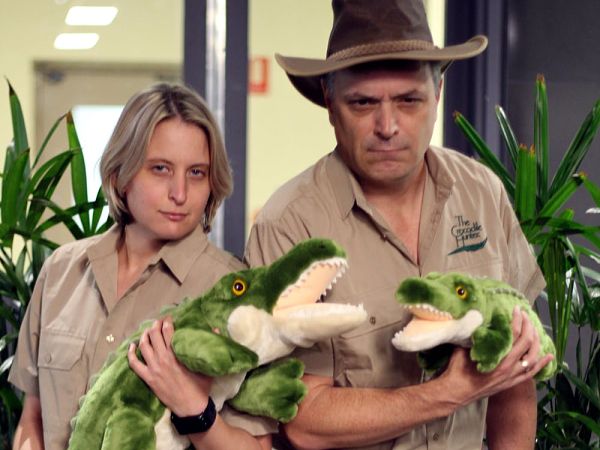
On the surface studying how gamblers reacted to playing a poker machine while holding a live crocodile sounds, well, silly. But the goal — to learn how to get gamblers to say ‘when’ — is deadly serious business.

Researchers and Authors from a variety of fields have an opportunity to share their innovations with a called for papers at the Technology, Mind and Society conference. Authors topics should include but are not limited to artificial intelligence, robotics, mobile devices, and more. Share your innovations here.

Academics have been disengaged, disengaged themselves, or never been engaged with the challenges of working in, and for, very complex organizations, says our Robert Dingwall. Their distaste for administration in its various forms is a liability.

“Crime is an integrated aspect of any culture.” David Canter reviews how crime influences a society’s actions and illustrates the broader social consequences that crime may have on the individuals in a particular culture.

In the Social Science Bites podcast, Ioanna Palaiologou and Dave Edmonds also talk about cultural differences in play and how it is a vital part of children’s emotional development. All work and no play, it seems, does more than make Jack a dull boy.

So if markets are truly good for English higher education, as many seem to think, should we follow that train of thought to its logical conclusions?
The US attorney general has been mocked for wanting to bring back a discredited drug-prevention program from the Reagan era. But have evidence-based researchers created a modern-day version that might actually perform as promised?

Replication and reproducibility have been big issues in medicine and psychology and economics, but les talked about in fields like archaeology. Here, Ben Marwick and Zenobia Jacobs discuss their latest paper’s reproducibility strategy and its tactics during fieldwork, labwork and data analysis.

The Royal Swedish Academy of Sciences has awarded this year’s Nobel Prize in Economic Sciences to the American economists Robert E. Hall […] Four Americans working in the social and behavioral sciences are among the 20 people named MacArthur Fellows this year. Recipients may be […] Euan Adie, the founder of Altmetric and later of Overton, discusses the reasons the led to Overton’s focus on showing researchers how […] The following is an adapted extract from The Cultural Industries, fifth edition, by David Hesmondhalgh. The increasing presence of information technology (IT) […] Developers of AI data centers have a public trust problem. According to multiple surveys, a majority of Americans say they would oppose […] I was adding some final flourishes on the topic of ‘iatrocracy’ to my forthcoming book with Natewindé Sawadogo – Sickness and Social […]
EXPLORE
Impact

Economic Peaks, Troughs and This Year’s Nobelists in Economics
READ MORE

Four From Social Science World Receive 2026 MacArthur Fellowships
READ MORE

Quick Insight: Euan Adie on Getting Academics Credit for Their Impact
READ MORE
Innovation

IT Giants and Their Operations: Should We Be Concerned?
READ MORE

What We Miss When We Study Public Trust with Surveys Alone
READ MORE

AI and ‘Iatrocracy’ – A Cautionary Tale
READ MORE












































































