



Could Distributed Peer Review Better Decide Grant Funding?
The landscape of academic grant funding is notoriously competitive and plagued by lengthy, bureaucratic processes, exacerbated by difficulties in finding willing reviewers. Distributed […]

Although this piece first posted at The Conversation was not intended as a response to Daniel Nehring’s request for opinions about effect of ranking-mania on academic labor, Alister Scott’s observations on the current state of British higher education do shine a light on one facet of the larger issues involved.
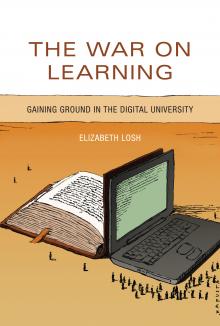
In The War on Learning, Elizabeth Losh analyses recent trends in post-secondary education and the rhetoric around them. In an effort to identify educational technologies that might actually work, she looks at strategies such as MOOCs, gaming subject matter and remixing pedagogy, writes Susan Marie Martin.

Unintended consequences and little practical improvement could result from England’s plan to give poor students priority in school placement, especially if schools can decide to opt in or out, argue Stephen Gorard and Rebecca Morris.

Gavin Moodie has looked at how printing first challenged then changed–for the better–higher education. Here he suggests more modern forms of technological advancement likely will result in the same.

David Glance argues that the university-shaking predictions once routinely made for massive open online courses have been borne out.

Just as scholarship now is more and more about the generation of economic benefits, for many studying is now less about ‘reading for a degree’ than about ‘getting a degree,’ suggests Daniel Nehring.
Robert Dingwall argues that numeracy and and a grasp of quantitative method of course have a place in the education of a social scientist, but they shouldn’t be the only skills in the graduate’s quiver. How about he ability to walk around, for one?

Some Australians have looked to the United States as a model for revamping Oz’s higher education system. U.S.-based sociologist Steven Ward suggests they ought to take another look.

The Royal Swedish Academy of Sciences has awarded this year’s Nobel Prize in Economic Sciences to the American economists Robert E. Hall […] Four Americans working in the social and behavioral sciences are among the 20 people named MacArthur Fellows this year. Recipients may be […] Euan Adie, the founder of Altmetric and later of Overton, discusses the reasons the led to Overton’s focus on showing researchers how […] The following is an adapted extract from The Cultural Industries, fifth edition, by David Hesmondhalgh. The increasing presence of information technology (IT) […] Developers of AI data centers have a public trust problem. According to multiple surveys, a majority of Americans say they would oppose […] I was adding some final flourishes on the topic of ‘iatrocracy’ to my forthcoming book with Natewindé Sawadogo – Sickness and Social […]
EXPLORE
Impact

Economic Peaks, Troughs and This Year’s Nobelists in Economics
READ MORE

Four From Social Science World Receive 2026 MacArthur Fellowships
READ MORE

Quick Insight: Euan Adie on Getting Academics Credit for Their Impact
READ MORE
Innovation

IT Giants and Their Operations: Should We Be Concerned?
READ MORE

What We Miss When We Study Public Trust with Surveys Alone
READ MORE

AI and ‘Iatrocracy’ – A Cautionary Tale
READ MORE