


Could Distributed Peer Review Better Decide Grant Funding?
The landscape of academic grant funding is notoriously competitive and plagued by lengthy, bureaucratic processes, exacerbated by difficulties in finding willing reviewers. Distributed […]
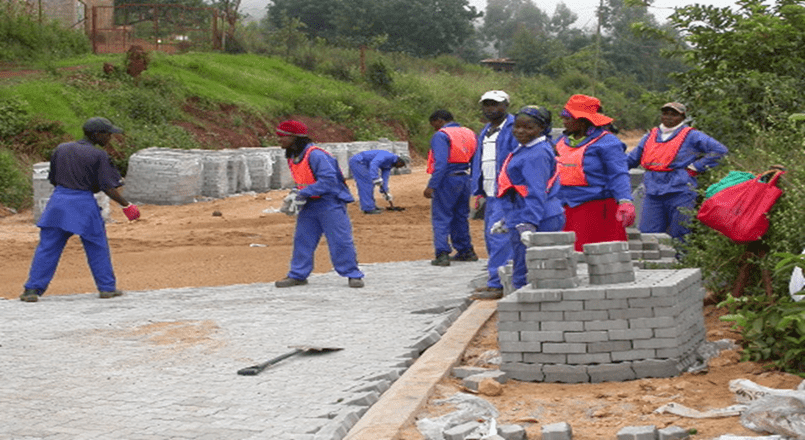
Desmond T. Ayentimi, a senior lecturer of management at the Tasmanian School of Business and Economics, University of Tasmania, reflects on his most recent paper, “Decent Gig Work in sub-Saharan Africa.”

Matthew CB Lyle recounts the journey behind his co-authored qualitative methods paper and the uphill trek it represented because, as he puts, ‘I didn’t know anything when I started.’
One of the currently raging issues in the management field has to do with the use of “templates” in qualitative research.

Brian Richardson, an associate professor at the University of North Texas and specialist in crisis communication and whistleblowing research, discusses the impacts of whistleblowing on familial relationships and answers questions about his paper “Death Threats don’t Just Affect You, They Affect Your Family”: Investigating the Impact of Whistleblowing on Family Identity

Jeremy Mackey, an associate professor of management at Auburn University, discusses the importance of interdisciplinary research and answers questions about the paper, “Musing about Interdisciplinary Research: Is Interdisciplinary Research Amusing or Bemusing?”

The authors found the unique conditions of working during the pandemic created a natural portal into understanding remote work habits.

To maximize skilled migrants’ contributions to the professional society of the host economy, Leila Afshari writes, there is a need for mutual understanding of their potentials and the career options available for them in the society.
What if we were able to predict which teams are capable of amazing levels of effectiveness even before they’ve had enough time to generate measurable performance?

As part of his 2026 budget proposal, Andy Burnham, the United Kingdom’s prime minister, has called for “good growth in every postcode.” […] The Royal Swedish Academy of Sciences has awarded this year’s Nobel Prize in Economic Sciences to the American economists Robert E. Hall […] Four Americans working in the social and behavioral sciences are among the 20 people named MacArthur Fellows this year. Recipients may be […] Part 2 of 3 In the first part of this series, I argued that artificial intelligence is forcing us back to an […] Part 1 of 3 Artificial intelligence is transforming society at extraordinary speed. In a remarkably short time, systems that can generate language, […] The following is an adapted extract from The Cultural Industries, fifth edition, by David Hesmondhalgh. The increasing presence of information technology (IT) […]
EXPLORE
Impact

A Conversation with Diane Coyle on Bridging Media, Government and Academe
READ MORE
Economic Peaks, Troughs and This Year’s Nobelists in Economics
READ MORE

Four From Social Science World Receive 2026 MacArthur Fellowships
READ MORE
Innovation

Renewing the Purpose of Education in an AI World: From Purpose to Practice
READ MORE

Renewing the Purpose of Education in an AI World: What is Education For?
READ MORE
IT Giants and Their Operations: Should We Be Concerned?
READ MORE