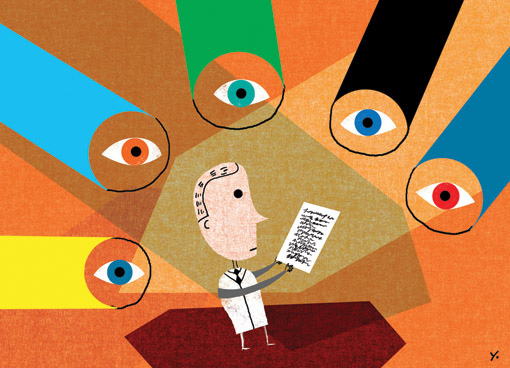




Could Distributed Peer Review Better Decide Grant Funding?
The landscape of academic grant funding is notoriously competitive and plagued by lengthy, bureaucratic processes, exacerbated by difficulties in finding willing reviewers. Distributed […]

China’s apparent reluctance to publish it social science and humanities scholarship openly is less about what it lets out, argues Michael Hockx, and more about what opening up might let in.

Technology may bring efficiencies to higher education, argues David Glance, but only if the expectations of both the suppliers and consumers fundamentally change.

The Conversation UK, a Social Science Space media partner, celebrates its first birthday today. Here, Stephen Khan, the editor of The Conversation UK, reflects on the year that was.

When Tony Abbott took office as Australia’s prime minister and didn’t name a science minister, he asked that his government be judged by action, not titles.

The Conversation UK, a Social Science Space media partner, is celebrating its first birthday on May 16. Here its editors reflect on stories — penned or influenced by academics — that were particularly powerful or memorable.
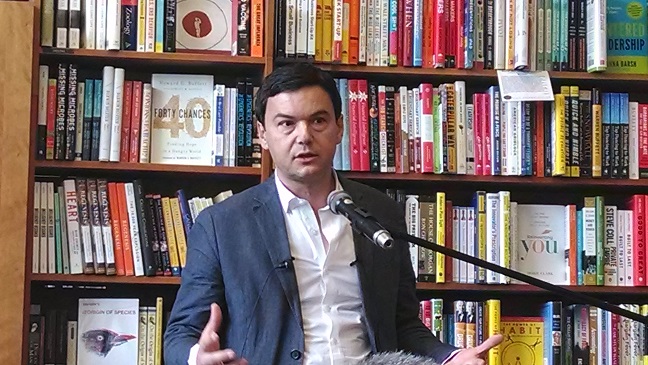
Is the French economist and meteoric public intellectual our generation’s Marx (or Malthus)?

After promising research subjects anonymity, a compelling reason — and the state’s compulsion — pushes us to renege on the promise. is that a mortal sin or a venal transgression? Mark Israel argues that sometimes it’s a necessary evil.

While there are ample perspective benefits to behavioral nudges in the creation of public policy, make sure the nudges are designed for real people and not some rational superbeing.

The Royal Swedish Academy of Sciences has awarded this year’s Nobel Prize in Economic Sciences to the American economists Robert E. Hall […] Four Americans working in the social and behavioral sciences are among the 20 people named MacArthur Fellows this year. Recipients may be […] Euan Adie, the founder of Altmetric and later of Overton, discusses the reasons the led to Overton’s focus on showing researchers how […] The following is an adapted extract from The Cultural Industries, fifth edition, by David Hesmondhalgh. The increasing presence of information technology (IT) […] Developers of AI data centers have a public trust problem. According to multiple surveys, a majority of Americans say they would oppose […] I was adding some final flourishes on the topic of ‘iatrocracy’ to my forthcoming book with Natewindé Sawadogo – Sickness and Social […]
EXPLORE
Impact

Economic Peaks, Troughs and This Year’s Nobelists in Economics
READ MORE

Four From Social Science World Receive 2026 MacArthur Fellowships
READ MORE

Quick Insight: Euan Adie on Getting Academics Credit for Their Impact
READ MORE
Innovation
IT Giants and Their Operations: Should We Be Concerned?
READ MORE

What We Miss When We Study Public Trust with Surveys Alone
READ MORE

AI and ‘Iatrocracy’ – A Cautionary Tale
READ MORE