

Could Distributed Peer Review Better Decide Grant Funding?
The landscape of academic grant funding is notoriously competitive and plagued by lengthy, bureaucratic processes, exacerbated by difficulties in finding willing reviewers. Distributed […]
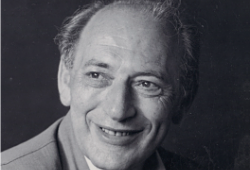
Rupert Brown, the biographer of Henri Tajfel, talks about the pioneering explorer of prejudice in this Social Science Bites podcast. Brown reviews the roots of Tajfel’s research arising from the Holocaust, and the current repercussions of Tajfel’s personal misdeeds.
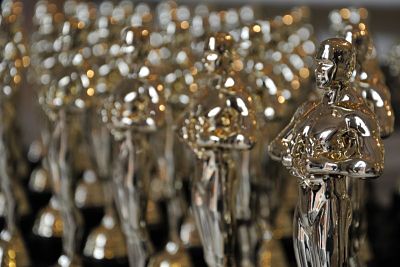
The Psychological Science Accelerator is a global network of more than 500 labs in more than 70 countries which aims to re-do older psychology experiments, but on a mass-scale in several different settings. The effort is one of many targeting a problem that has plagued the discipline for years: the inability of psychologists to get consistent results across similar experiments.

Vicky Randall, a political scientist whose research into how marginalized populations – such as women, the aged, and those outside the First World – can and do interact in politics, died on November 22. The emeritus professor of government at Essex University was 74.

Choice is overwhelming. This should be no surprise to anyone who has spent a good few hours in a department store looking for the right pair of jeans. What if you’re a researcher looking at the landscape of technological tools available for data collection, analysis, or participant recruitment? A new white paper from SAGE has some answers.

If you were going to create an encyclopedia about “mass media,” your first task likely would be to define both words in the term. Doing so was immeasurably easier in the 1920s, when the term “mass media” first started making the rounds, but it’s grown corresponding harder as both the popular conception of ‘mass’ has mutated and the very media itself has evolved from purely paper to heavily broadcast to OMG online.

Social psychology teaches us that when people riot, their collective behavior is never mindless. It may often be criminal, but it is structured and coherent with meaning and conscious intent. To address the causes of such violence, we need to understand this.
Spats, fall-outs and intellectual and personal feuds have long been commonplace among scholars. And, because critiques of ideas and publications are also exercises in freedom of expression, they are integral to the rough and tumble of academic life. But British universities are now facing much more insidious challenges…

How you structure the thesis itself is only one part of the overall structure of your doctorate. In their new book, Mike Bottery and Nigel Wright discuss the importance of three different areas in which a good structure is crucial to your success…


Euan Adie, the founder of Altmetric and later of Overton, discusses the reasons the led to Overton’s focus on showing researchers how […] Here’s a couple of quick questions for you. What is the smallest of the eight discipline-based directorates at the United States’ National […] Sage’s 10-Year Impact Awards recognize academic papers appearing in Sage-published journals that have achieved lasting impact. The winning papers are the most […] I was adding some final flourishes on the topic of ‘iatrocracy’ to my forthcoming book with Natewindé Sawadogo – Sickness and Social […] How is AI changing the shape and space of higher education? Critical thinking continues to rank highly among key skills and attributes […] My colleagues and I recently spoke with a group of talented, interesting students who just completed their first year of college about […]
EXPLORE
Impact
Quick Insight: Euan Adie on Getting Academics Credit for Their Impact
READ MORE

NSF’s Embattled SBE Directorate Shown as Agency’s Policy Heavyweight
READ MORE

Sage’s 10-Year Impact Awards Capture Longer-Term Significance
READ MORE
Innovation

AI and ‘Iatrocracy’ – A Cautionary Tale
READ MORE

The Critical Student: How GenAI Reshapes Critical Skills and Higher Education’s Role Preparing Students For It
READ MORE

AI Doesn’t Drive Student Cheating. It Just Hitches a Ride
READ MORE